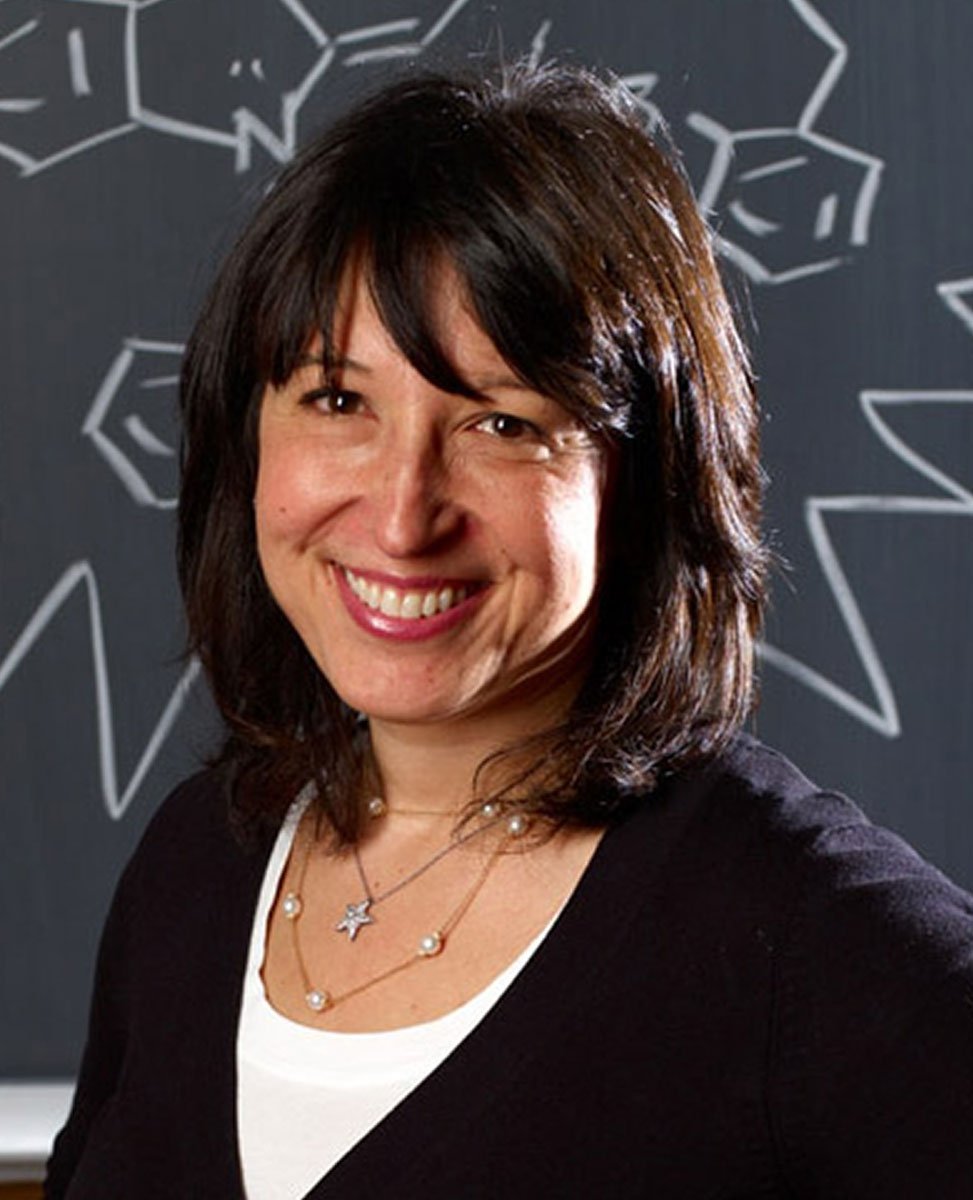
Alanna Schepartz
Dr. Alanna Schepartz is a pioneer in chemical biology whose creative application of synthetic chemistry to biological problems has advanced understanding of protein-DNA recognition, protein-protein interactions and intracellular protein trafficking while establishing β-peptide foldamers as protein-like architectures with unprecedented structural complexity. Her work spans the design of miniature proteins that reach the cell cytosol intact, the development of β-peptides that fold into bundles indistinguishable from natural proteins and the reprogramming of ribosomes to incorporate non-α-amino acids into polypeptides.
Schepartz was born on January 9, 1962, in New York City and was raised in Rego Park, Queens. She graduated from Forest Hills High School in 1978 at the age of 16. She earned a B.S. in chemistry from the State University of New York at Albany and a Ph.D. in organic chemistry from Columbia University, where she worked under the supervision of Ronald Breslow. Following an NIH postdoctoral fellowship with Peter Dervan at the California Institute of Technology, she joined the faculty at Yale University in July 1988.
Schepartz was promoted to Associate Professor in 1992 and to Full Professor with tenure in 1995, becoming the first woman to receive tenure in Yale's Department of Chemistry and the first female full professor in any physical sciences department at Yale. She was named the Milton Harris '29 Ph.D. Professor of Chemistry in 2000 and appointed Professor in the Department of Molecular, Cellular and Developmental Biology in 2001. From 2002 to 2007 she held a Howard Hughes Medical Institute Professorship. In 2017 she was named Sterling Professor of Chemistry, Yale's highest faculty honor. In 2019 Schepartz moved to the University of California, Berkeley, where she is the T.Z. and Irmgard Chu Distinguished Chair in Chemistry and Professor of Molecular and Cell Biology. She is also Editor-in-Chief of Biochemistry.
Schepartz's laboratory develops chemical tools to study and manipulate protein-protein and protein-DNA interactions inside cells. The approach centers on designing molecules that nature did not synthesize, including miniature proteins, β-peptide foldamers, polyproline hairpins and proto-fluorescent ligands. These molecules address biological questions that would otherwise be nearly impossible to answer.
A major contribution has been the development of β-peptide bundles. While β-peptides had been assembled into isolated helices since the early 1990s, creating structures that mimic the larger size and complex folded architecture of natural proteins had remained elusive. In 2006 Schepartz reported the first cooperatively folded β-peptide quaternary structure: β3-peptides designed to promote a 14-helix structure in water assembled into defined hetero-oligomers with highly stabilized secondary structure and cooperative melting transitions. In 2007 she reported the first high-resolution crystal structure of a β-peptide bundle, an octameric assembly of the 12-mer β-peptide Zwit-1F that exhibits kinetic and thermodynamic properties virtually indistinguishable from natural proteins. This discovery, cited by Chemical and Engineering News as one of 2007's most important research advances, demonstrated that natural proteins could have been composed of β-amino acids and established β-peptides as powerful tools for basic research and drug discovery. Since β-peptides are not processed in cells like natural peptides, they hold potential as stable protein mimetics.
Schepartz has applied β-peptide foldamers to inhibit therapeutically significant protein-protein interactions. Her laboratory developed helical β-peptide inhibitors of the p53-hDM2 interaction, demonstrating that foldamers can disrupt critical oncogenic complexes. The β-peptide bundles have also been engineered with catalytic potential, extending their function beyond recognition to include chemical transformations.
A second major contribution addresses the longstanding challenge of delivering proteins, peptides and their mimetics into the mammalian cell cytosol. Schepartz discovered a family of cell-permeant miniature proteins containing a precisely defined penta-arginine motif that traffics efficiently into the cytosol and nucleus. Unlike other cell-penetrating peptides that remain trapped in endosomes, these miniature proteins are released efficiently through a previously unknown pathway involving the HOPS complex, a natural endosome remodeling machine. Using fluorescence correlation spectroscopy, Schepartz demonstrated that these miniature proteins are superior to every known cell-penetrating peptide in achieving cytosolic delivery. The compact miniature protein ZF5.3, just 27 amino acids, guides proteins into the cytosol and nucleus with delivery efficiencies reaching 50% or higher, establishing nuclear or cytosolic concentrations of 500 nM or greater. This work has enabled the nuclear delivery of functional transcription factors including MeCP2, a regulator whose mutation causes Rett syndrome.
Schepartz has also made fundamental contributions to understanding receptor signaling across membranes. Her laboratory discovered that binding of growth factors to the extracellular domain of EGFR induces formation of antiparallel coiled coils in the cytoplasmic juxtamembrane segment located hundreds of amino acids away. The identity of these coiled coils tracks with growth-factor-dependent signaling and can be targeted by novel allosteric inhibitors, offering potential therapeutic strategies for drug-resistant EGFR.
In collaboration with cell biologists, Schepartz developed HIDE probes, two-component chemical tools that allow visualization of multiple organelles in live cells at super-resolution for unprecedented durations. HIDE probes generate images lasting up to 50 times longer than those obtained with protein fusions and can be applied to both cultured and primary cells without transfection.
Current research in the Schepartz laboratory focuses on repurposing the ribosome to synthesize novel polymers. The ribosome tolerates non-α-amino acids in vitro, and Schepartz has demonstrated ribosomal incorporation of β-amino acids and β-hydroxy acids into proteins in living cells. In 2016 her laboratory reported the first in vivo biosynthesis of a β-amino acid-containing protein. Recent work has achieved ribosomal incorporation of consecutive β-amino acids and developed the backbone extension acyl rearrangement reaction to install β-peptide, γ-peptide and δ-peptide backbones into genetically encoded proteins. These advances point toward programmed cellular synthesis of sequence-defined biopolymers with properties unavailable to natural proteins.
Schepartz is a member of the National Academy of Sciences and a Fellow of the American Academy of Arts and Sciences and the American Chemical Society. Her honors include a David and Lucile Packard Foundation Fellowship in 1990, an NSF Presidential Young Investigator Award in 1991, a Camille and Henry Dreyfus Teacher-Scholar Award in 1993, an Alfred P. Sloan Research Fellowship in 1994, the ACS Arthur C. Cope Scholar Award in 1995, the ACS Eli Lilly Award in Biological Chemistry in 1997, the Agnes Fay Morgan Research Award in 2002, the Frank H. Westheimer Prize Medal from Harvard University in 2008, the inaugural ACS Chemical Biology Prize in 2011, the Ronald Breslow Award for Achievement in Biomimetic Chemistry in 2012, the Wheland Medal, the ACS Ralph F. Hirschmann Award in Peptide Chemistry in 2020 and the Vincent du Vigneaud Award from the American Peptide Society in 2021.