Peptide Publications Archive
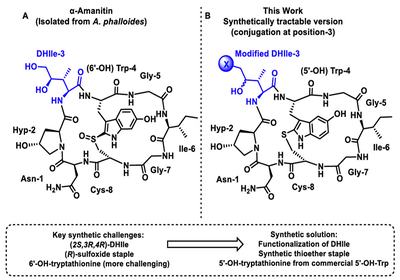
Unlocking Amanitin ADCs
Perrin Lab
α-Amanitin kills cancer cells regardless of proliferation status, making it an attractive antibody–drug conjugate payload. Yet its signature non-canonical amino acid, dihydroxyisoleucine, had never been …
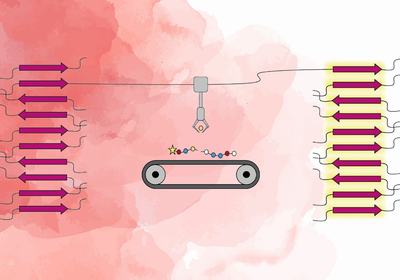
Painting Amyloid
Rüdiger and Friedler labs
Amyloid fibrils in Alzheimer's and Huntington's disease desperately need better molecular tools, yet most peptide scaffolds offer little chemical flexibility. A new modular peptide family …
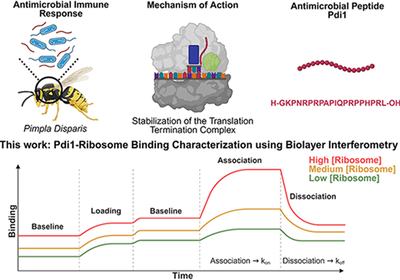
Timing the Tunnel
Terry Moore Lab
Type II proline-rich antimicrobial peptides kill bacteria by trapping release factors inside the ribosome, yet no biophysical method existed to measure how tightly they bind …
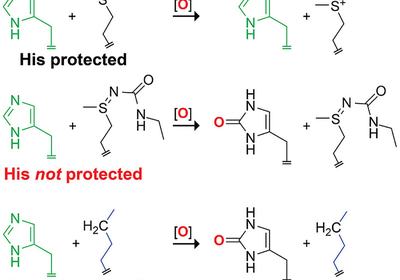
Sacrificial Shields
Raines Lab
Histidine drives catalysis in roughly one-fifth of all enzymes, yet oxidative damage to its imidazole ring is irreversible. A study of human ribonuclease 1 now …
Designing Molecular Switches
Baker Lab
Chemically induced dimerization systems give researchers on/off control over cellular processes, but existing tools borrow from nature and carry off-target liabilities. A new approach builds …
Tagging Nanobodies Precisely
Distefano Lab
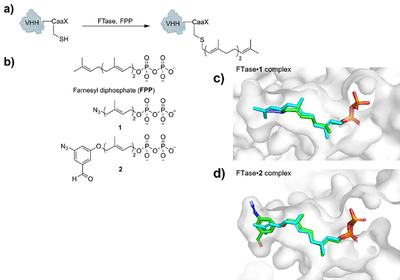
Conventional nanobody conjugation generates heterogeneous products that erode imaging performance in vivo. A new chemoenzymatic strategy using farnesyltransferase installs two orthogonal bioorthogonal handles in a …
Lipophilic Cation Switch
Waters Lab
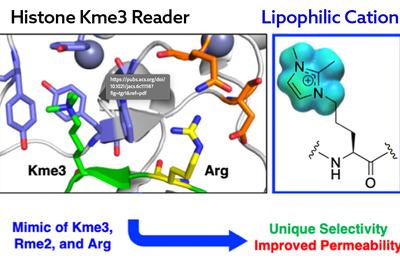
Peptidomimetic inhibitors of histone reader proteins carry a fundamental contradiction: the cationic residues required for tight binding actively sabotage cell entry. A new class of …
Silencing the Warhead
Derda Lab
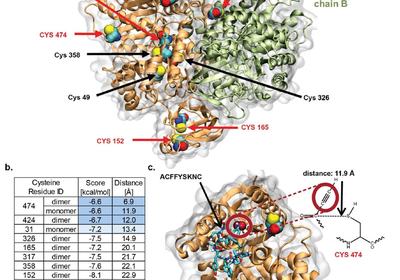
Covalent genetically encoded peptide libraries hold enormous promise for discovering irreversible inhibitors, but installing reactive electrophilic warheads under basic conditions causes those warheads to quench …
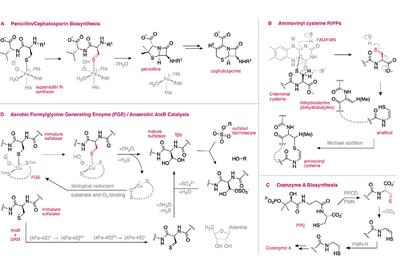
Unmasking Thioaldehydes
Myers Lab
Cysteine thioaldehydes are fleeting, reactive intermediates implicated in penicillin biosynthesis, RiPP natural products, coenzyme A assembly, and sulfatase activation, yet their aqueous chemistry has resisted …
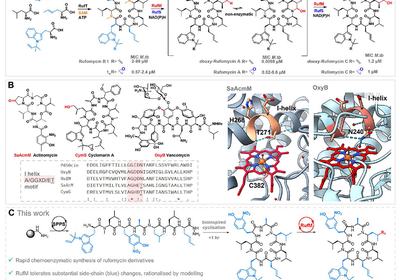
Unlocking the Power of Biosynthetic Tailoring Enzymes
Barry Lab
Biosynthetic cytochrome P450 enzymes can selectively oxidize inert C–H bonds on complex cyclic peptides, but studying them has been nearly impossible without reliable access to …
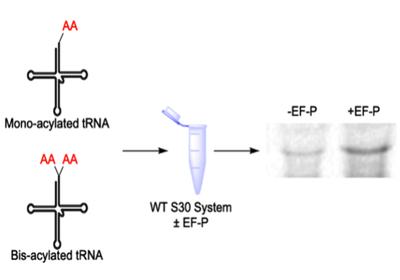
Unlocking Cyclic Dipeptides
Hecht Lab
Incorporating cyclic dipeptides into proteins with native ribosomes has long been hampered by ribosomal stalling, and loading two amino acids onto a single tRNA can …
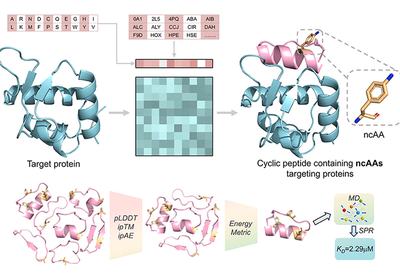
Expanding Cyclic Space
Duan Lab
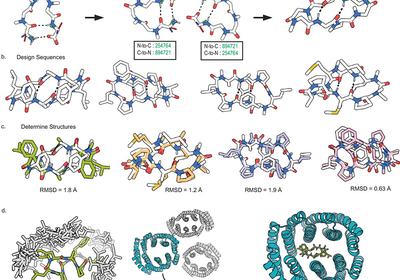
Designing cyclic peptides that incorporate non-canonical amino acids against dynamic protein interfaces is a compelling strategy, but the combinatorial explosion of sequence space makes structure-guided …
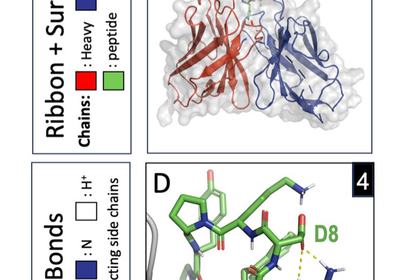
Blocking MS Autoantibodies
Kumar Lab
Current multiple sclerosis therapies suppress broad immune cell populations rather than the disease-specific autoantibodies that drive myelin destruction. A new computationally designed cyclic peptide targets …
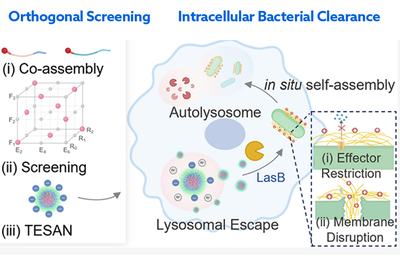
Fibers Trap Persisters
Zhan Lab
Intracellular bacteria shelter inside macrophages, suppress the very immune machinery designed to destroy them, and resist antibiotics that cannot reach them. A new enzyme-triggered peptide …
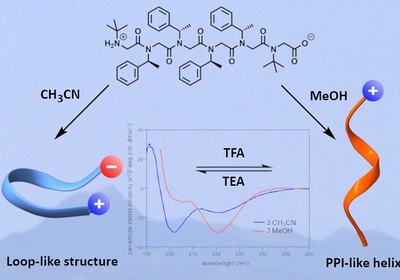
Loop Surprise
Faure & Taillefumier Lab
Peptoids are celebrated for their helical folds, but a serendipitous discovery has revealed that hexamers with free termini can instead curl into a stable looplike …
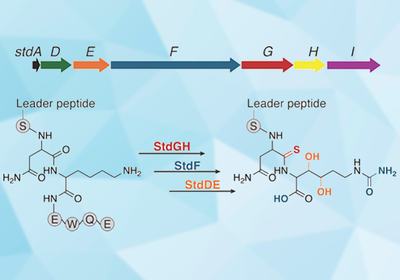
Homocitrulline Reimagined
Rosenzweig Lab
Homocitrulline is known in human biology only as a marker of chemical damage, arising when isocyanic acid nonenzymically carbamoylates lysine during aging and inflammation. Now …
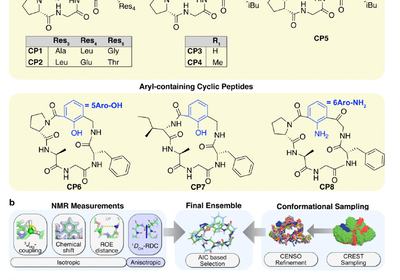
Mapping Macrocycle Motion
Sun & Yudin Labs
Conventional NMR methods force dynamic macrocycles into a single averaged structure, obscuring the multiple conformers that govern permeability and activity. A new integrative framework combining …
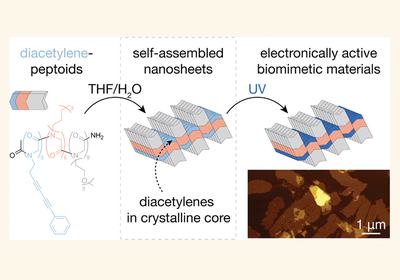
Conducting Peptoid Sheets
Tran Lab
Peptoid nanosheets are prized for their programmable surfaces and enzymatic stability, but they have never been made electronically active. A new strategy exploits the crystalline …
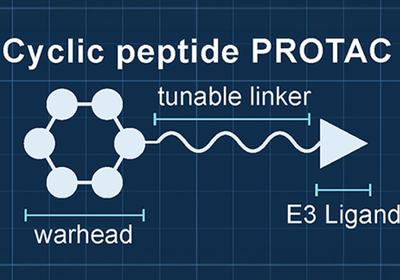
Degraders Beat Hypoxia
Tavassoli Lab
Conventional PROTACs rely on small-molecule warheads, leaving protein–protein interaction targets beyond reach. By converting a cyclic peptide HIF-1α inhibitor into a VHL-recruiting degrader, researchers uncovered …
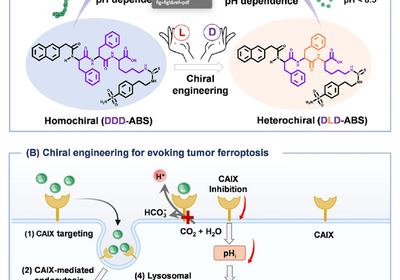
Chirality Targets Lysosomes
Li and Chen Labs
Swapping a single chiral residue in a peptide-drug conjugate shifts where it self-assembles inside a tumor cell, from the cell surface all the way into …
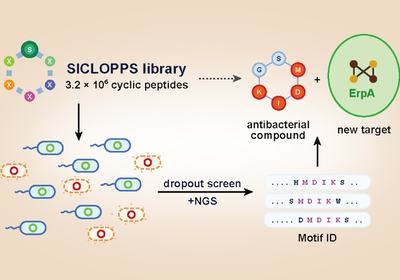
Dropout Finds Target
Tavassoli Lab
Most cyclic peptide screens hunt a known protein target. A new dropout platform asks a simpler question: which library members kill bacteria when expressed inside …
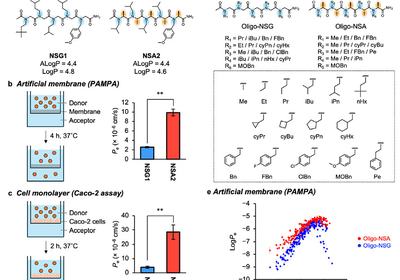
Steric Backbone Advantage
Morimoto & Sando Lab
N-alkyl peptides cross cell membranes with unusual efficiency, and removing their amide hydrogens has long been credited as the reason why. A new study isolates …
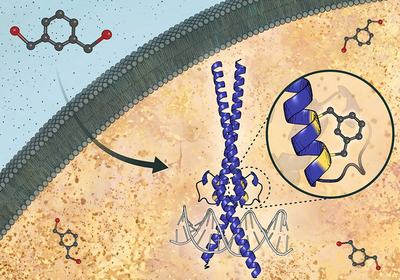
Stapled c-Myc Binds E-box DNA Without Max
Mason Lab
c-Myc is intrinsically disordered and cannot bind DNA without its partner protein Max, a dependency that has stymied drug discovery for decades. A new intracellular …
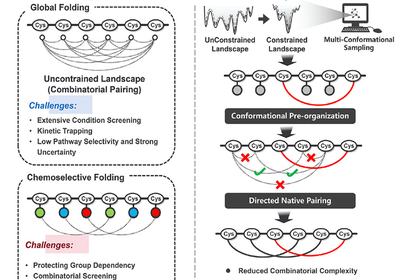
Folding by Design
Hemu Lab
Folding disulfide-rich peptides with three or more disulfide bonds has long frustrated chemists: without cellular machinery, the wrong bonds form first and kinetic traps accumulate. …