Peptide Publications Archive
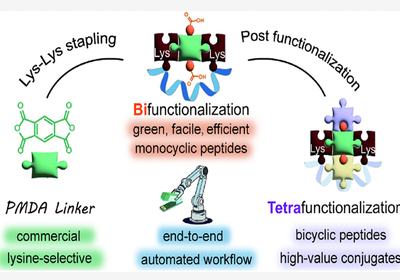
Stapling With PMDA
Zhang and Li Groups
Peptide stapling typically demands exotic amino acids, cysteine handles, or metal catalysts, each carrying trade-offs in selectivity or modularity. A new pyromellitic dianhydride linker sidesteps …
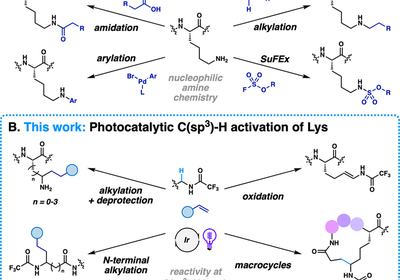
Editing Lysine Radically
Arora Lab
Lysine's aliphatic C–H bonds have long resisted selective functionalization, leaving a rich vein of branched unnatural amino acid motifs out of reach. A photoredox strategy …
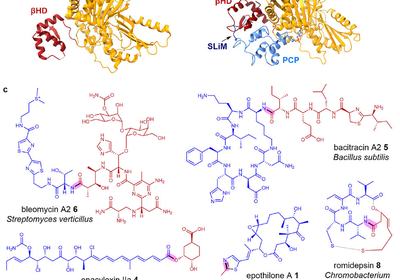
Decoding HDAC Inhibitor Assembly
Challis & Alkhalaf Labs
A family of depsipeptide HDAC inhibitors that includes the lymphoma drug romidepsin share a conserved pharmacophore fused to structurally diverse peptide caps, but the molecular …
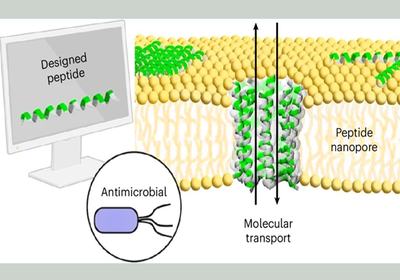
Pores by Design
Vácha Lab
Antibiotic-resistant bacteria are running out of places to hide. Researchers have now built a computational pipeline that designs synthetic peptides from scratch to punch stable, …
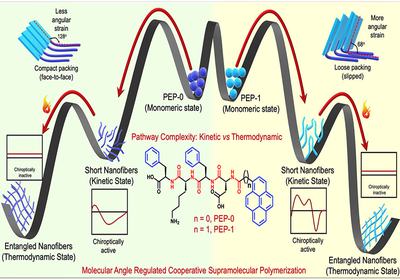
Angles Govern Assembly
Ghosh Lab
Adding a single methylene spacer between a pyrene chromophore and a tetrapeptide backbone shifts the molecular angle from 128° to 68°, flipping the π-stacking mode …
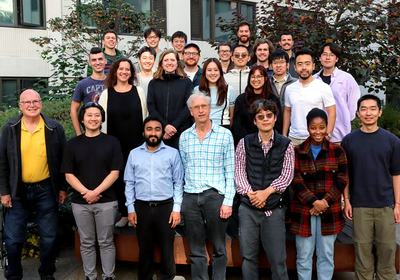
Protein Space Illuminated
DeGrado Lab
How often does a random sequence fold into a stable protein? Surprisingly often, if that sequence repeats itself. A large-scale computational survey of tandem-repeat proteins …
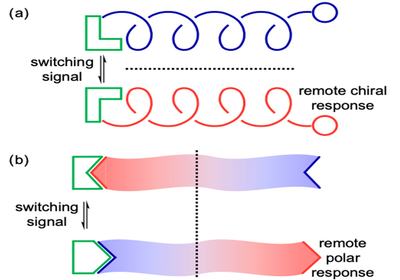
Foldamers in Membranes
Clayden Lab
Synthetic foldamers that switch their internal hydrogen-bond direction could one day carry signals across cell membranes, but only if their conformational dynamics survive the lipid …
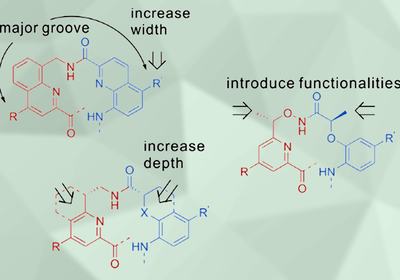
Groovy Foldamer Design
Huc Lab
Aromatic foldamers that mimic DNA can already outcompete the double helix for binding certain proteins, but their repetitive structure limits sequence-specific recognition. Now, four new …
Rethinking GPA Recognition
Davis Lab
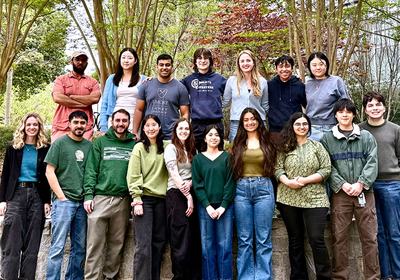
Glycopeptide antibiotics are thought to work by gripping a single peptidoglycan motif through five hydrogen bonds. But when researchers simulated a recently discovered antibiotic that …
Mushroom Toxins Decoded
Süssmuth Lab
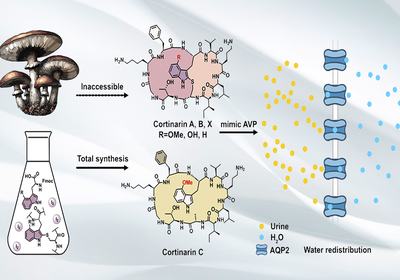
Cortinarins are bicyclic peptides from toxic Cortinarius mushrooms that have resisted independent biological study for decades. A new total synthesis now unlocks milligram quantities of …
Bismuth Cyclisation Inside Living Cells
Jody Mason Lab
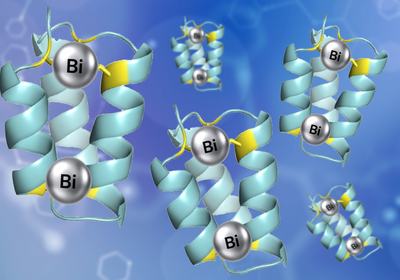
Cyclisation is one of the most dependable ways to make a peptide behave more like a drug, tightening its fold, sharpening target engagement, and slowing …
Tricycles from Display
Jongkees Lab
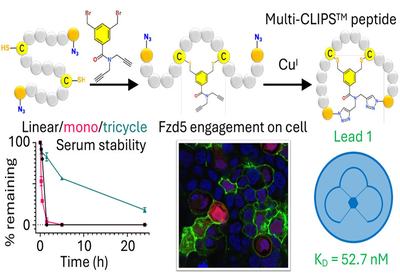
Tricyclic peptides offer tighter binding, better selectivity, and longer serum lifetimes than simpler macrocycles, but generating single regioisomers at the high dilution of mRNA display …
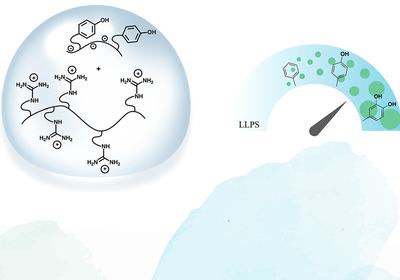
Questioning Cation–π
Gellman Lab
A long-held hypothesis holds that cation–π interactions between arginine and tyrosine side chains drive protein condensate formation. A new two-component model system built from a …
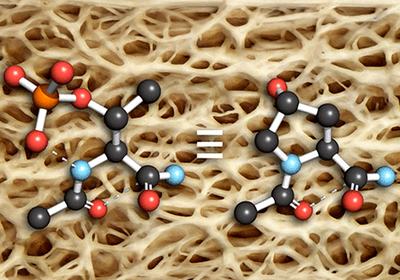
Phosphorylation Mimics Hydroxylation
Raines Lab
Collagen stability depends on 4-hydroxyproline, a permanent modification. Now, researchers show that phosphorylation of threonine at the Yaa position of a collagen triple helix mimics …
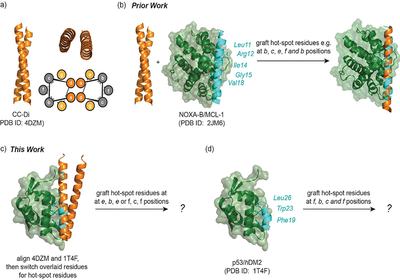
Coiled-Coil Grafting
Wilson, Woolfson, and Itzhaki Groups
Protein–protein interactions are notoriously difficult to drug, but coiled-coil peptides offer a structured scaffold for presenting binding hot spots. Researchers grafted p53 hot-spot residues onto …
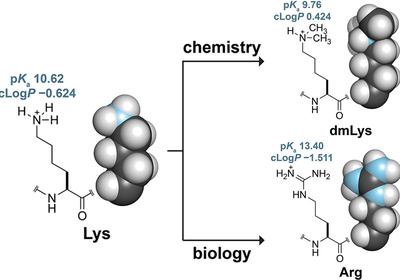
Methylating Every Lysine
Raines Lab
Replacing lysine with arginine is the standard move in protein engineering, but it changes charge geometry, alters hydrogen-bond donors, and cannot touch the N-terminal amino …
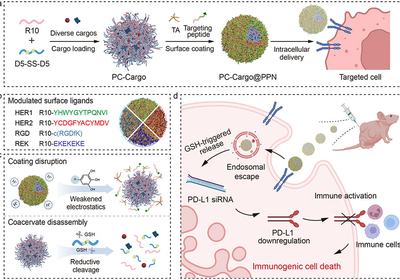
Coacervates Find Targets
Jiang, Caruso, and Liu Groups
Peptide coacervates are promising drug carriers, but poor stability and nonspecific uptake have limited their therapeutic reach. A new polyphenol–peptide network coating changes that equation, …
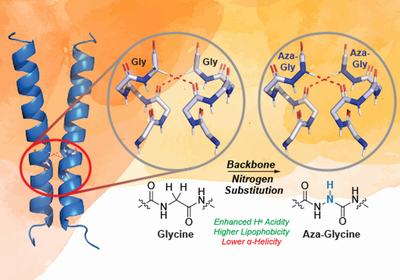
Probing GxxxG Interfaces
Newberry Lab
Glycine residues at GxxxG motifs stabilize transmembrane helix dimers through Cα–H hydrogen bonds, but their lack of side chains makes them difficult to engineer. Replacing …
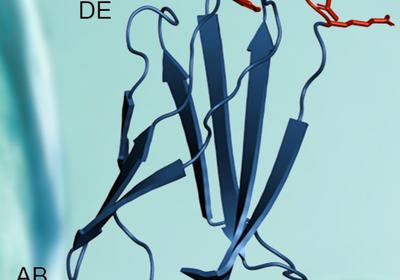
Unlocking Intracellular Space
Pei Lab
Delivering functional proteins into living cells has long been a bottleneck for biologics-based therapies. A newly engineered membrane translocation domain built on a human fibronectin …
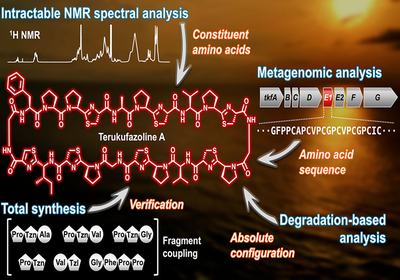
Decoding Terukufazoline
Iwasaki Lab
A 22-residue macrocyclic cyanobactin collected from a remote Japanese island proved too spectrally complex to sequence by conventional NMR and tandem MS alone. Metagenomics cracked …
Prions Fight Back
de la Fuente Lab
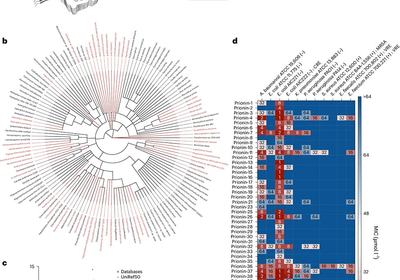
Prion proteins are notorious for causing neurodegeneration, but a deep learning screen of nearly 20 million sequence fragments from prion-related proteins has uncovered more than …
Glycation Codes αSyn
Becker Lab
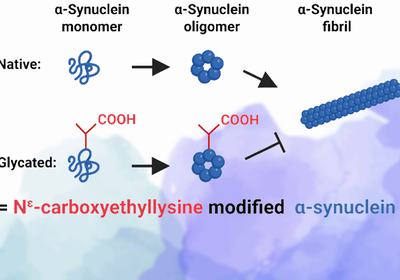
A single glycation mark on α-synuclein reshapes its entire aggregation behavior, but the outcome depends sharply on which lysine carries it. A new semisynthetic platform …
Stapling Pancreatic Invasion
Kennedy Lab
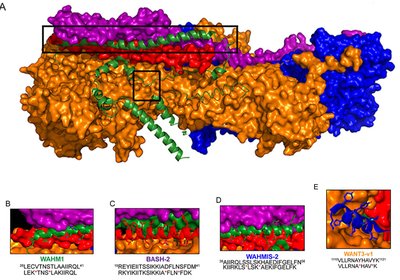
Pancreatic cancer carries a five-year survival rate of just 13%, partly because metastasis outpaces available treatments. A stapled peptide derived from the WASF3 protein sequence …
Engineering Better Peptides
Bhunia Lab
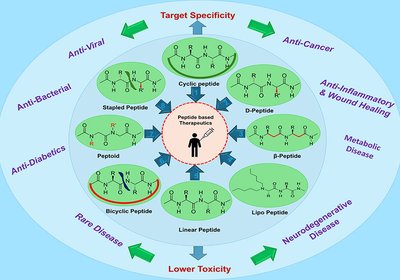
More than 80 peptide drugs are approved worldwide, yet rapid proteolysis, poor oral bioavailability, and short plasma half-life still limit the class. A sweeping new …