Peptide Publications Archive
Showing items in Self-Assembly & Materials · Clear filter
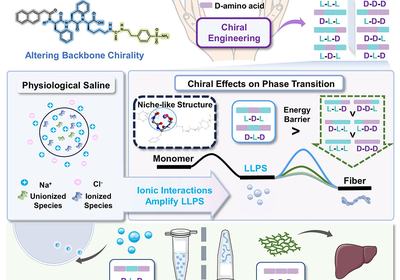
Chirality Steers Condensates
Chen Lab
Switching a single residue's chirality in a tripeptide-drug conjugate redirects assembly away from amyloid-like fibers and toward liquid droplets, but only when Na⁺ or K⁺ …
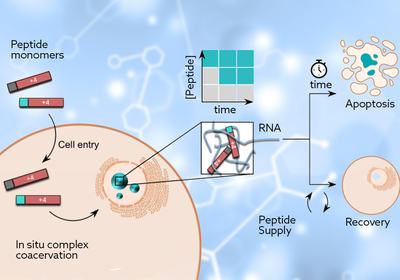
Nucleolar Droplets On Demand
Department of Synthesis of Macromolecules at the Max Planck Institute for Polymer Research
Synthetic coacervates that form inside living cells and then dissolve on command would open a new class of reversible compartments, but reaching the concentrations needed …
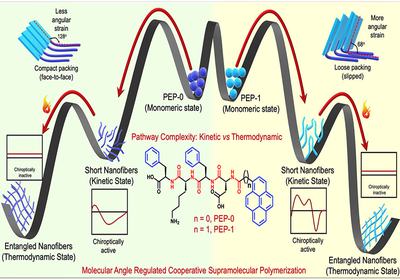
Angles Govern Assembly
Ghosh Lab
Adding a single methylene spacer between a pyrene chromophore and a tetrapeptide backbone shifts the molecular angle from 128° to 68°, flipping the π-stacking mode …
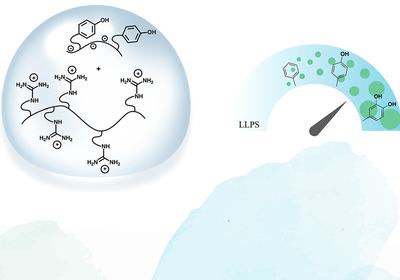
Questioning Cation–π
Gellman Lab
A long-held hypothesis holds that cation–π interactions between arginine and tyrosine side chains drive protein condensate formation. A new two-component model system built from a …
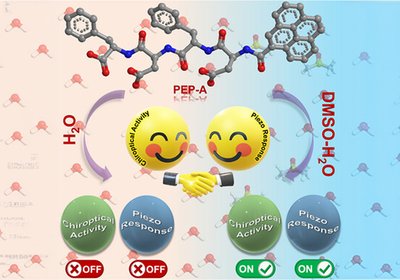
Chirality Switches Piezoelectricity
Ghosh Lab
A pyrene-conjugated tetrapeptide assembles into nanofibers that are both chirally silent and piezoelectrically inert in pure water, yet adding just 1% DMSO flips a supramolecular …

Porous Collagen Crystals
Merg Lab
Collagen-mimetic peptides are renowned for triple-helix rigidity, but no one had channeled that rigidity into a porous crystalline framework. Now, by appending a single alkyl …
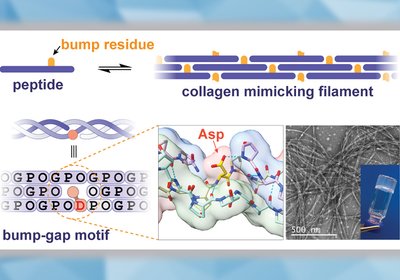
Bump-Gap Filaments
Chenoweth Lab
Natural collagen carries risks of immunogenicity and resists chemical modification, but synthetic collagen-mimetic peptides have struggled to match its continuous, mechanically robust fibrillar architecture. A …
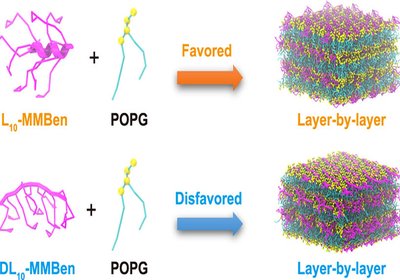
Helical Hierarchy
Xiao Lab
Researchers supervised by Professor Shiyan Xiao at the University of Science and Technology of China in Hefei, published in J. Am. Chem. Soc., studied …
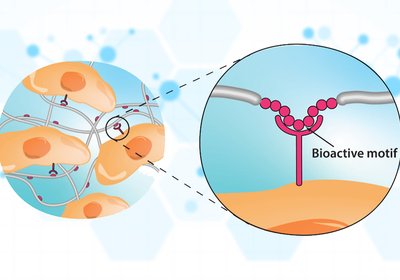
Designing Peptide Materials
López-Silva Group
Synergistic peptide cues, structural conformation, and stimulus-responsive chemistries let materials recapitulate the dynamic complexity of native tissue microenvironments
Rippled Sheets
Nilsson Group
Enantiomeric peptide mixtures preferentially form rippled β-sheets over pleated structures, expanding design principles for next-generation biomaterials
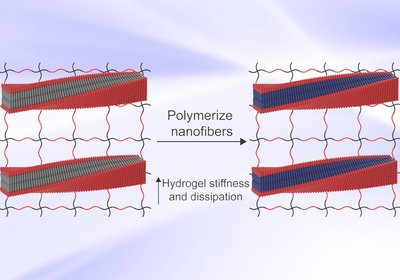
Programmable Hydrogel Mechanics
Pashuck Lab
Researchers in the Pashuck Group at Lehigh University, published in the Journal of the American Chemical Society, developed a modular approach that harnesses self-assembling …

Programmable Peptide Coacervates
Tian Lab
Peptide-based coacervates have emerged as versatile platforms for drug delivery, tissue scaffolding, bioreactor systems, and cellular regulation due to their sequence programmability, dynamic self-assembly, and …
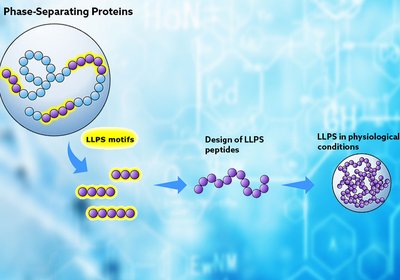
Designing Droplets
Pina Lab
Cells organize their interiors not only with membranes but also through liquid-liquid phase separation, LLPS, the spontaneous demixing that creates membraneless organelles like nucleoli and …
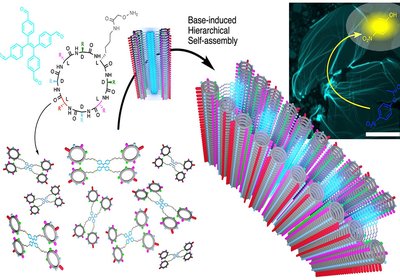
Luminescent Nanosheets
Granja/Montenegro Labs
Two-dimensional materials have captivated researchers since graphene's isolation in 2004, offering properties unmatched by their bulk counterparts. High surface areas, tunable electronics, and morphological anisotropy …
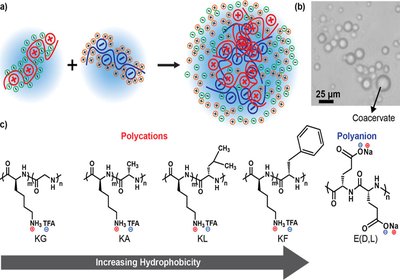
Sequence Hydrophobicity
Perry Lab
In this study, published in Biomacromolecules, researchers in Sarah Perry's group at the University of Massachusetts - Amherst, employ sequence-defined polypeptides as minimal models …
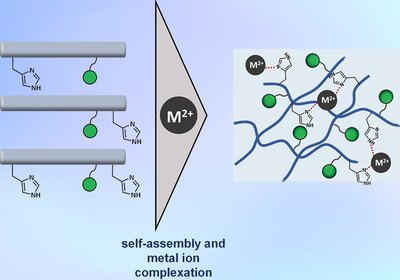
Glycan–Metal Synergy
Koksch Lab
Hydrogels, highly hydrated polymer networks, underpin both natural barriers such as mucus and numerous biomedical applications. Mucins, the glycoprotein constituents of mucus, achieve their viscoelasticity …
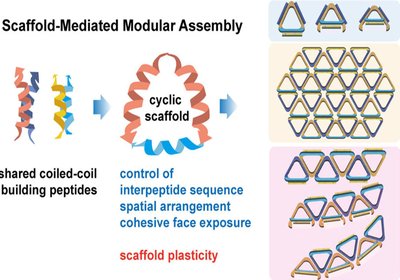
Shaping Peptide Assemblies
Jiang Lab
Peptides capable of folding into defined secondary structures serve as promising modular building blocks for supramolecular materials. However, conventional approaches to peptide-based self-assembly are often …
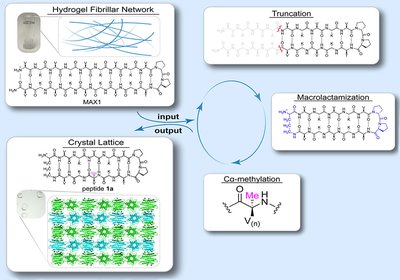
From Hydrogel to Crystal
Schneider Lab
Published in the Journal of the American Chemical Society, researchers in the lab of Dr. Joel P. Schneider at NIH, have unveiled a groundbreaking …
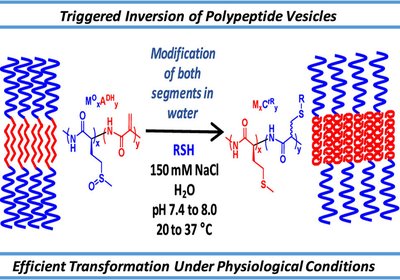
Vesicle Inversion
Deming Lab
Self-assembled polymeric vesicles that respond to biologically relevant stimuli have significant potential in drug delivery and synthetic biology. While many stimuli-responsive assemblies disassemble upon activation, …