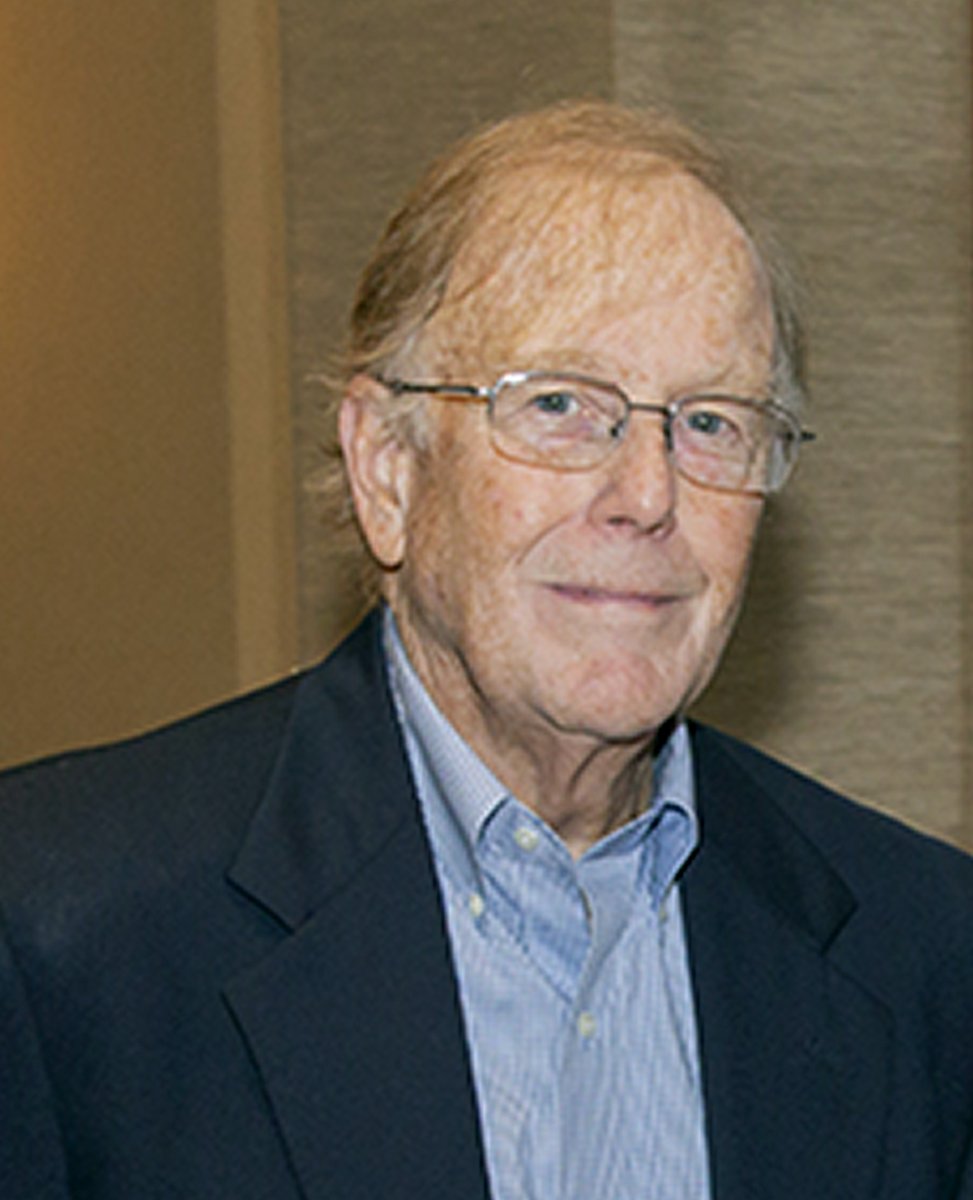
Daniel H. Rich
Dr. Daniel H. Rich is a pioneer in the field of chemical biology whose research on the design and synthesis of enzyme inhibitors laid the groundwork for the HIV protease inhibitors used to treat AIDS. His work on the synthesis and conformational analysis of cyclic peptides and the development of transition-state analog inhibitors of aspartic proteases transformed the understanding of enzyme mechanisms and enabled the rational design of therapeutically important drugs.
Rich was born on December 12, 1942, in Fairmont, Minnesota. As a General Motors Scholar at the University of Minnesota–Minneapolis, he received his B.S. in chemistry in 1964. He earned his Ph.D. in organic chemistry from Cornell University in 1967 and held postdoctoral appointments with Vincent du Vigneaud at Cornell and W. S. Johnson at Stanford University. After working briefly at Dow Chemical, he joined the faculty of the School of Pharmacy at the University of Wisconsin–Madison in 1970.
At the School of Pharmacy, Rich pursued an approach that was unusual for his time: combining organic chemistry with biology. In 1970 organic chemists typically did not engage in biological research, but Rich sought to bridge these disciplines. His work focused on two major areas: the synthesis and conformational analysis of cyclic peptides and the design and synthesis of inhibitors of therapeutically important enzymes, particularly aspartic proteases.
In the early 1980s Rich pioneered the development of aspartic protease inhibitors as drug candidates, focusing initially on the enzyme renin, which plays a critical role in blood pressure regulation. His approach drew on the structure of pepstatin, a naturally occurring inhibitor of aspartic proteases containing the unusual amino acid statine. By incorporating transition-state mimics such as the hydroxyethylene isostere into peptide substrates, Rich and his collaborators created potent, selective enzyme inhibitors that could not be cleaved by the target protease. This strategy of replacing the scissile peptide bond with non-cleavable transition-state analogs became the primary method for designing aspartic protease inhibitors and proved invaluable when researchers turned their attention to HIV protease.
The impact of Rich's work on AIDS treatment is substantial. Of the first six HIV protease inhibitors approved for treating AIDS in humans, his former student Roger Tung is a named inventor on patents for two, and a third was first described in a publication by Tung. Many other students from Rich's laboratory rose to important research positions in the pharmaceutical industry, where they applied the principles developed in his group to drug discovery programs.
Over his career Rich published more than 250 articles and trained 36 Ph.D. students along with approximately 100 postdoctoral researchers. His commitment to education extended beyond his laboratory. He was elected Teacher of the Year by the UW–Madison Pharmacy graduating class of 1986 for his teaching of medicinal chemistry. His mentoring philosophy emphasized understanding over mere execution, requiring students to develop complete comprehension of their research problems rather than simply making compounds.
Rich played a leading role in establishing chemical biology as a recognized discipline. In 1992 he organized and wrote the first Chemistry-Biology Interface training grant for UW–Madison and served as its program director, principal investigator and chair of the advisory committee from 1993 to 2003. The UW–Madison CBI training program became the largest of its type in the United States. He also served in various administrative roles including Assistant Dean of Graduate Studies in the School of Pharmacy from 1976 to 1980, chair of the Physical Sciences Divisional Committee from 1992 to 1993, and Associate Dean for Research and Graduate Studies for the School of Pharmacy from 2005 to 2006.
Rich has received numerous awards recognizing his contributions to peptide chemistry, medicinal chemistry and pharmaceutical science. These include the Vincent du Vigneaud Award in Peptide Chemistry in 1990, the ACS Division of Medicinal Chemistry Award and the Research Achievement Award from the American Association of Pharmaceutical Scientists in 1992, the George Herbert Hitchings Award for Innovative Methods in the Design and Discovery of Drugs in 1992, the Ralph F. Hirschmann Award in Peptide Chemistry in 1993, and the E. Volwiler Research Achievement Award from the American Association of Colleges of Pharmacy in 1995. He received an Arthur C. Cope Scholar Award from the American Chemical Society and the R. Bruce Merrifield Award from the American Peptide Society, both in 1999. In 2005 he received the E. E. Smissman Award from the ACS Division of Medicinal Chemistry, and in 2007 he was inducted into the ACS Medicinal Chemistry Hall of Fame. In 2017 he received the Meienhofer Award for Excellence in Peptide Sciences.
In 1993 Rich was named a Senior U.S. Scientist Alexander von Humboldt Scholar in Germany. In 1994 he was awarded a WARF University Professorship at UW–Madison, which he named after his friend Ralph F. Hirschmann, becoming the Ralph F. Hirschmann Professor of Medicinal and Organic Chemistry. Hirschmann in turn established the Ralph F. Hirschmann–Daniel H. Rich Fellowship in Bio-organic Chemistry at UW–Madison to honor their friendship and Rich's contributions to the field. In 2004 Rich received an Outstanding Alumni Achievement Award from his alma mater, the Institute of Technology of the University of Minnesota, and in 2008 he received the School of Pharmacy's Citation of Merit Award for his significant contributions to research and education.