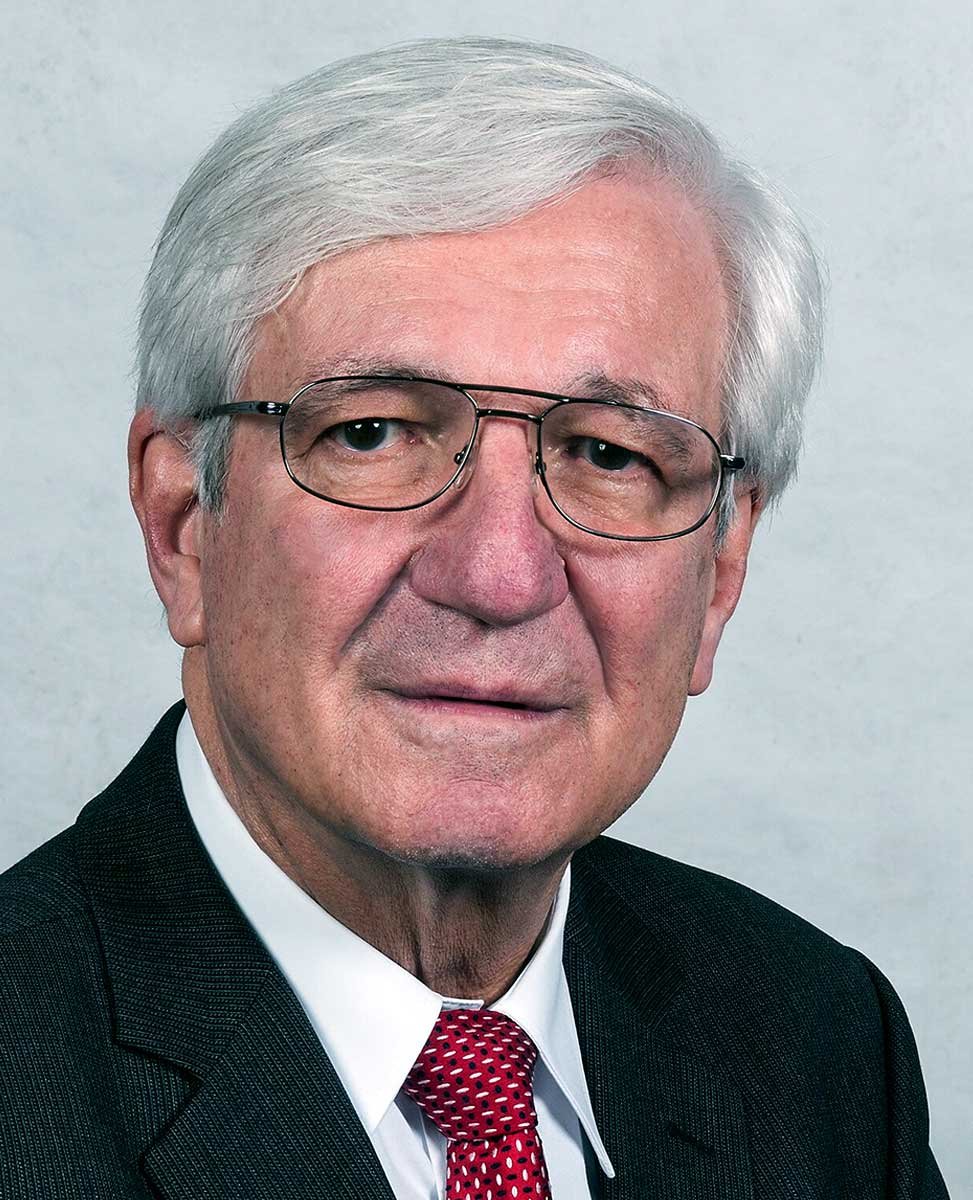
Dieter Seebach
Professor Dieter Seebach made foundational contributions to organic synthesis methodology and pioneered the chemistry of β-peptides. His discovery that oligomers of β-amino acids form stable helical structures independent of α-peptide scaffolds opened a new chapter in foldamer science.
Seebach studied chemistry at the University of Karlsruhe, completing his Ph.D. under Rudolf Criegee in 1964. He spent two years with Elias Corey at Harvard, where he developed the lithium dithiane chemistry underlying the Corey-Seebach umpolung reaction. After habilitation at Karlsruhe and a professorship at the University of Giessen, he joined ETH Zurich in 1977, where he worked until retiring in 2003.
In the mid-1990s, Seebach launched systematic investigations of oligomers built from β-amino acids bearing the side chains of proteinogenic amino acids. His group demonstrated that β-hexapeptides adopt stable 314-helices in solution, with central amide protons exchanging on timescales of hours to days. X-ray crystallography and NMR spectroscopy revealed the novel hydrogen-bonding patterns stabilizing these structures.
Seebach showed that β-peptides resist common peptidases, retaining their structure after days of exposure to proteolytic enzymes. His laboratory developed efficient routes to enantiopure β-amino acids through homologation of α-amino acids and explored biological activities including somatostatin mimicry and inhibition of cholesterol transport.
His honors include the Karl Ziegler Prize, the Roger Adams Award, the King Faisal International Prize, the Marcel Benoist Prize, the A. W. von Hofmann Medal, the Tetrahedron Prize, the Ryoji Noyori Prize and the Max Bergmann Medal. He was elected a foreign associate of the U.S. National Academy of Sciences in 2007.
Photo Credit: By Jü - Own work, CC BY-SA 4.0.