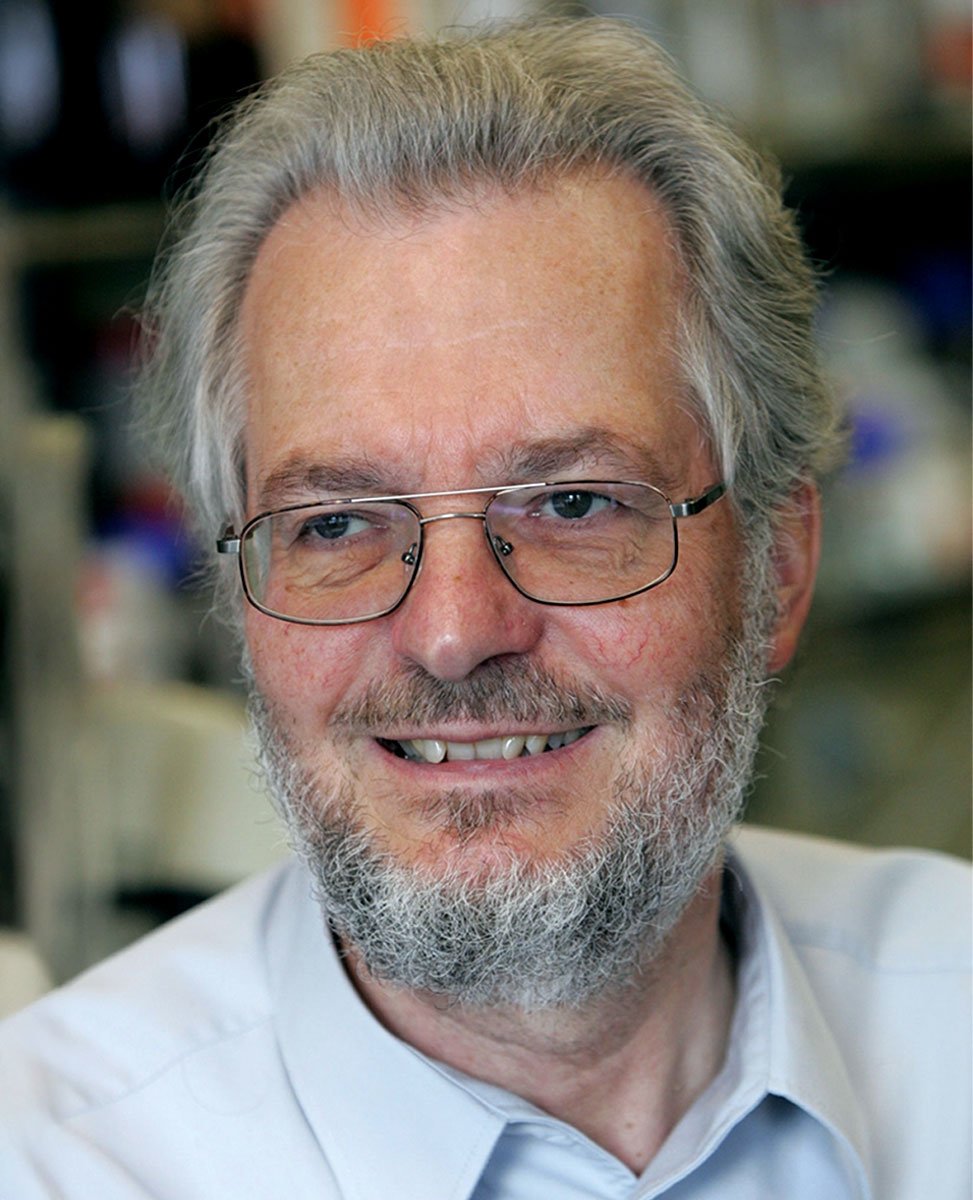
Horst Kessler
Professor Horst Kessler pioneered the application of NMR spectroscopy to peptide conformational analysis and developed cyclic RGD peptides that discriminate among integrin subtypes. His work bridged organic chemistry, structural biology and drug discovery, establishing methods that remain central to peptide-based medicinal chemistry.
Kessler studied chemistry at Leipzig University from 1958 to 1961, completing his Diplom in 1963 and his Ph.D. in 1966 under Eugen Müller at the University of Tübingen. He underwent habilitation in organic chemistry in 1969. In 1971, at age 31, he became full professor of organic chemistry at Goethe University Frankfurt. He moved to the Technical University of Munich in 1989, where he oversaw installation of one of Germany's four 900 MHz NMR spectrometers and founded the Bavarian NMR Center.
Kessler's research combined synthetic chemistry with advanced spectroscopic methods. He developed NMR techniques for determining the structure and dynamics of peptides and proteins in solution, including approaches for measuring coupling constants that became standard tools in conformational analysis. His group applied these methods to biologically active cyclic peptides, elucidating the relationship between three-dimensional structure and receptor selectivity.
By systematically incorporating the RGD tripeptide sequence into cyclic peptides and developing non-peptidic mimetics, Kessler created highly active ligands that discriminate among integrin subtypes αvβ3, αvβ5, αvβ6, α5β1 and αIIbβ3. These compounds have been developed for molecular imaging, biomaterial coatings and biophysical studies of integrin function. In later years, his laboratory applied NMR methods to larger proteins, including tumor suppressor p53, heat shock proteins and spider silk terminal domains.
His honors include the Emil Fischer Medal from the German Chemical Society in 1997, the Max Planck Research Prize in 2001, the Burckhardt Helferich Prize for bioorganic chemistry in 2005, the Josef Rudinger Memorial Award from the European Peptide Society in 2008 and the R. Bruce Merrifield Award from the American Peptide Society in 2015. He was elected to the Bavarian Academy of Sciences and Humanities in 1996 and to the German National Academy of Sciences Leopoldina in 2002. Since 2008 he has served as Carl-von-Linde Professor at the TUM Institute for Advanced Study.
Photo credit:By Jü - Own work, CC BY-SA 4.0