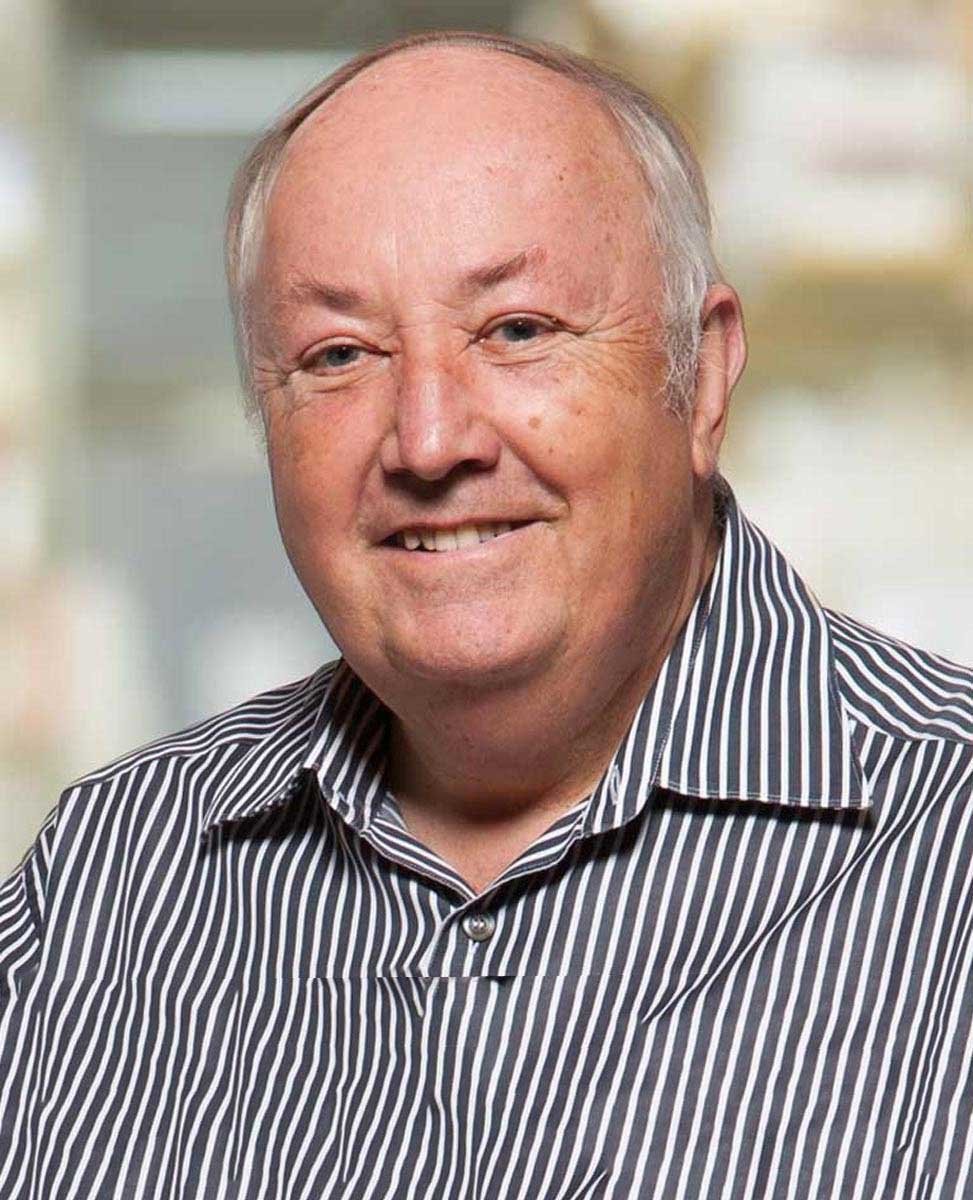
Jean E. Rivier
Dr. Jean E. Rivier made fundamental contributions to neuroendocrinology through the isolation and synthesis of hypothalamic releasing factors and the development of peptide analogs that became important human therapeutics. His pioneering use of reverse-phase high-performance liquid chromatography revolutionized peptide purification, enabling the characterization of previously elusive hormones including corticotropin-releasing factor. His synthetic peptides and structure-activity studies laid the foundation for drugs treating conditions ranging from prostate cancer to severe pain.
Rivier was born in Casablanca, Morocco, in 1941. His family moved to Brazil in 1956, where he obtained the French baccalauréat. He relocated to Switzerland in 1960 and earned a bachelor's degree in chemical engineering from the Ecole Polytechnique de l'Université de Lausanne followed by a doctorate in organic chemistry from the Université de Lausanne. He completed postdoctoral studies at Rice University in Houston before joining the Salk Institute in 1970 with his wife, Catherine Rivier.
At the Salk, Rivier joined the laboratory of Roger Guillemin, who was pursuing the isolation and characterization of hypothalamic releasing factors. Their efforts, together with other laboratory members, led to the discovery of thyrotropin-releasing hormone, gonadotropin-releasing hormone and somatostatin, work that contributed to Guillemin sharing the Nobel Prize in Physiology or Medicine in 1977. In his Nobel biographical statement, Guillemin singled out Jean Rivier among the collaborators of unique significance in the saga of the hypothalamic hormones.
In 1973 Rivier, Catherine Rivier and Wylie Vale established the Peptide Biology Laboratory at the Salk Institute. Their most celebrated achievement was the isolation of corticotropin-releasing factor in 1981, ending decades of searching by numerous investigators. CRF proved to be the molecule at the nexus of central and peripheral stress response pathways, with implications for mental health, gastrointestinal disease, immunology and endocrinology. The laboratory subsequently discovered urocortins 1 through 3, growth hormone-releasing hormone and inhibin.
Rivier's pioneering application of reverse-phase HPLC was essential not only for purifying these trace hypothalamic factors but also for enabling the widespread use of solid-phase peptide synthesis. He developed novel strategies to understand how peptide structure controls biological activity, incorporating numerous unnatural amino acids, many invented in his laboratory. His structure-activity studies produced the first superagonists and antagonists of GnRH, leading to important drugs for prostate cancer, endometriosis and reproductive medicine. He developed long-acting CRF receptor antagonists called astressins for stress-related disorders including irritable bowel syndrome.
Beyond mammalian hormones, Rivier became intrigued by conotoxins, the complex multicyclic peptides from venomous cone snails. In 1982 he was a coinventor on the first conotoxin patent, filed by the Salk Institute with Baldomero Olivera, Lourdes Cruz and William Gray, disclosing the biological activity, chemical structures and synthesis of toxic peptides from Conus species. Rivier synthesized many conotoxins and analogs, including ziconotide, which was approved in 2004 as Prialt for the treatment of severe chronic pain.
His research contributed to eight marketed drugs for diagnosing and treating diseases including prostate cancer, endometriosis, pituitary dwarfism, acromegaly and neuroendocrine tumors. He founded Sentia Medical Sciences to develop peptide-based drugs for stress-related diseases. He was author or coauthor on more than 1,200 refereed papers and coinventor on more than 120 patents, sharing synthetic peptide tools unselfishly with collaborators worldwide.
Rivier was survived by his wife, Professor Emerita Catherine Rivier, and their children Lauraine and Cédric. He died in San Diego on November 13, 2019, from complications of Parkinson's disease.