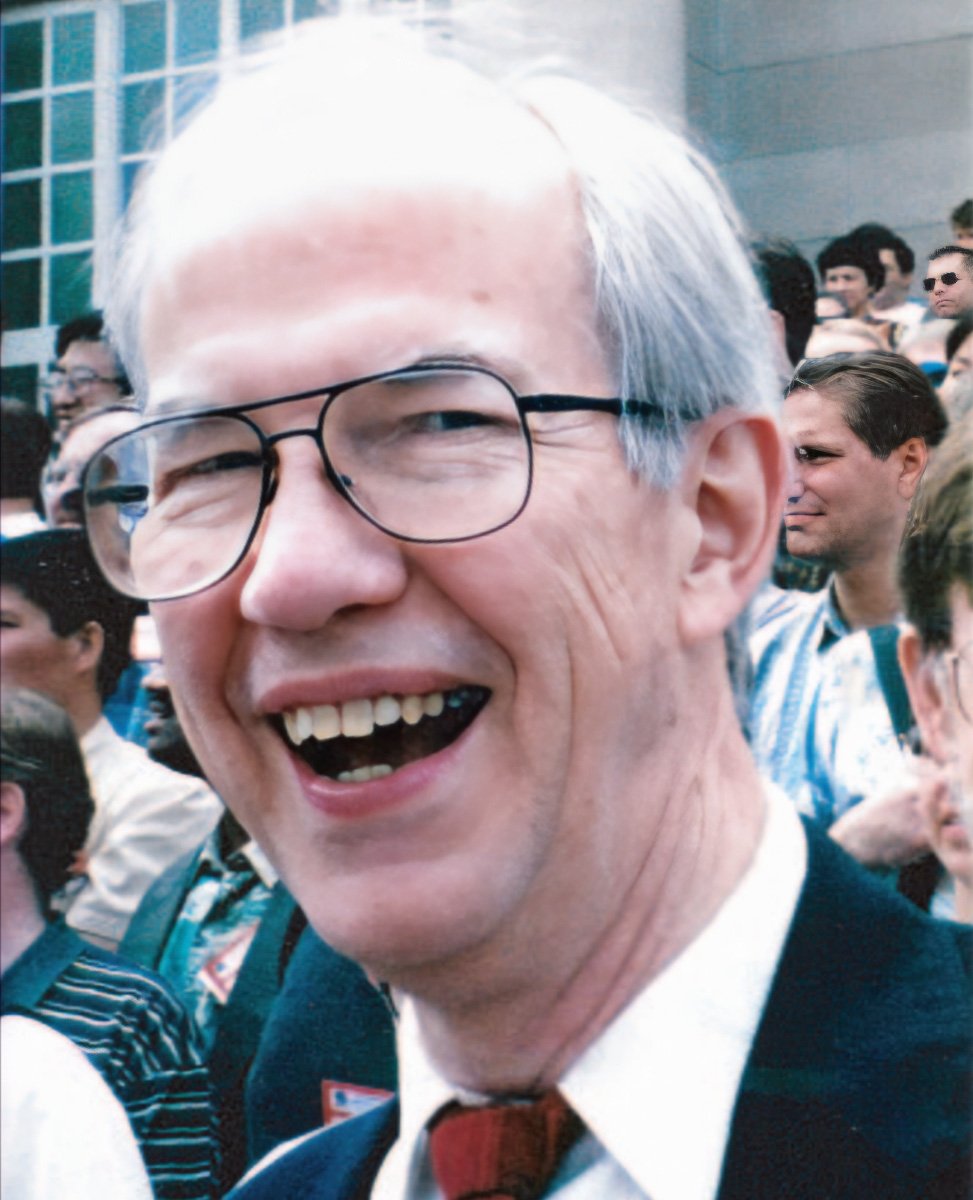
John M. Stewart
John Morrow Stewart was one of the founding figures of modern peptide synthesis, whose sixteen-year collaboration with Bruce Merrifield at The Rockefeller Institute helped transform peptide chemistry from a laborious art into a practical science.
Born October 31, 1924, on a farm in Guilford County, North Carolina, Stewart served in the U.S. Army during World War II in the European Theater before pursuing his education. He earned his undergraduate degree from Davidson College, then completed his master's and doctorate in organic chemistry at the University of Illinois at Urbana-Champaign in 1952, studying under the legendary Roger Adams. That same year, he joined the laboratory of D. Wayne Woolley at The Rockefeller Institute, where Merrifield had arrived three years earlier.
At Rockefeller, Stewart became one of Merrifield's earliest and most important collaborators. Together with Maurice Manning and graduate students Garland Marshall and Arnold Marglin, they validated solid-phase peptide synthesis through landmark syntheses of bradykinin, desamino-oxytocin, angiotensin, and insulin. Stewart's expertise in organic chemistry proved invaluable, Merrifield acknowledged his contributions in the historic 1963 JACS publication introducing the solid-phase method. Working alongside Merrifield and instrument shop head Nils Jernberg, Stewart helped design and build the first automated solid-phase peptide synthesizer; their joint publication appeared in Nature in July 1965. This machine reduced bradykinin synthesis time from 160 hours to just 32 hours and eventually enabled the 1969 synthesis of ribonuclease A. The original instrument now resides in the Smithsonian Institution's National Museum of American History.
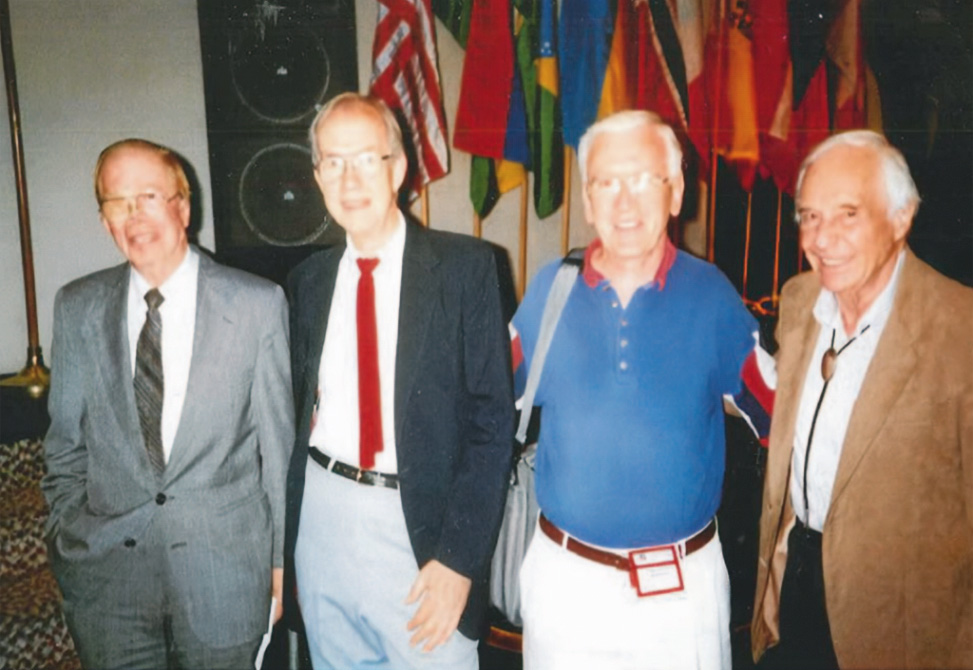
From left to right: Bruce Merrifield, John Stewart, Maurice Manning and Robert Schwyzer at the 1995 American Peptide Symposium after J. Stewart’s Pierce Award address
Stewart's impact extended beyond the laboratory through his textbook Solid Phase Peptide Synthesis, co-authored with Janis D. Young. His involvement with the Bay Area Peptide Club in San Francisco in 1965 led to the book's publication in 1969 by Pierce Chemical Company. The second edition, 1984, became the definitive practical guide to the methodology, cited in thousands of scientific papers and patents worldwide.
In 1968, two years after the untimely death of his beloved mentor Woolley, Stewart moved to Denver to join the University of Colorado School of Medicine. He continued his research on bradykinin, establishing CU as a world center for kinin research. In 1985, after twenty years of effort dating back to his Rockefeller days, Stewart and Raymond Vavrek finally achieved a breakthrough: the first competitive bradykinin antagonists. This discovery opened an entirely new field of peptide therapeutics. His longtime collaborator Dr. Lajos Gera, who worked with Stewart for 22 years, played a key role in developing second-generation orally active bradykinin antagonists. One of these, Breceptin, received FDA approval for a Phase I clinical trial as a potential cancer therapy—a prospect that excited Stewart until the very end.
Over his career, Stewart authored more than 400 peer-reviewed publications and held 23 patents. He received the American Peptide Society's Lifetime Achievement Award, the Pierce Award, in 1995 and was named a Pinnacle of Inventorship Lifetime Inductee by the University of Colorado. His enduring legacy at CU is commemorated through the John M. Stewart Chair in Peptide Research, which he founded and which has been held by subsequent leaders in the field including Robert Hodges.
Beyond science, Stewart had a lifelong passion for orchids. He collected and cultivated specimens from around the world and received several grants from the American Orchid Society for his research on these plants—his "second passion after peptide chemistry," as colleagues noted.
Stewart died on December 29, 2011, in Denver at age 87. Maurice Manning, writing in the European Peptide Society Newsletter, remembered him as possessing "a special joie de vivre" and "a warm friendship renewed on an annual basis at peptide meetings spanning almost five decades." He is remembered not only for his scientific achievements but as a beloved mentor who trained generations of peptide chemists, and as a witness to what Manning called "the Golden Age of Peptide Chemistry" in Woolley's laboratory at Rockefeller.