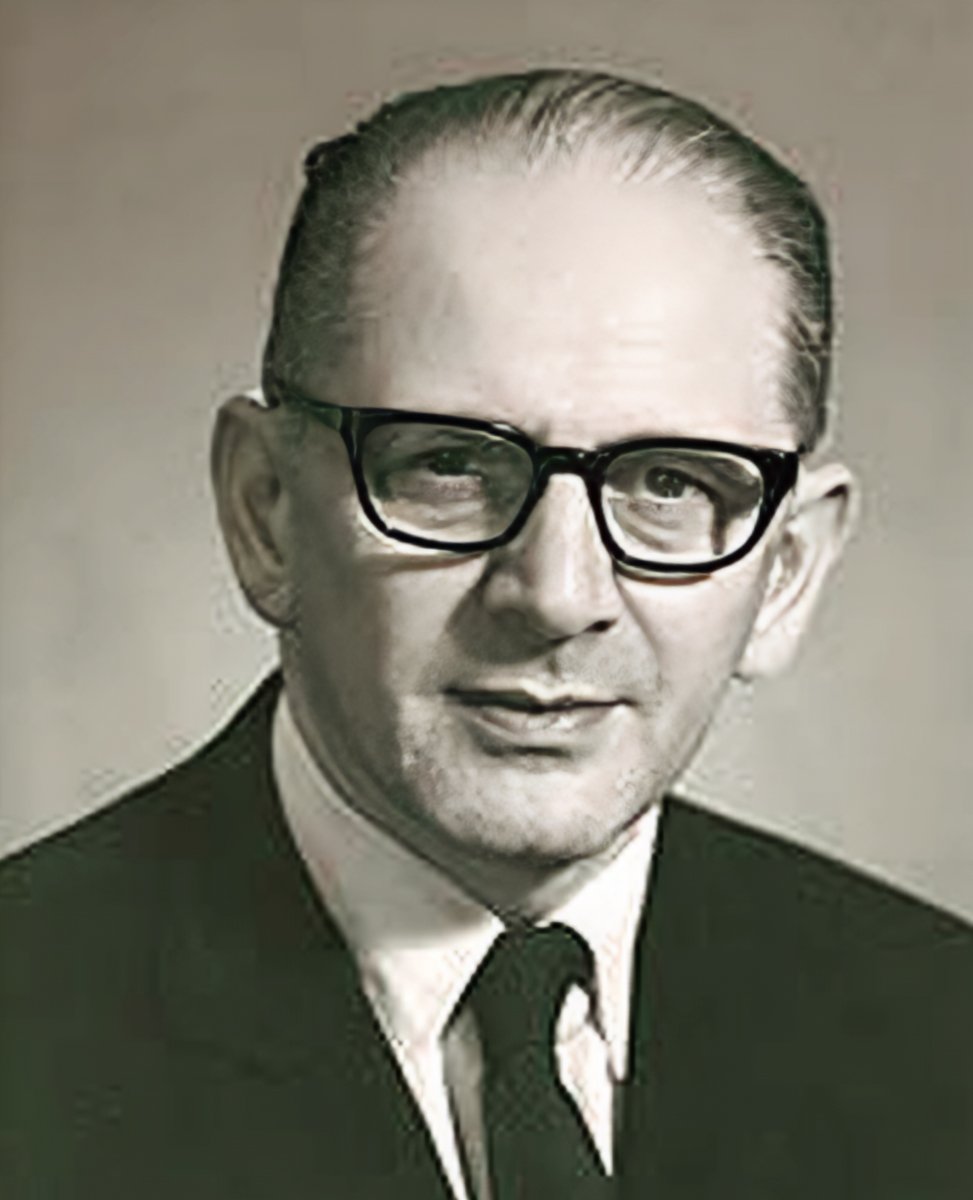
Miklos Bodanszky
Miklos Bodanszky was a peptide chemist whose introduction of the active ester method transformed the practical synthesis of peptides and enabled the first chemical synthesis of the gastrointestinal hormone secretin. His 1955 discovery that nitrophenyl esters could serve as activated intermediates for peptide bond formation provided an elegant alternative to existing methods and established a strategy of stepwise chain assembly that remains fundamental to the field.
Born in Budapest, Hungary, in 1915, Bodanszky received his doctorate from the Technical University of Budapest, where he subsequently became a lecturer in medicinal chemistry. His seminal contribution came while still working in Hungary: a 1955 paper in Nature titled "Synthesis of Peptides by Aminolysis of Nitrophenyl Esters" demonstrated that these activated compounds could form peptide bonds efficiently under mild conditions. The nitrophenyl ester method offered important advantages, including reduced racemization compared to other coupling approaches and the ability to prepare stable, crystalline intermediates that could be characterized before use.
The 1956 Hungarian uprising changed the course of Bodanszky's career. He left his homeland and came to the United States to join Vincent du Vigneaud in the Department of Biochemistry at Cornell University Medical College in New York City. Working with the Nobel laureate who had first synthesized oxytocin in 1954, Bodanszky applied his nitrophenyl ester method to demonstrate its utility for complex targets. Their 1959 synthesis of oxytocin, published in Nature and the Journal of the American Chemical Society, established that the active ester approach could successfully construct biologically active peptide hormones. They subsequently synthesized lysine-vasopressin and arginine-vasopressin using the same methodology.
Bodanszky then formed and led a peptide research group at the Squibb Institute for Medical Research, where he and his colleagues achieved the first synthesis of secretin, a 27-amino-acid gastrointestinal hormone. This work, published in a series of papers from 1966 to 1968 with Miguel Ondetti and other collaborators, represented the largest biologically active peptide hormone synthesized to that date and demonstrated both stepwise and fragment condensation approaches. The synthesis of secretin proved that the methods developed for smaller peptides could scale to increasingly complex targets.
In 1966, Bodanszky joined Case Western Reserve University in Cleveland, Ohio, where he served as the Charles Frederic Mabery Professor of Research in Chemistry until his retirement in 1983. During this period, he continued to refine peptide synthesis methodology, investigating side reactions, racemization mechanisms, and the role of catalysis in peptide bond formation. His research emphasized practical understanding of why reactions succeed or fail, knowledge essential for the synthesis of increasingly challenging targets.
Bodanszky was a prolific author whose books became essential references for peptide chemists. Peptide Synthesis, written with Miguel Ondetti in 1966, provided the first comprehensive treatment of the field. Principles of Peptide Synthesis (1984) and The Practice of Peptide Synthesis (1984), the latter written with his wife and frequent collaborator Agnes Bodanszky, offered both theoretical foundations and practical guidance. His final major work, The World of Peptides (1991), coauthored with Theodor Wieland, surveyed the entire landscape of peptide chemistry and its biological applications.
Bodanszky received the inaugural Alan E. Pierce Award from the American Peptide Society in 1977, recognition that his contributions had helped establish peptide synthesis as a rigorous discipline. He was elected a foreign member of the Hungarian Academy of Sciences and received honors from scientific societies in both the United States and abroad.
After retirement, Bodanszky returned to Princeton, New Jersey, where he continued contributing to the peptide chemistry literature. Agnes Bodanszky, his coworker and coauthor, died in 1989. Miklos Bodanszky died of heart failure on February 7, 2007, at the age of 91. He was survived by his daughter, Dr. Eva Bodanszky.