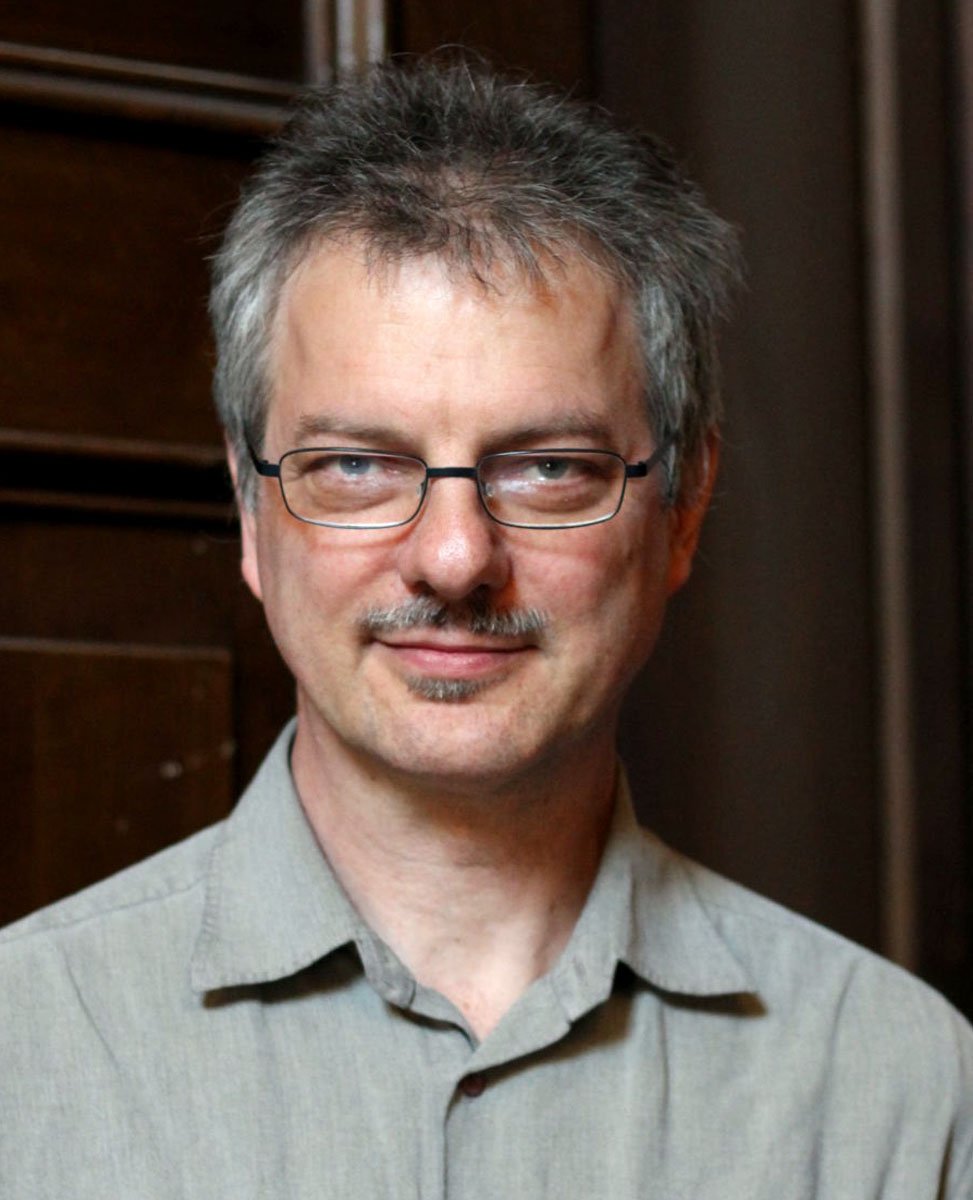
Morten P. Meldal
Professor Morten Meldal has dedicated his scientific career to developing novel methods, supports, instruments and chemical tools for peptide scientists worldwide. In 2022, he received the Nobel Prize in Chemistry, shared with Carolyn R. Bertozzi and K. Barry Sharpless, for the development of click chemistry and bioorthogonal chemistry. His landmark contribution, the copper-catalyzed azide-alkyne cycloaddition, now stands as the crown jewel of click chemistry.
Meldal headed synthesis at Carlsberg Laboratory in Copenhagen for twenty years, directing a Centre of Combinatorial Chemistry and Molecular Recognition. He now serves as Professor at the Department of Chemistry at the University of Copenhagen and heads the Center of Evolutionary Chemical Biology. He earned his Ph.D. in oligosaccharide chemistry from Technical University of Denmark and completed postdoctoral work with R.C. Sheppard at the MRC Laboratory of Molecular Biology in Cambridge. His research spans combinatorial chemistry, click chemistry, polymer chemistry, organic synthesis, artificial receptors and enzymes, nano-assays, biomolecular recognition and catalysis.
Meldal recognized the need for solid-phase supports suited to both peptide and peptide-organic chemistry. He invented several PEG-based resins, including PEGA, SPOCC, POEPOP and ULTRAMINE, each unique in its amphipathic character. These supports enabled on-resin analysis for chemical biology and protein chemistry applications.
At the 2001 American Peptide Symposium in San Diego, Meldal presented the copper-catalyzed "click" ligation of acetylenes and azides, discovered independently and concurrently with Sharpless and Valery V. Fokin. This CuAAC reaction now finds widespread use in peptide and protein conjugations, polymer science, materials development, pharmaceutical research and DNA mapping. His group demonstrated its complete orthogonality to most other chemistries.
The PEG-based resins allowed Meldal to merge organic and peptide chemistry on solid support. He developed novel methods based on N-acyl iminium ion generation, involving backbone or side-chain amides to yield complex heterocyclic systems from peptides through intramolecular cascade reactions with C-, N-, O- and S-nucleophiles. He also created live cell on-bead assays using biocompatible PEG-resins and showed that GPCRs can be screened using fluorescent reporter gene assays in split-mix format.
Pioneering the organozyme concept, Meldal created peptide-organic molecules that fold around transition metals and chelate them through phosphines, carbenes and heterocycles, acting as enzyme-like chiral catalysts on solid support. He also developed peptide-based cage-like receptors capable of recognizing sugars in water.
Meldal pioneered numerous technological developments for peptide synthesis: a carousel amino acid delivery system, the first real-time on-resin spectrophotometric coupling monitor, the first multiple column synthesizer and instrumentation for split-mix library assembly. His fluorescence-based screening methods for protease specificity led to combinatorial libraries of phosphinic acid peptides as transition state analogs, yielding nanomolar selective inhibitors for metalloproteases.