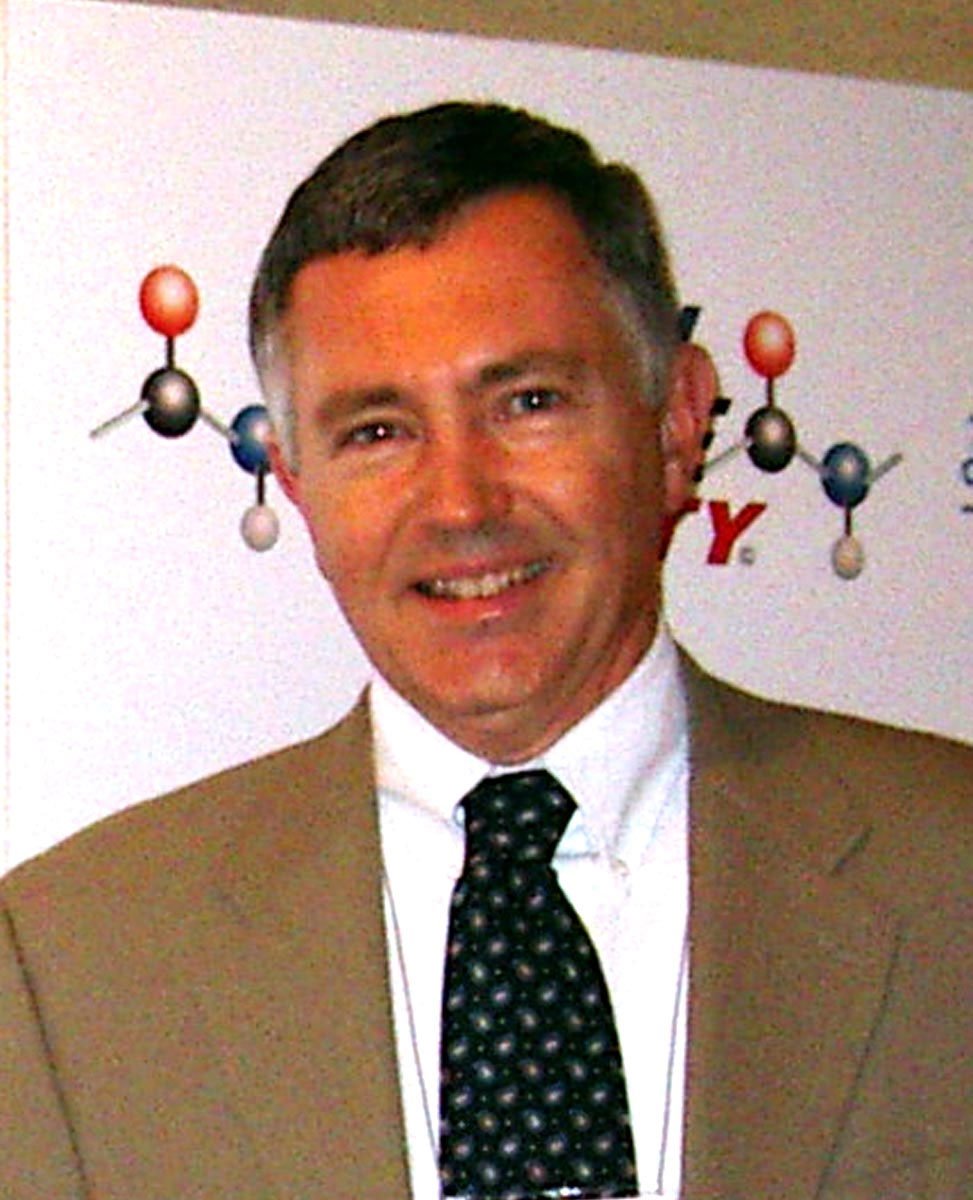
Roger M. Freidinger
Dr. Roger M. Freidinger developed conformationally constrained peptide analogs that became foundational tools in medicinal chemistry. His lactam-bridged dipeptides, now universally known as Freidinger lactams, provided a general strategy for stabilizing β-turn and γ-turn structures in bioactive peptides. At Merck he helped pioneer the design of nonpeptide ligands for peptide hormone receptors, work that produced orally active cholecystokinin antagonists and influenced drug discovery across multiple therapeutic areas.
Freidinger earned his Ph.D. at the Massachusetts Institute of Technology. In 1975 he joined Merck Research Laboratories in West Point, Pennsylvania, where he spent his entire 30-year industrial career, rising to Executive Director of Medicinal Chemistry before retiring in 2005.
In the early 1980s Freidinger published a series of γ-, δ- and ε-lactam bridged dipeptides designed to constrain peptide conformations. The concept originated from studies of C3-symmetric cyclic hexapeptides being evaluated as potential feed efficiency enhancers in ruminants. By tethering the backbone nitrogen to the side chain of an adjacent residue, these lactams locked the peptide into defined turn geometries. The strategy proved widely applicable and Freidinger lactams have since appeared in the design of ACE inhibitors, growth hormone secretagogues, neurokinin antagonists and numerous other compound classes.
Freidinger's group applied conformational analysis to optimize analogs of somatostatin and luteinizing hormone-releasing hormone and contributed to the development of potent renin inhibitors. A major achievement came with the design of nonpeptide cholecystokinin antagonists. Starting from asperlicin, a benzodiazepine-like natural product discovered by receptor-based screening at Merck, the team recognized structural relationships to diazepam and D-tryptophan and designed simplified indolylmethyl benzodiazepines that matched asperlicin's potency. Optimization produced devazepide, which bound the CCK-A receptor with subnanomolar affinity and greater than 1000-fold selectivity over CCK-B. This work demonstrated for the first time that orally active nonpeptide antagonists could be designed for peptide hormone receptors, opening a new paradigm in medicinal chemistry.
Freidinger also contributed to the development of nonpeptide oxytocin antagonists, bradykinin B1 receptor antagonists and growth hormone secretagogues. His research produced numerous development candidates across gastrointestinal, cardiovascular, central nervous system, oncology, diabetes and pain indications.
He served as President of the American Peptide Society from 2003 to 2005. His honors include the Vincent du Vigneaud Award in 1986. Over his career he authored 174 scientific publications, was named inventor on 69 patents and delivered 92 invited lectures.