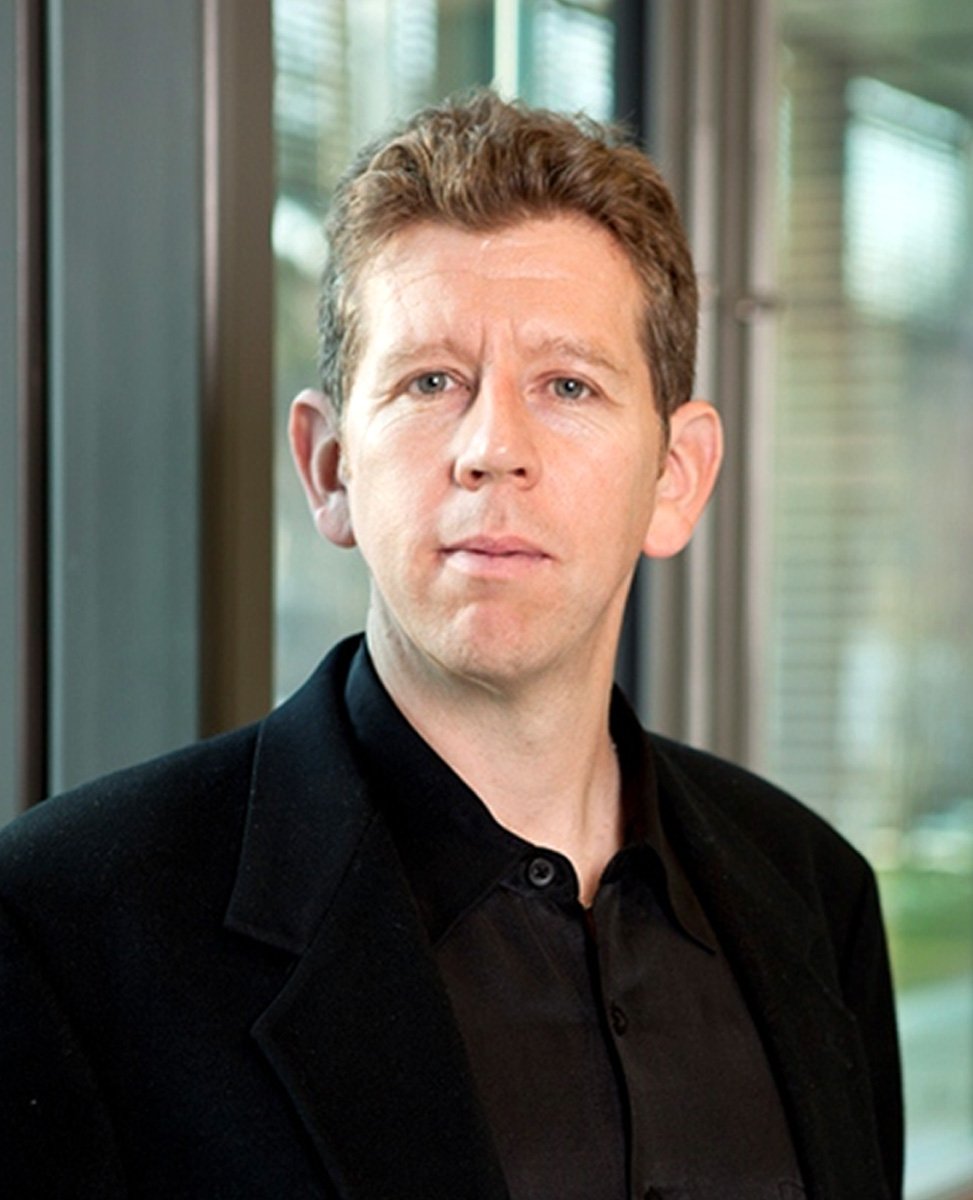
Thomas W. Muir
Professor Thomas W. Muir pioneered the field of protein semisynthesis, developing methods that enable chemists to manipulate protein covalent structure with unprecedented precision. His invention of expressed protein ligation, or EPL, bridged synthetic peptide chemistry and recombinant protein expression, opening new frontiers in chemical biology.
Muir earned his Ph.D. in organic chemistry from the University of Edinburgh in 1993. After postdoctoral studies at Scripps Research, he joined The Rockefeller University in 1996, where he became the Richard E. Salomon Family Professor and directed the Pels Family Center for Biochemistry and Structural Biology. In 2010 he moved to Princeton University as the Van Zandt Williams Jr. Class of 1965 Professor of Chemistry.
In 1998, Muir introduced expressed protein ligation, which combines native chemical ligation with intein-mediated protein splicing. This technology allows researchers to attach synthetic peptide fragments containing unnatural amino acids, posttranslational modifications or biophysical probes to recombinant proteins. The method has been applied to enzymes, ion channels, transcription factors, transmembrane receptors and antibodies.
Muir applied these tools to chromatin biology, generating "designer" histones bearing site-specific modifications. His group produced the first semisynthetic ubiquitylated histone H2B, providing direct biochemical evidence that ubiquitylation stimulates methylation of histone H3 at lysine 79. This landmark study demonstrated crosstalk between posttranslational modifications on different histones.
His laboratory also developed split intein technologies for protein engineering inside living cells, enabling temporal control of protein function through small molecule-dependent trans-splicing.
Muir has received numerous honors including the Irving Sigal Young Investigator Award, the Leonidas Zervas Award, the Blavatnik Award for Young Scientists, and the Emil Thomas Kaiser Award from the Protein Society.