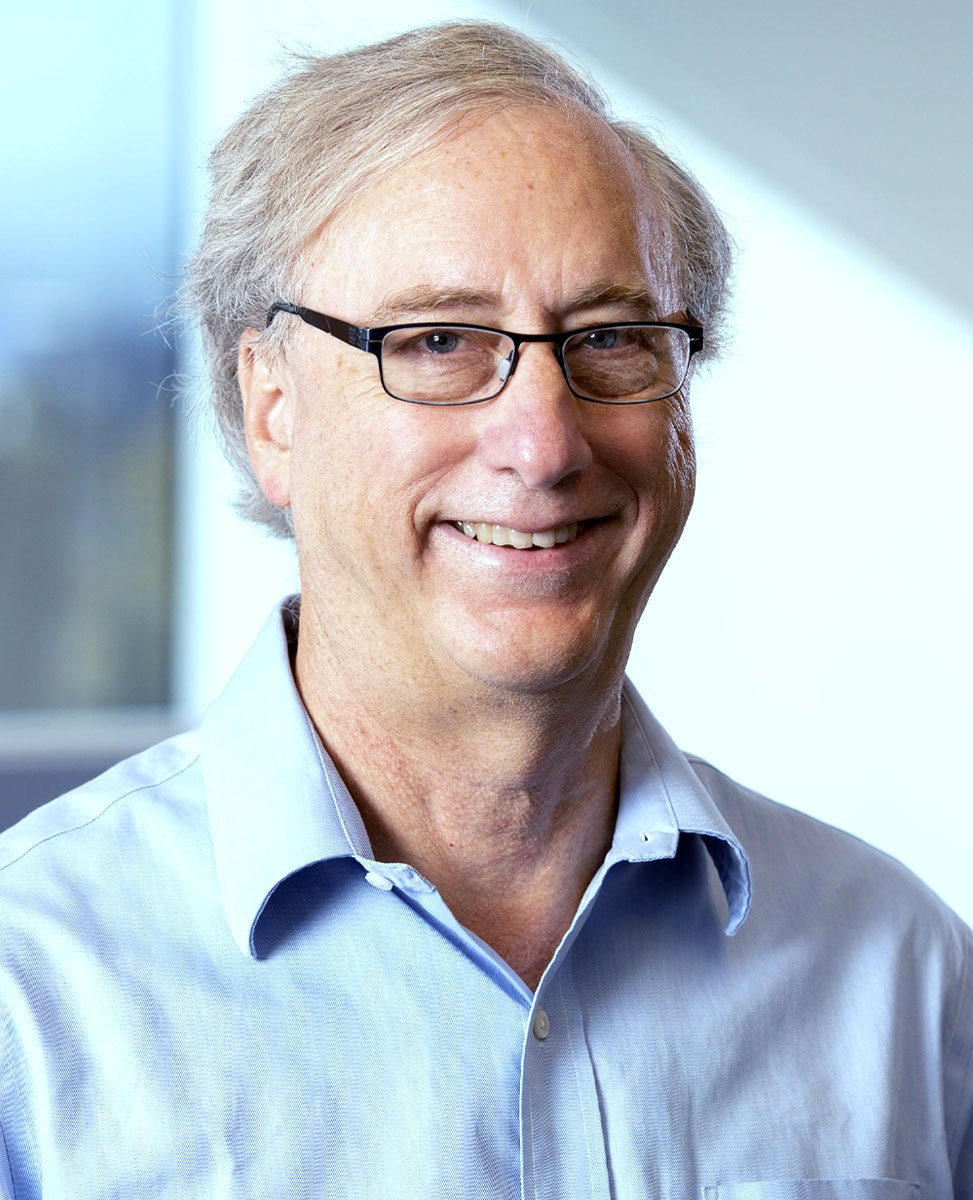
William F. DeGrado
William F. DeGrado is the scientist who taught proteins to be designed from scratch. By coining the term "de novo protein design" and demonstrating that functional proteins could be built from first principles rather than modified from natural sequences, he opened an entirely new field that continues to transform chemistry, biology, and medicine.
DeGrado was born September 12, 1955, in Exeter, California. His path to science was unconventional. After high school, he worked in a coat rack factory, an experience he later credited with motivating him to further his education. He attended colleges in the Chicago suburbs while running a lawn-mowing service to pay his way. He earned his B.A. in chemistry from Kalamazoo College in 1978, then completed his Ph.D. in organic chemistry at the University of Chicago in 1981 under the mentorship of Emil T. Kaiser, a pioneering figure in peptide chemistry.
In an unusual move, DeGrado joined DuPont Central Research immediately after his doctorate, bypassing the traditional postdoctoral fellowship. This decision proved fortuitous. At DuPont, he had the freedom and resources to pursue ambitious questions about protein structure and function. It was there, in the 1980s, that he began developing the conceptual and experimental framework for designing proteins from scratch.
The core insight was deceptively simple: if we truly understand the physical and chemical principles that govern protein folding, we should be able to design proteins that nature never made. Between 1988 and 1993, DeGrado and his colleagues published seven landmark papers in Science that collectively launched the field of de novo design. These included synthetic amphiphilic peptides that formed ion channels, the first helical proteins designed from first principles, DNA-binding peptides based on leucine zipper motifs, and thermodynamic scales for helix-forming tendencies. As one colleague later wrote, these papers were "audacious in design, stunning in simplicity, and profound in their impact."
DeGrado remained at DuPont through 1996, eventually becoming senior director for small molecule therapeutics when the company merged with Merck's pharmaceutical division. In 1996 he transitioned to academia, joining the University of Pennsylvania as a professor in the Department of Biochemistry and Biophysics, with an adjunct appointment in Chemistry. He moved to the University of California, San Francisco in 2011, where he currently holds the Toby Herfindal Presidential Professor of Entrepreneurship and Innovation in the Department of Pharmaceutical Chemistry.
His research has yielded practical therapeutics as well as fundamental insights. DeGrado contributed significantly to the development of Brilacidin, a defensin-mimetic drug candidate that has advanced through Phase II clinical trials for multiple indications including bacterial infections and COVID-19. His work on small molecule antagonists of integrins, conducted with Dean Sheppard, formed the scientific basis for Pliant Therapeutics, a company he co-founded that is conducting clinical trials on idiopathic pulmonary fibrosis. The de novo designed protein alpha3D, created using computational sidechain repacking algorithms, has been used by the company Arcellx as a starting point for chimeric antigen receptors showing promising results against multiple myeloma.
DeGrado's honors reflect the breadth of his influence across chemistry, biology, and protein science. He received the du Vigneaud Award for Young Investigators in 1988, the Eli Lilly Award in Biological Chemistry in 1992, the American Peptide Society's Merrifield Award in 2003, the Ralph F. Hirschmann Award in Peptide Chemistry in 2008, the Protein Society's Stein and Moore Award in 2015, and the Murray Goodman Memorial Prize in 2017. He was elected to the American Academy of Arts and Sciences in 1998, the National Academy of Sciences in 1999, and the National Academy of Inventors in 2014. He has served as President of the Protein Society.
With more than 400 publications and 25 patents, DeGrado has trained over 50 Ph.D. students and postdoctoral fellows, many of whom have gone on to distinguished careers. His laboratory at UCSF continues to push the boundaries of what designed proteins can do, from metalloproteins that mimic enzyme catalysis to transmembrane channels that shuttle electrons across membranes. The field he helped create, once considered impossible, now underpins efforts ranging from vaccine design to cancer immunotherapy.