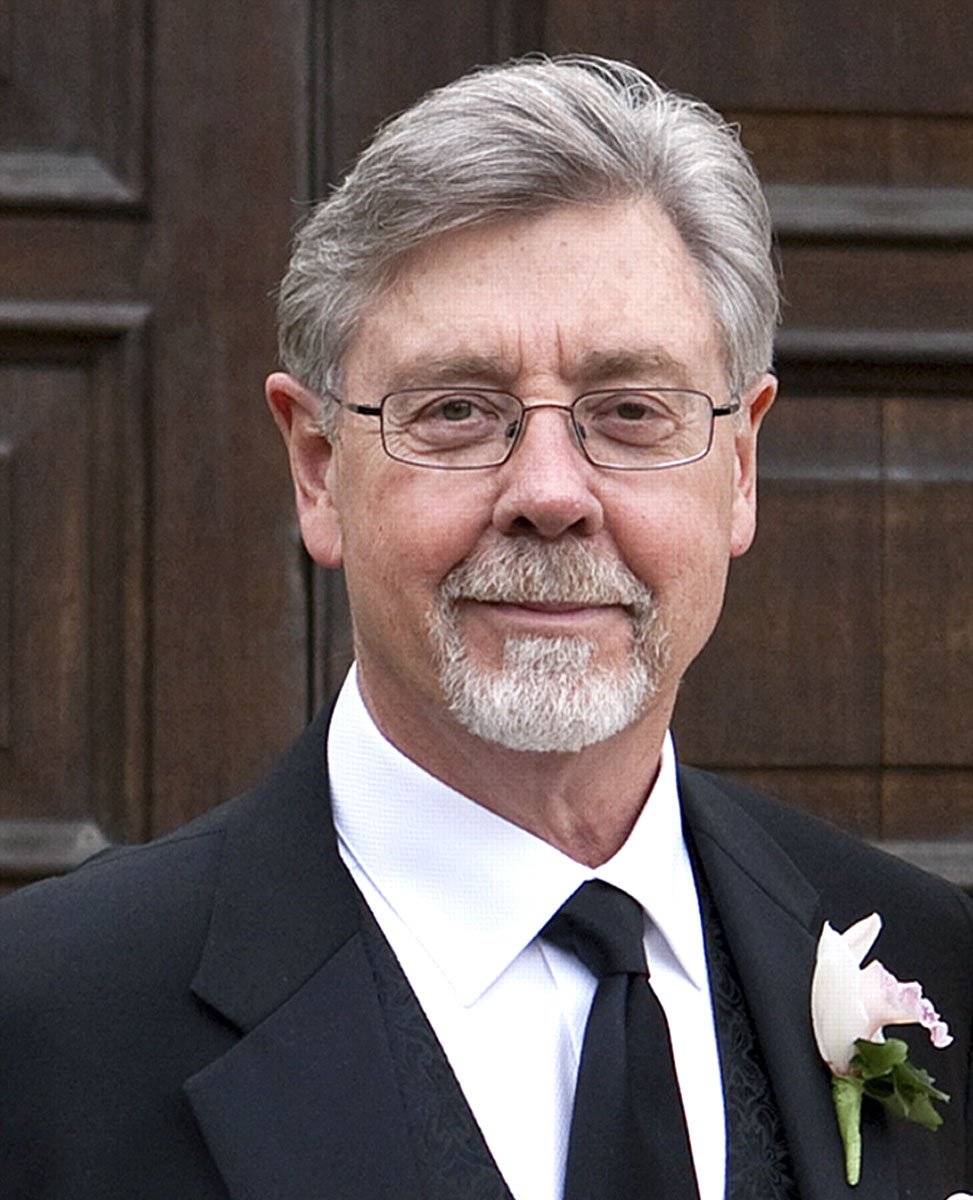
Wylie W. Vale
Dr. Wylie W. Vale was a world-renowned neuroendocrinologist who elucidated the molecular basis of the stress response. His isolation and characterization of corticotropin-releasing factor in 1981 solved one of the most challenging problems in endocrinology, revealing the brain hormone that serves as the on-off switch for the body's stress response. His subsequent discoveries of related peptides, their receptors and signaling mechanisms opened new possibilities for treating anxiety, depression, irritable bowel syndrome and drug abuse.
Vale was born in Houston, Texas, on July 3, 1941. He earned a B.A. in biology from Rice University in 1964 and a Ph.D. in physiology and biochemistry from Baylor College of Medicine in 1968, where he trained with Roger Guillemin. As a graduate student, Vale contributed to the isolation and characterization of thyrotropin-releasing hormone, establishing bioassays essential for detecting hypothalamic releasing factor activity. In early experiments, he was himself injected with TRH under medical supervision to determine its physiological effects, providing some of the first evidence that hypothalamic hormones exert central nervous system actions.
Vale remained with Guillemin as a postdoctoral fellow and relocated with the laboratory to the Salk Institute in 1970 to establish the Laboratories for Neuroendocrinology. There he contributed to the discovery of gonadotropin-releasing hormone and somatostatin, work that led to Guillemin sharing the Nobel Prize in Physiology or Medicine in 1977.
In 1978 Vale, together with Jean and Catherine Rivier and Marvin Brown, established a separate department at the Salk Institute, the Clayton Foundation Laboratories for Peptide Biology. Their primary objective was to isolate corticotropin-releasing factor, the long-sought hypothalamic peptide that triggers the pituitary-adrenal stress response. Working from hydrophobic fractions that others had dismissed as unlikely to contain CRF, they pursued the elusive peptide with extraordinary perseverance. In 1981 the Vale team presented the primary structure of the 41-amino-acid CRF peptide in Science, ending decades of searching by investigators worldwide.
The discovery of CRF proved transformative for understanding how the brain controls hormonal, immune and behavioral responses to stress. Vale and his collaborators subsequently discovered three CRF-related peptides called urocortins, two distinct CRF receptors and a CRF-binding protein. They demonstrated that this family of peptides regulates not only the hypothalamic-pituitary-adrenal axis but also cardiovascular function, glucose metabolism and gastrointestinal motility. In 1982 Vale's group also characterized growth hormone-releasing hormone, the brain peptide controlling body growth.
In separate work, Vale's laboratory made seminal contributions to the transforming growth factor-β field. In 1985 his group was among several to isolate inhibin, a heterodimeric inhibitor of follicle-stimulating hormone secretion. They subsequently characterized activin, a related stimulator of FSH release, and cloned the activin type II receptor, the first signaling receptor identified for the TGF-β superfamily. This receptor proved to function as a serine/threonine kinase, establishing a paradigm for the entire family. Collaborating with Senyon Choe's group at the Salk Institute, Vale determined the crystal structure of the activin receptor extracellular domain, the first such structure for receptors of this class.
Vale cofounded Neurocrine Biosciences, a public biotechnology company developing therapeutics based on his identification of stress-related peptides and receptors. His discoveries also stimulated companies worldwide to develop CRF receptor antagonists, leading to clinical trials for anxiety and depression. His work on activin and inhibin contributed to the founding of Acceleron Pharma, with applications for anemia and osteoporosis.
He was promoted to Professor at the Salk Institute in 1980 and named the Helen McLoraine Chair in Molecular Neurobiology in 2003. He discovered more than a dozen novel peptide hormones and receptors and coauthored more than 1,000 peer-reviewed papers, ranking among the most cited authors in the life sciences.
Vale was elected to the National Academy of Sciences, the Institute of Medicine and the American Academy of Arts and Sciences. He served as President of the Endocrine Society and President of the International Society of Endocrinology. His honors included the Vincent du Vigneaud Award in 1992 and awards from the Endocrine Society and the Karolinska Institute.
Vale died on January 3, 2012, while on vacation in Hana, Hawaii. He was survived by his wife Betty, daughters Elizabeth and Susannah, and granddaughter Celeste.