Global Peptide Groups - Wuest Group
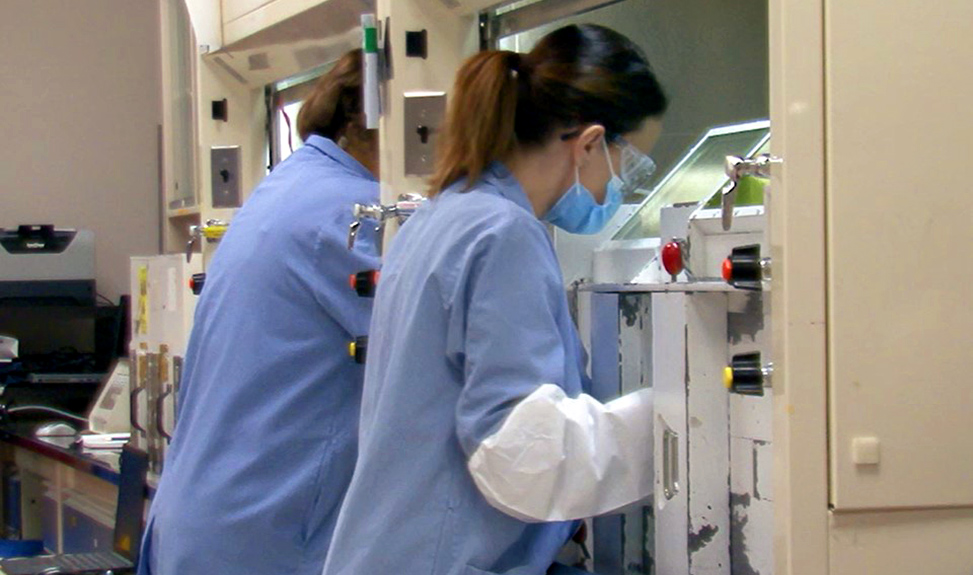
At the Cross Cancer Institute in Edmonton, Frank Wuest and his team are doing something deceptively simple to describe: they make molecules that find cancer, and in many cases, treat it too. The Wuest Research Group sits at the crossroads of radiochemistry, organic chemistry, and molecular imaging, designing probes that can be tracked through the body using positron emission tomography, PET. The real goal, always, is to get these tools out of the lab and into the clinic, where they can make a difference for real patients. What makes the group's work especially compelling is its range, from synthesizing new radiotracers to chasing down novel cancer biomarkers to helping build Alberta's capacity for medical isotope production. Peptides are a thread that runs through much of it, used as targeting vectors that deliver imaging agents or therapeutic payloads with a precision that small molecules often can't match. The group has been at this for a long time, and it shows.
Frank trained in chemistry at Dresden University of Technology, earning his Ph.D. in 1999, and then did a postdoctoral fellowship with Dr. Michael Welch at Washington University in St. Louis, one of the foundational figures in radiopharmaceutical sciences. That early immersion clearly stuck. After leading the PET-Tracer Division at the Research Centre Dresden-Rossendorf, Frank moved to Edmonton in 2008 to take up the Dianne and Irving Kipnes Chair in Radiopharmaceutical Sciences, and has been building the program there ever since. He's now Chair of the Department of Oncology, a co-lead of the Alberta Radiopharmaceutical Collaboration (ARC), and the author of more than 200 peer-reviewed papers. Somewhere in between, he's also been a guest professor at Beijing Normal University and holds adjunct appointments in both Chemistry and Pharmacy at Alberta. He keeps a busy plate.
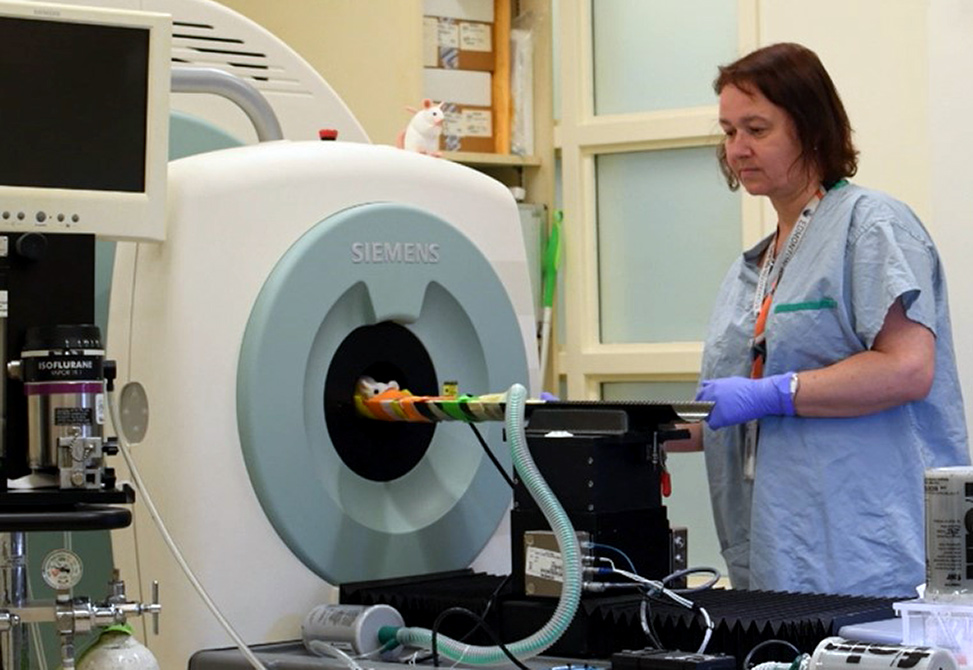
Anchoring the operation alongside Frank is Dr. Melinda Wuest, who manages the Preclinical PET Imaging Facility at the Cross Cancer Institute. Her path to Edmonton closely mirrors Frank's, she also trained in Dresden and did a postdoctoral fellowship at Washington University in St. Louis, which gives the group an unusual depth of shared radiopharmaceutical expertise at the senior level. Dr. Susan Pike, a Professional Service Officer with a Ph.D. from Helmholtz-Zentrum Dresden-Rossendorf, rounds out the core team with a particular focus on clinical translation. And then there is Cody Bergman, who joined in 2012 as a peptide synthesis technician and has since grown into a linchpin of the group, now touching everything from organic synthesis to radiochemistry to training the next wave of students. That kind of institutional continuity matters in a lab doing work this technically demanding.
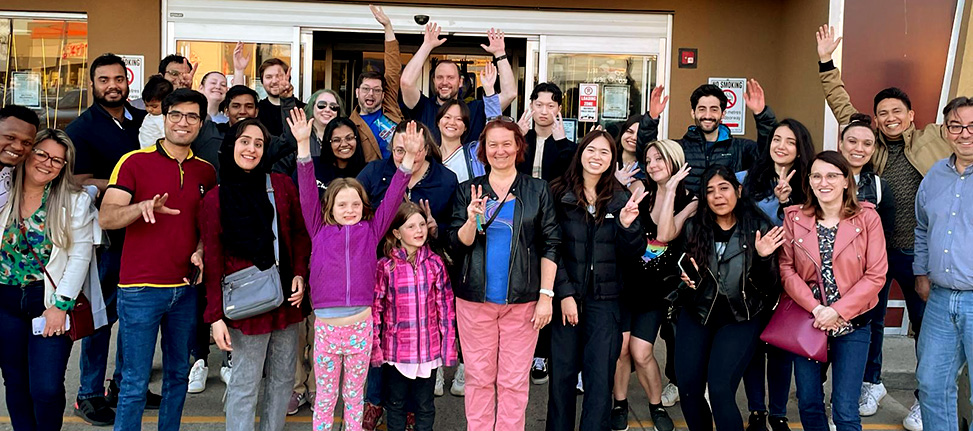
The broader team is a genuinely international crew, and the geographic spread tells its own story. Current postdoctoral fellows include Marco Verona, University of Padua, Italy, Miguel Herrera Rueda, Mexico, and Yasniel Babi Araujo, who completed his Ph.D. at the University of São Paulo after training in radiochemistry in Havana, Cuba. Jenilee Woodfield, who did all three of her degrees at the University of Alberta, brings a radiochemist's perspective to a wide portfolio, from PET agents targeting USP14 in multiple myeloma to ketone metabolism imaging and autotaxin tracers. Among the Ph.D. students, Pawani Perera, University of Kelaniya, Sri Lanka, is working on peptide radiotracers for PD-L1 and oxytocin receptors in breast cancer, Felix Francis, Mahatma Gandhi University, India, is developing palladium-mediated cysteine arylation methods for site-selective radiolabeling; and Toktam Shirazian, Tehran, Iran, is synthesizing small molecule inhibitors of Heat Shock Protein 90. David Yang, a master's student from Xi'an, China, is focused on the effects of epigenetic drugs on neuroendocrine tumors. The group has also mentored dozens of former students and postdocs who have gone on to positions in academia and industry around the world, an alumni network that reflects how long and consistently the Wuest Lab has been producing researchers.
The simplest way to describe the Wuest Group's research agenda is also the most honest: they want to find cancer early, characterize it precisely, and treat it effectively, ideally with the same molecule doing multiple jobs. That idea, commonly called theranostics, sits at the center of much of the group's output. But the way they get there involves a surprisingly wide toolkit, and some genuine chemistry firsts along the way.
Radiolabeled Peptides and PET Imaging:
Much of the group's peptide work centers on designing radiolabeled tracers that bind selectively to receptors overexpressed in cancers such as breast and prostate. Recent work has explored oxytocin receptors as a novel biomarker in breast cancer and PD-L1 as a target for patient selection in immunotherapy, both using peptide-based PET radiotracers. The group was also among the first to apply click chemistry to peptide radiolabeling with fluorine-18, an approach that removes a lot of the laborious synthesis involved in traditional tracer development.
Homegrown Isotopes:
One of the more distinctive aspects of the Edmonton operation is the group's investment in producing medical isotopes locally using cyclotron facilities. The goal is matched pairs, one isotope for imaging, one for therapy, and recent work has focused on lanthanum-133/135 and lead-203/212 as particularly promising combinations. A 2022 paper in the Journal of Nuclear Medicine reported the first-ever in vivo imaging with cyclotron-produced lanthanum-133, a milestone for the field. This kind of local production capacity matters: it keeps Canada from being dependent on external suppliers for research-critical isotopes, and it shortens the road from discovery to patient.
Antibodies, Auger Electrons, and Glycan Engineering:
The group doesn't limit itself to small molecules and peptides. They're also developing glycan remodeling methods to attach radioactive isotopes to antibodies with unusual precision, opening up new possibilities for targeted imaging and therapy. And for situations where maximum localization matters, they're exploring Auger electron-emitting radionuclides, a strategy where radiation is delivered essentially at the level of individual cells and DNA strands, with the intent of sparing surrounding healthy tissue.
The Alberta Radiopharmaceutical Collaboration:
Frank is the scientific lead of the Alberta Radiopharmaceutical Collaboration, ARC, a province-wide initiative focused on accelerating the safe clinical introduction of new radiopharmaceuticals. The goal is to close the gap between promising laboratory results and actual patient care, a gap the Wuest Group has been working to close, one tracer at a time, for nearly two decades.
Selected Publications - Trainees underlined
Perera, M. P. J.; Pike, S.; Yuen, R.; Bergman, C.; Woodfield, J.; Wuest, M.; Wuest, F. 68Ga-labeled peptides targeting oxytocin receptor in breast cancer using linchpin chemistry for tandem peptide cyclization and radiometal chelator incorporation. Bioconjug. Chem. 2025, 36, 2665–2677.
Rueda, M. H.; Boateng, M. A.; Wuest, M.; West, F. G.; Wuest, F. Synthesis and evaluation of fluorinated peptidomimetics enabling the development of 18F-labeled radioligands targeting muscarinic acetylcholine receptor subtype M3. ChemMedChem 2025, 20, e202500572.
Yuen, R.; Woodfield, J. D.; Verona, M.; Bergman, C. N.; Leier, S.; Wuest, M.; Wuest, F. Optimized radiosynthesis of the ketone body radioligand (3S)-4-[18F]fluoro-3-hydroxybutyric acid ([18F]FBHB) for PET imaging. Org. Lett. 2025, 27, 6901–6905.
Sarrami, N.; Nelson, B.; Leier, S.; Wilson, J.; Chan, C.; Means, J.; Komal, T.; Ailles, L.; Wuest, M.; Schultz, M.; Lavasanifar, A.; Reilly, R.; Wuest, F. SPECT/CT imaging of EGFR-positive head and neck squamous cell carcinoma patient-derived xenografts with 203Pb-PSC-panitumumab in NRG mice. EJNMMI Radiopharm. Chem. 2024, 9, 79.
Francis, F.; Wuest, M.; Woodfield, J.; Wuest, F. Palladium-mediated S-arylation of cysteine residues with 4-[18F]fluoroiodobenzene ([18F]FIB). Bioconjug. Chem. 2024, 35, 232–244.
Nelson, B. J. B.; Ferguson, S.; Wuest, M.; Wilson, J.; Duke, M. J.; Richter, S.; Andersson, J. D.; Jans, H.-S.; Juengling, F.; Wuest, F. First in vivo and phantom imaging of cyclotron-produced 133La as a theragnostic pair for 225Ac and 135La. J. Nucl. Med. 2022, 63, 584–590.
A Conversation with Professor Frank Wuest
APS: Your lab has become internationally recognized for radiopharmaceutical development, particularly PET imaging agents for cancer. What drew you to this intersection of chemistry and medicine?
Wuest: In my early training as a chemist in Germany, what captivated me was the idea that molecules could become "metabolic spies," slipping into the body to reveal what's happening inside tumors at a molecular level. Radiopharmaceuticals offer this unique window: you design a chemical key that fits a biological lock, attach a radioactive reporter, and suddenly you can visualize disease processes noninvasively. The translational speed is remarkable compared to traditional drug development. Because we work with tracer doses that have no pharmacological effect, we can move from bench to bedside in months rather than years. That immediacy, seeing your chemistry directly improve patient care, has kept me in this field for over two decades.
APS: You recently introduced linchpin chemistry for peptide radiopharmaceuticals. What problem does this approach solve?
Wuest: Many peptide-based radiotracers require two modifications: cyclization to stabilize the scaffold and chelator attachment to capture the radiometal. Conventionally, these are separate steps, each requiring protection-deprotection sequences and purification. Our linchpin reagents accomplish both transformations simultaneously. The bifunctional linchpin reacts with two cysteine residues, forming a stable macrocycle while installing the metal-binding moiety in a single operation. Beyond synthetic efficiency, the approach lets us explore how different ring geometries affect receptor binding, metabolic stability, and pharmacokinetics. We are essentially building a modular platform where we can tune each parameter independently.
APS: Your oxytocin receptor work targets a relatively unexplored biomarker. Why focus there?
Wuest: Breast cancer imaging has excellent tools for estrogen receptor and HER2, but many tumors lack these markers entirely. The oxytocin receptor is overexpressed across multiple breast cancer subtypes, yet it remains underexplored as an imaging target. We found elevated OTR mRNA in over 95% of breast cancer patient samples compared to healthy tissue. That's a significant opportunity. Our 68Ga-labeled oxytocin peptides demonstrated specific tumor uptake in preclinical models, with blocking studies confirming receptor-mediated binding. The field needs more options, and OTR represents a promising alternative for patients who currently lack suitable imaging agents.
APS: What surprised you most in developing these tracers?
Wuest: The disconnect between in vitro metrics and in vivo performance. Our LP2-oxytocin peptide degraded rapidly in plasma, with only 5% intact at 60 minutes, yet it achieved tumor uptake equivalent to our most stable compound. This suggests that initial delivery during the first minutes of biodistribution matters more than prolonged circulation for peptide radiotracers. It's a reminder that traditional stability assays don't always predict imaging success. We need models that better capture the kinetics of target engagement in complex biological environments.
APS: The Alberta Radiopharmaceutical Collaboration you lead has enrolled thousands of patients in clinical trials. How did that infrastructure develop?
Wuest: It grew organically from the imaging biomarkers program we built at the Cross Cancer Institute starting in 2008. The Kipnes Chair provided the foundation to establish world-class radiochemistry capabilities, and we cultivated partnerships across chemistry, biology, and clinical oncology. By 2019, Alberta Health Services and the University of Alberta formalized the Alberta Radiopharmaceutical Collaboration to coordinate these capabilities provincially. We've now supported over 8,000 cancer patients in investigator-initiated trials and dozens of industry-sponsored studies. The key was integrating discovery science with clinical translation from the beginning, not treating them as separate enterprises.
APS: Many APS members work on peptide therapeutics but may be less familiar with radiopharmaceuticals. What technical considerations differ?
Wuest: Three things stand out. First, radiochemistry imposes strict time constraints. Gallium-68 has a 68-minute half-life, so your synthesis, purification, and quality control must happen within that window, typically under an hour total. That demands robust, reproducible chemistry with minimal optimization. Second, the chelator-radiometal combination profoundly affects biodistribution. We found that gallium incorporation preserved or enhanced receptor binding compared to lutetium or indium with the same peptide scaffold. Third, the interplay between lipophilicity, charge, and clearance route determines background signal. Small changes in linker structure shifted our logD values enough to alter renal versus hepatobiliary clearance. Peptide medicinal chemists understand structure-activity relationships; for radiotracers, you also need structure-pharmacokinetic relationships.
APS: What advice would you give someone designing their first peptide radiotracer?
Wuest: Start with the biology. Identify a target with validated overexpression in disease tissue, ideally with existing binding data for your peptide scaffold. Then think backwards from the clinic: what isotope matches your imaging timeframe, what chelator provides stable complexation under physiological conditions, and what modifications preserve binding while enabling radiolabeling. Don't neglect metabolic stability studies early, but recognize that in vivo behavior may surprise you. Finally, build collaborations with nuclear medicine physicians and radiochemists from the outset. This field requires integration across disciplines that rarely interact in traditional peptide research.
APS: You have described radiopharmaceuticals as enabling precision medicine. Where do you see the field heading?
Wuest: Theranostics is the immediate frontier: pairing diagnostic imaging isotopes with therapeutic radionuclides on the same targeting scaffold. You image with 68Ga to identify patients whose tumors express your target, then treat with 177Lu or an alpha emitter using the same peptide. PSMA-targeted agents for prostate cancer have validated this paradigm clinically. We are now building alpha- and Auger-electron therapy programs to extend this approach to other tumor types. Longer term, I see radiopharmaceuticals integrating with other precision medicine tools: liquid biopsies for patient selection, artificial intelligence for image analysis, and combination regimens where imaging guides therapeutic sequencing in real time.
APS: Final thought for the peptide community?
Wuest: Peptides are natural partners for nuclear medicine. Their size enables rapid tumor penetration and blood clearance, their synthetic accessibility allows extensive optimization, and their target specificity provides the selectivity that imaging demands. The field needs more peptide chemists willing to cross into radiopharmaceutical development. The clinical impact is tangible and the timeline from discovery to patient benefit is remarkably short.
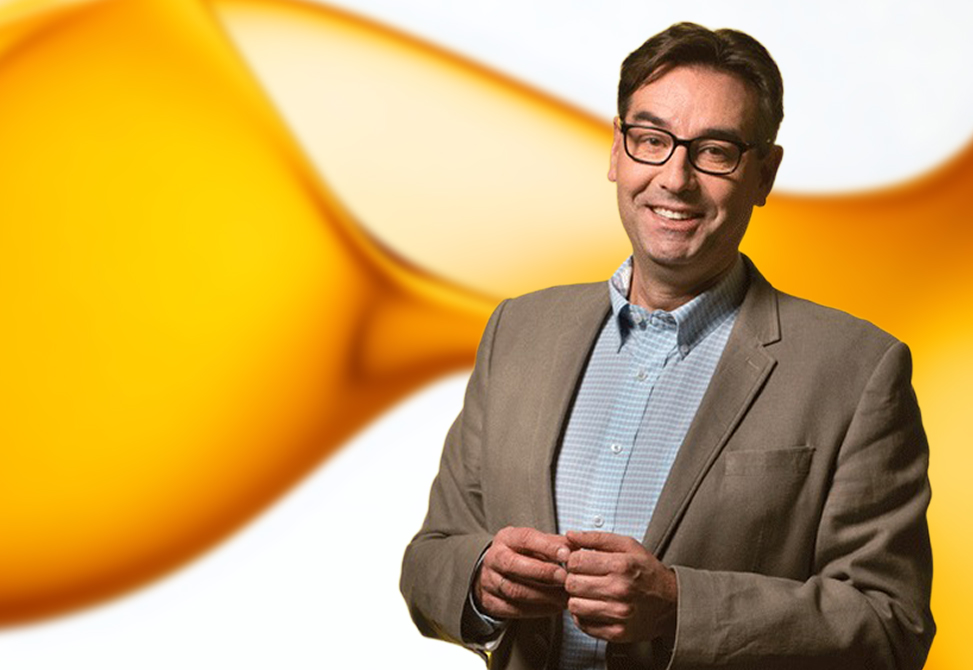
Professor Frank Wuest, Chair of the Department of Oncology, University of Alberta.