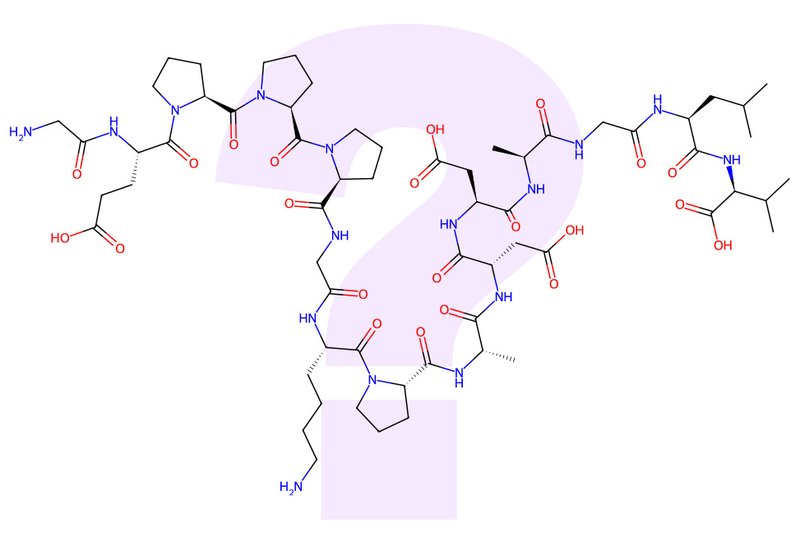
Editor's note: The original article, published in Undark and co-published with STAT, draws on a seven-month investigation by journalist Sara Talpos. The specific historical details in the opening paragraphs, including the 1975 origin, the second-year medical school account, and the name Substancija Bože Pomozi, are the product of that original reporting rather than established common knowledge. The full investigation by Sara Talpos, is available at statnews.com.
BPC-157 is a fifteen-amino-acid peptide that Predrag Sikiric, a researcher at the University of Zagreb, has studied for roughly fifty years. As Talpos's investigation recounts, the idea traces to 1975, when as a second-year medical student he reasoned that the stomach must produce a natural anti-stress healing substance, which he named Substancija Bože Pomozi, or "Substance God Help Me." His team gathered stomach fluid from clinics and pig slaughterhouses, screened it across years, and in 1989 reported a protein from which they identified the peptide they named BPC-157. The evidence for its broad healing claims has stayed largely unproven, mostly in animal and cell studies, while the compound found a second life among bodybuilders and biohackers and, more recently, within the Make America Healthy Again movement.
That trajectory now carries regulatory weight. A US Food and Drug Administration advisory committee is scheduled to meet in July 2026 to consider whether pharmacies should be permitted to compound and sell seven unapproved peptides, with BPC-157 among them. The question sits within a broader debate over how much latitude Americans should have to access therapies that have not completed the controlled human trials ordinarily required before a drug reaches the market.
Reviewing the team's patent and related documents at Talpos's request, Anna Mapp, the Edwin Vedejs Collegiate Professor of Chemistry at the University of Michigan, and also the President of the American Peptide Society, questioned the limited detail available and the absence of a published sequence for the peptide's parent protein, an omission she noted makes the original work impossible to reproduce. The investigation also reports that genetic material coding for BPC-157 has not been located in the human genome or the gut microbiome. "That is troubling," Mapp told the publication.
Other researchers cited in the piece raised related concerns, including the absence of an identified receptor through which the peptide would be expected to act, a feature common to most peptide therapeutics. Sikiric defends the compound, pointing to decades of animal and cell work reporting broad healing effects and few side effects, and rejecting suggestions that BPC-157 is not a naturally occurring substance.