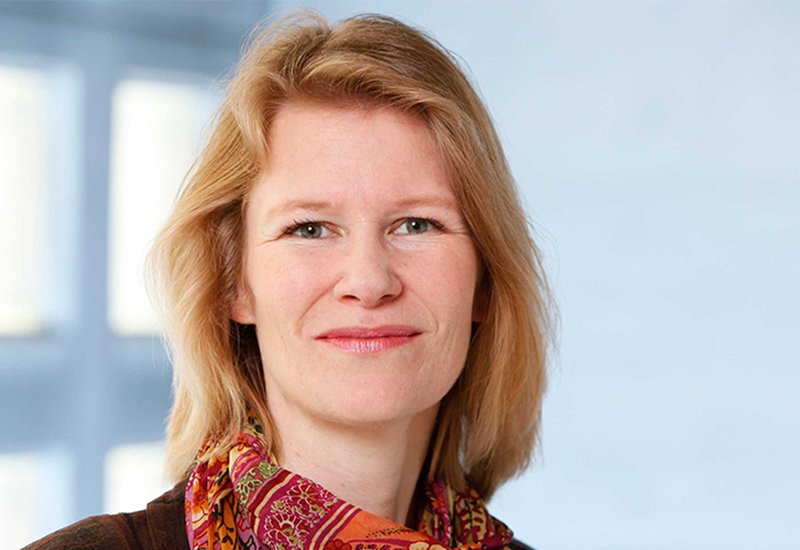
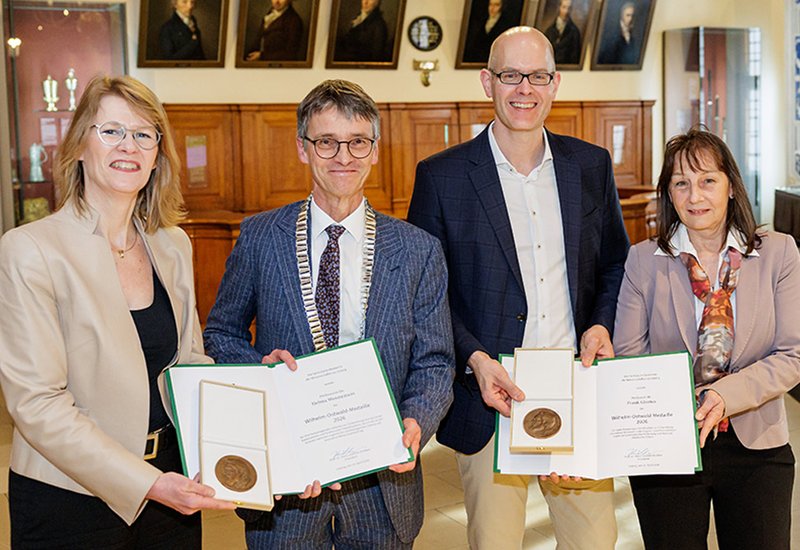
The Saxon Academy of Sciences in Leipzig has awarded the Wilhelm Ostwald Medal to Prof. Helma Wennemers, recognizing her contributions to the development of bio-inspired catalysts and functional peptide systems. The ceremony took place in the historic hall of Leipzig's Old Town Hall, where the Academy also elected nineteen new members.
The Wilhelm Ostwald Medal is the Academy's most important prize. Established in 1978 to mark the 125th anniversary of Ostwald's birth, the medal honors achievement in the natural sciences and engineering. Wilhelm Ostwald received the 1909 Nobel Prize in Chemistry for his work on catalysis, the field that frames the significance of this year's recognition. The medal was shared this year with Prof. Frank Glorius of the University of Münster, recognized alongside Wennemers. The laudations were delivered by Academy member Prof. Annette Beck-Sickinger of Leipzig University, herself a long-standing figure in the peptide community.
The Academy cited Wennemers for her work at the interface of organic and biological chemistry, where her contributions to bio-inspired catalysts and functional peptide systems have advanced understanding of molecular function and established peptide-based catalysis as a distinct and forward-looking field. The Academy noted that her interdisciplinary approach and originality stand in the tradition of Ostwald himself.
"It is a great honor that our research has been recognized with the Wilhelm Ostwald Medal, named after the scientist who discovered the concept of catalysis," Wennemers said. "A heartfelt thank you to all my wonderful co-workers, past and present!"
Wennemers is Professor of Organic Chemistry at ETH Zürich and a long-standing presence within the global peptide community. The American Peptide Society warmly congratulates her on this distinction.