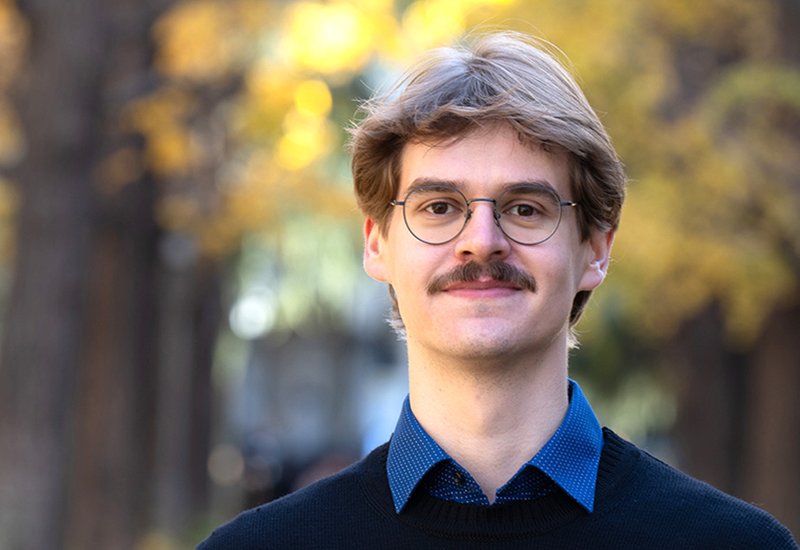
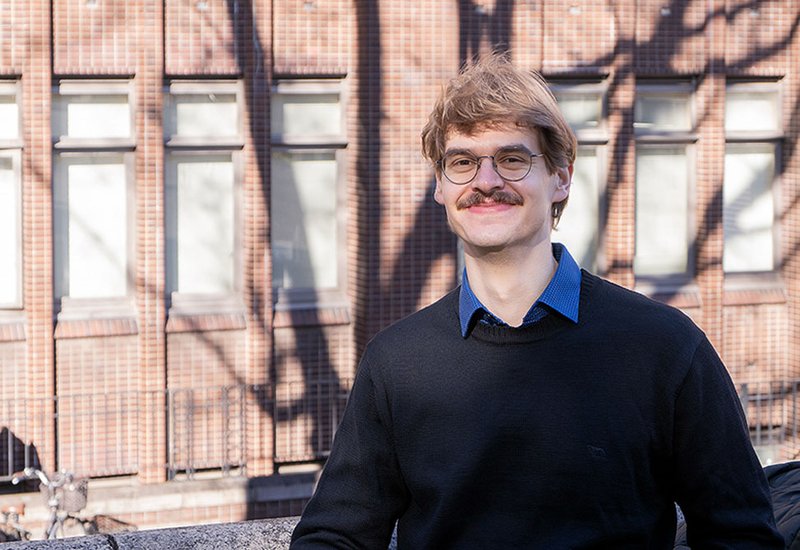
In a high school classroom in Germany, a teacher named Ms. Jaeger handed her students an unusual assignment: using the amino acid alphabet, dream up your own polymer proteins by drawing their chemical structures on paper. For teenage Sven Ullrich, something clicked. The idea that twenty building blocks could encode an almost infinite diversity of molecular machines felt, in his words, "really cool."
That spark led to his first peptide synthesis as an undergraduate at the University of Heidelberg, followed by a research project on peptide natural products from the American bullfrog. But the defining moment came during his doctoral work at the Australian National University, when he picked up a review paper that would reshape his trajectory. Vinogradov, Yin, and Suga's 2019 Journal of the American Chemical Society article on macrocyclic peptides as drug candidates became his entry point into cyclic peptide therapeutics. Years later, he would briefly overlap with Alex Vinogradov himself, and eventually find his way to the Suga Lab in Tokyo to learn the RaPID mRNA display platform directly "at the source."
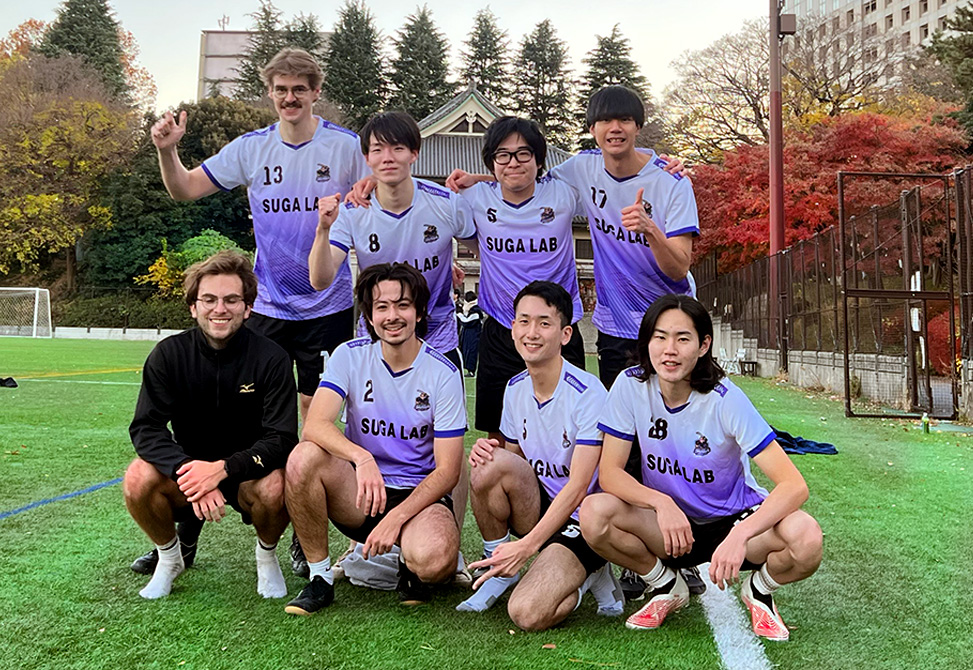
The Hiroaki Suga Lab Soccer Team; Photo: Xiyun Ye
The path from Heidelberg to Tokyo wound through Canberra, where Sven earned his doctorate under Professor Christoph Nitsche, whose outstanding mentorship was central to his scientific development. His thesis on modified peptides as viral protease inhibitors arrived at an opportune moment. When the Omicron variant emerged in late 2021, his team's paper demonstrating that SARS-CoV-2 main protease mutants remained susceptible to nirmatrelvir was shared by German Health Minister Karl Lauterbach and Scripps researcher Eric Topol, reaching audiences far beyond the usual scientific circles. It reminded him that even a "minor contribution" can matter when it reaches the right people at the right time.
His doctoral work also yielded a biocompatible method for generating bicyclic peptides, published in Angewandte Chemie, Int. Ed., with a German-language version, a detail that delights him. The novel amino acids he developed are now commercially available from a German biotech company, transforming a laboratory discovery into tools other researchers can use.
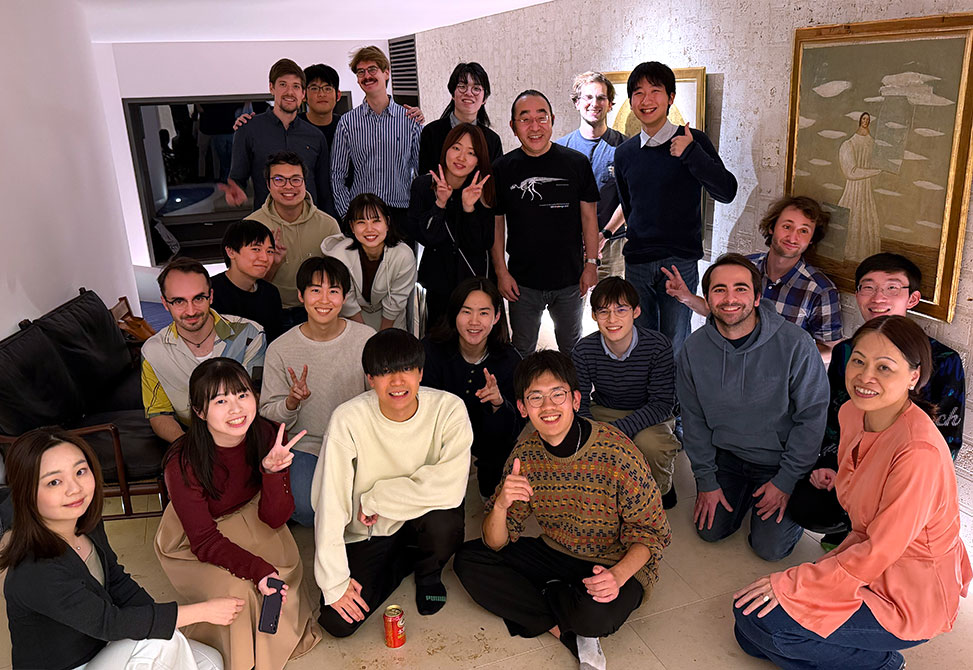
The Suga research group, Photo by Chenlian Wan
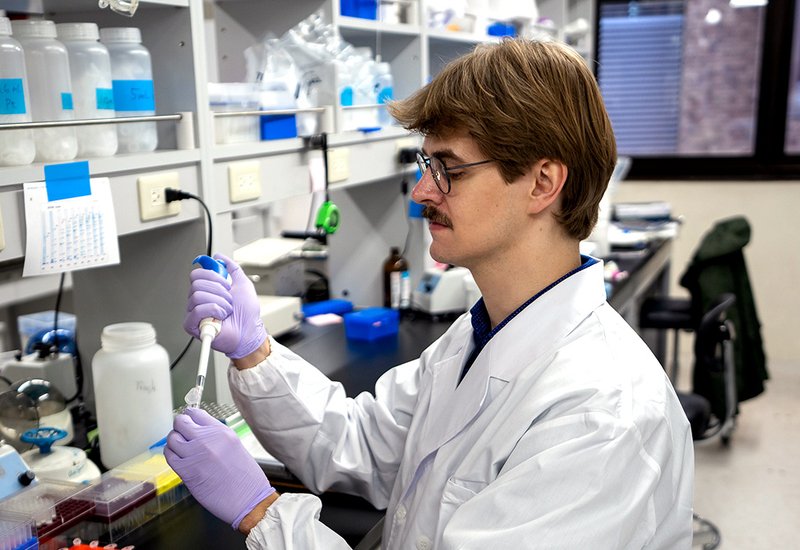
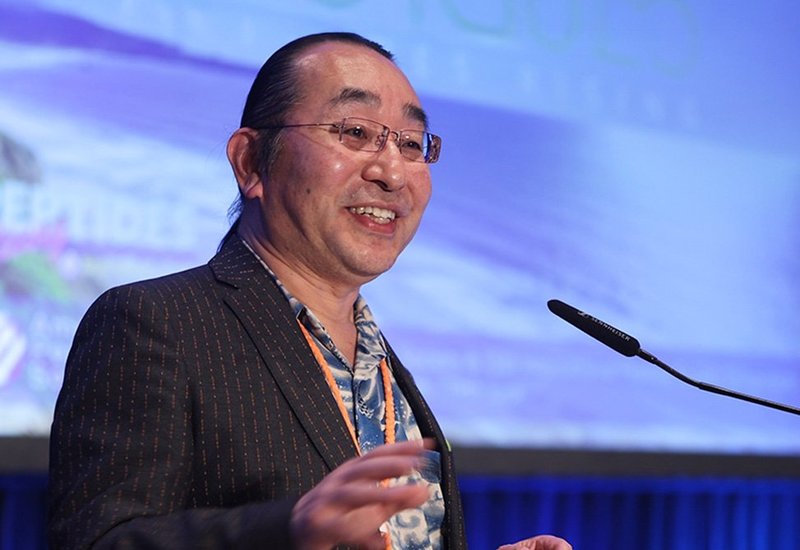
Now in Tokyo as a Feodor Lynen Research Fellow, Sven hunts for protease inhibitors against viral diseases while developing new peptide and protein cyclization methods. Professor Hiroaki Suga supports his exploration of new ideas with remarkable academic freedom and hospitality that extends to lab gatherings at homes in Tokyo, Hawaii, and Oxford. The international journey, Sven reflects, brings out the most creative side of scientists. Environment shapes us more than we realize, and opening ourselves to new impressions and new people yields the best results.
Friend and colleague Dr. Tongil Ko once showed him an old MoMA. press release about "The Long Run," describing progress in art as sustained attention over time rather than sudden breakthroughs. Sven sees science the same way. Compound interest, he tells his students: small consistent efforts add up to something much bigger. It is advice he received and now passes forward.
Outside the lab, he plays basketball and soccer in the University of Tokyo Chemistry Department tournament, discovers new ramen styles with friends, and has embraced the Tokyo ritual of the neighborhood sento. When he does engage deeply with media, it is something like Cixin Liu's "Three-Body Problem" series, stories that unfold gradually. The long run, after all, is where the real discoveries happen.