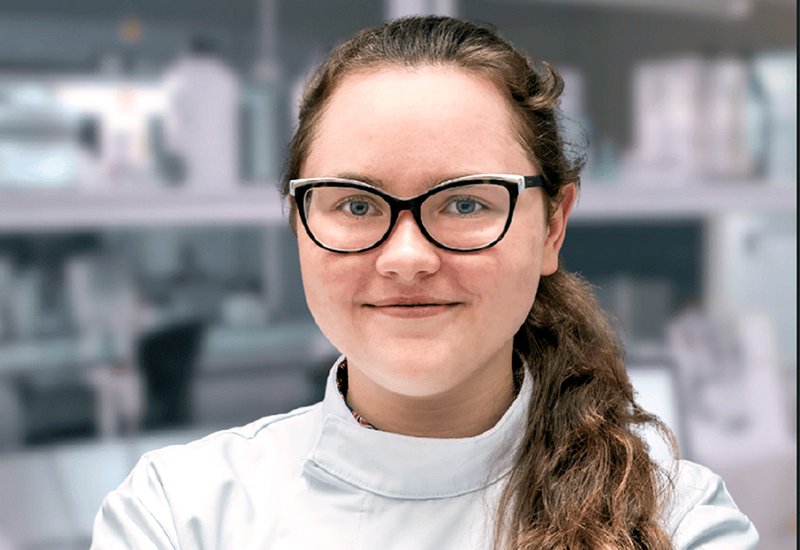
Arina Filatova is a BSc student in Chemical Biology at Maastricht University. Her fascination with biological macromolecules began early in her studies, when she first learned that a protein's three-dimensional structure dictates its function. This curiosity evolved into a central academic interest in how chemical structure governs biological activity, and how molecular changes, such as mutations or post-translational modifications, can produce profound functional effects, particularly in the context of disease.
Her first research experience took place during her freshman year in bioinformatics and systems biology, under the supervision of Professor Martina Summer-Kutmon. She analyzed protein-protein interaction networks derived from pancreatic cancer transcriptomic data. While this work provided insight into how proteins function within complex cellular pathways, it also sparked a growing interest in the structural basis of these interactions. Seeking more hands-on experience, she joined the 2024 Maastricht University iGEM team, Natronaut. There, she worked on molecular cloning and synthetic biology approaches to engineer E. coli and Vibrio natriegens to mitigate coastal eutrophication by converting excess nitrates into ammonia and producing single-cell proteins. During this project, she also gained extensive experience in macromolecular structure visualization and computational modeling.
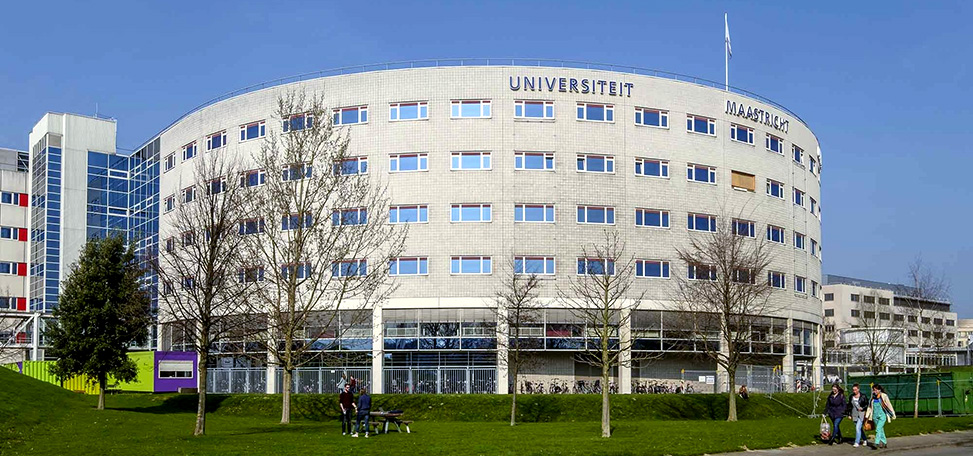
Maastricht University Campus
These experiences motivated her to focus more directly on molecular structure and peptide-level interactions, leading to her bachelor's thesis in the research group of Professor Tilman Hackeng, under the supervision of Professor Ingrid Dijkgraaf. Her thesis investigates the structure-activity relationships of Salp15, an immunomodulatory tick salivary protein that suppresses T-cell activation by binding the CD4 glycoprotein on human T cells. Dysregulated CD4⁺ T-cell responses play a central role in autoimmune diseases such as multiple sclerosis and rheumatoid arthritis, making Salp15 a compelling model for studying immune modulation and exploring its therapeutic potential.
Using recombinant protein expression and purification combined with protein NMR spectroscopy, Arina studies the structure of Salp15 with particular emphasis on its cysteine connectivity. The arrangement of disulfide bonds is critical to the protein's stability and biological function. To elucidate the molecular basis of Salp15-CD4 binding, she applies protein-protein docking and structural modeling. Based on predicted interaction interfaces, she designs smaller peptide analogs that mimic key functional regions of Salp15. These peptides are synthesized using Fmoc solid-phase peptide synthesis and evaluated for immunomodulatory activity in cellular assays by analyzing inflammatory cytokine expression. Compared to the full-length protein, these peptides offer advantages in stability, tunability, and translational potential while retaining biologically relevant activity.
In parallel with her undergraduate research, Arina was selected as an Amgen Scholar at LMU Munich in 2025. In the laboratory of Professor Pavel Kielkowski, she investigated post-translational modifications of GDF15, a protein implicated in the progression of Parkinson's disease, using chemical proteomics and tandem mass spectrometry. This experience further reinforced her interest in how chemical modifications at the peptide and protein level influence biological function and contribute to disease-relevant pathways.
Looking ahead, Arina aims to pursue graduate studies in molecular and biological chemistry, with the goal of integrating computational approaches with experimental chemistry to design peptides that modulate protein function. She is particularly interested in using predictive modeling to guide the rational design of peptides targeting challenging protein-protein interactions, and in validating these candidates through biophysical and biochemical methods.
Outside the lab, Arina enjoys reading, traveling, creative arts, and tennis.