Global Peptide Groups - The Olsen Group
At the University of Copenhagen’s Faculty of Health and Medical Sciences, the Olsen Laboratory uses organic chemical synthesis to build the molecules that biology will not hand over on its own. The group designs and prepares peptides, peptidomimetics, and macrocycles, then puts them to work as substrates, probes, and inhibitors in two very different arenas: the enzymes that write and erase acyl marks on lysine residues, and the small cyclic peptides with which bacteria talk to one another. Both programs rest on the same conviction, that a well-made molecule is the most direct way to ask a biological question, and that a chemistry group serious about the interface should run the biochemical assays itself rather than send its compounds elsewhere and wait.
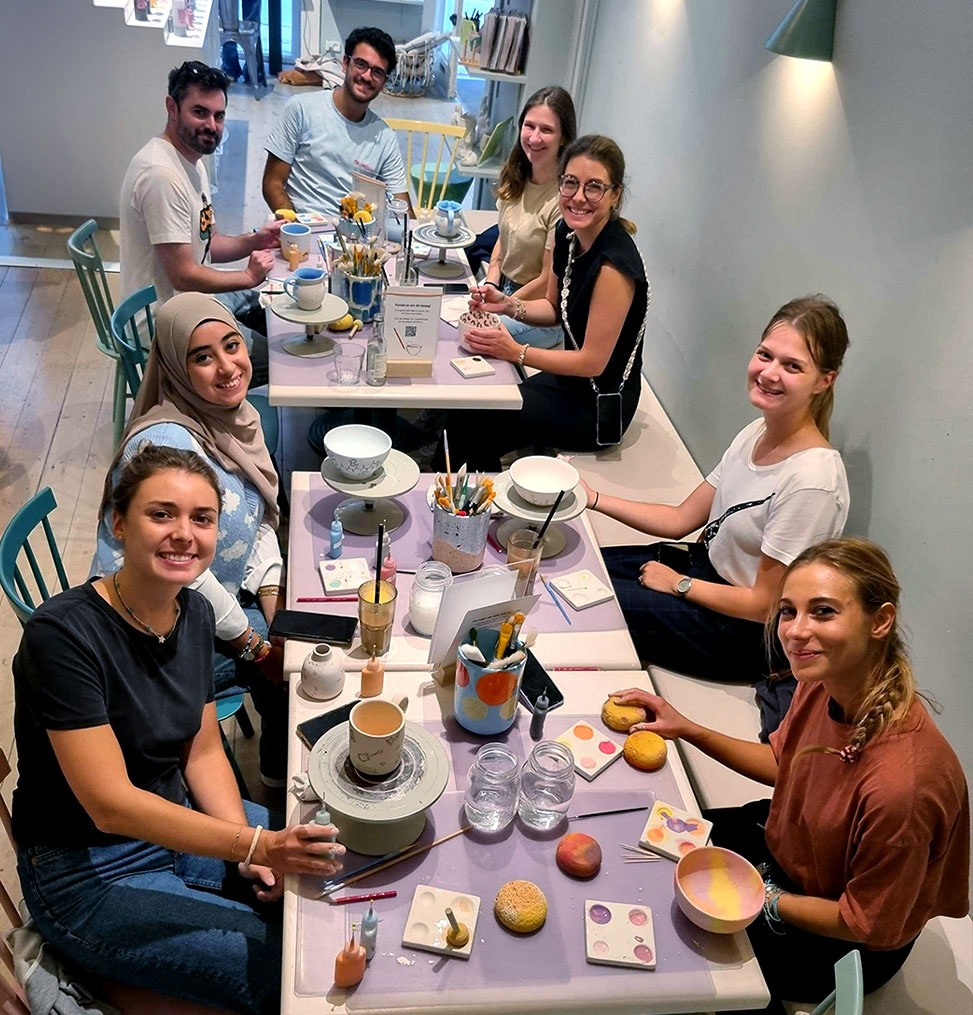
The Olsen Group at Pottery Class
The lab runs as two main branches, one working on quorum sensing and bacterial behavior, the other on epigenetics, with a shared synthetic toolbox and a great deal of traffic between them. Twelve people currently make up the group: two postdocs, four Ph.D. students, a research assistant, and five undergraduates. Ideas are aired in group meetings and journal club, but mostly in the ordinary back-and-forth of the day. New members are trained hands-on by whoever knows the technique best, undergraduates are paired with a dedicated supervisor, and Professor Olsen keeps an open door for anyone who wants to talk through a result or a problem. Members describe the creative latitude as the defining feature: room to come at a question from an unexpected angle, paired with an insistence on high standards and a sharply critical eye.
The group is part of the Center for Biopharmaceuticals and the Department of Drug Design and Pharmacology, and its reach depends on collaboration. Work with the Ingmer group in Copenhagen opened microbiology the lab could not have set up alone; the Melican group at the Karolinska Institute in Stockholm brought cutting-edge xenograft skin models that show how lead molecules engage the human immune system. Further afield, partnerships with Yingming Zhao in Chicago, John Denu in Wisconsin, Joseph Rogers in Copenhagen, Christian Heinis at EPFL, and Tom Muir at Princeton, the last supported by a Novo Nordisk Foundation Infectious Disease Catalyst grant, have carried the group’s chemistry into territory no single laboratory could cover.
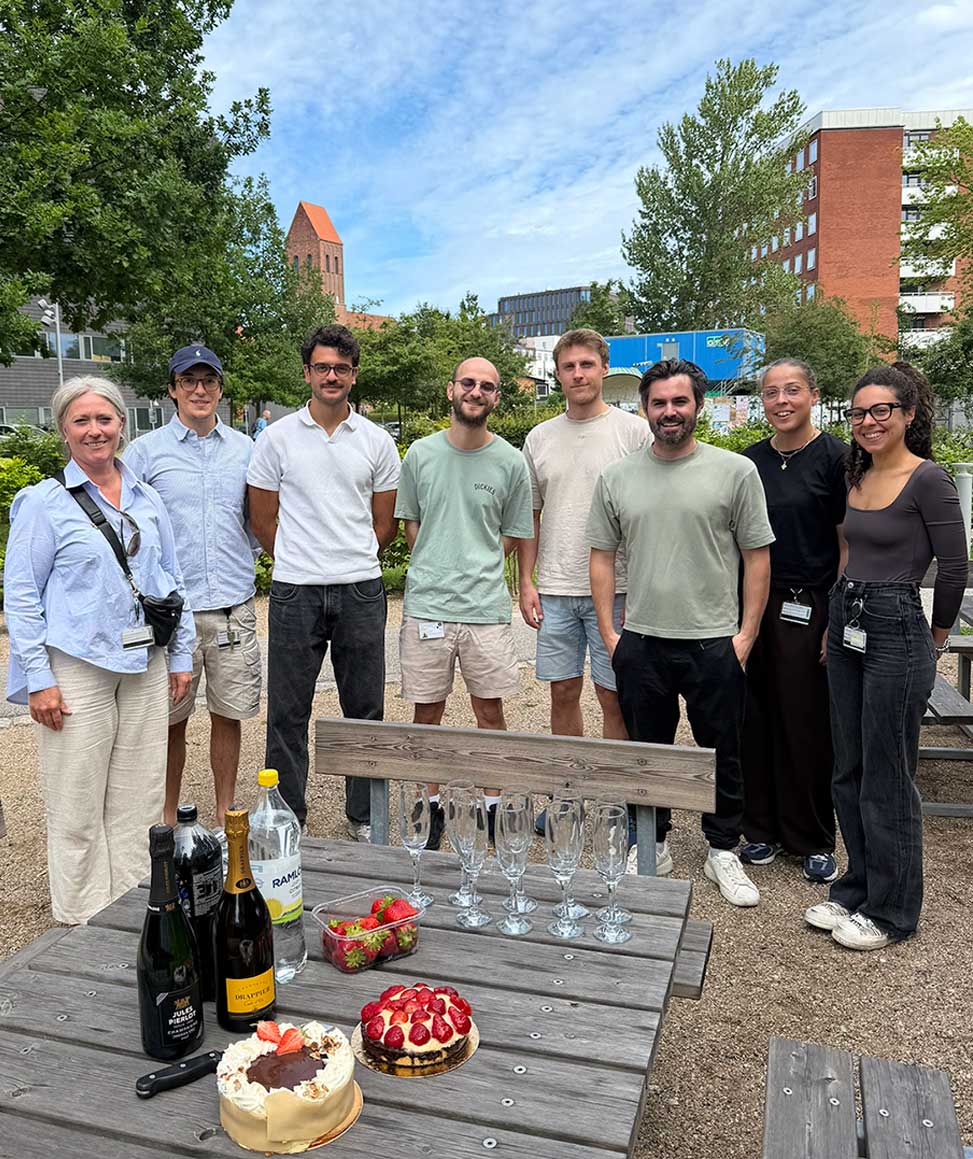
The Olsen Laboratory, University of Copenhagen, celebrating another publication.
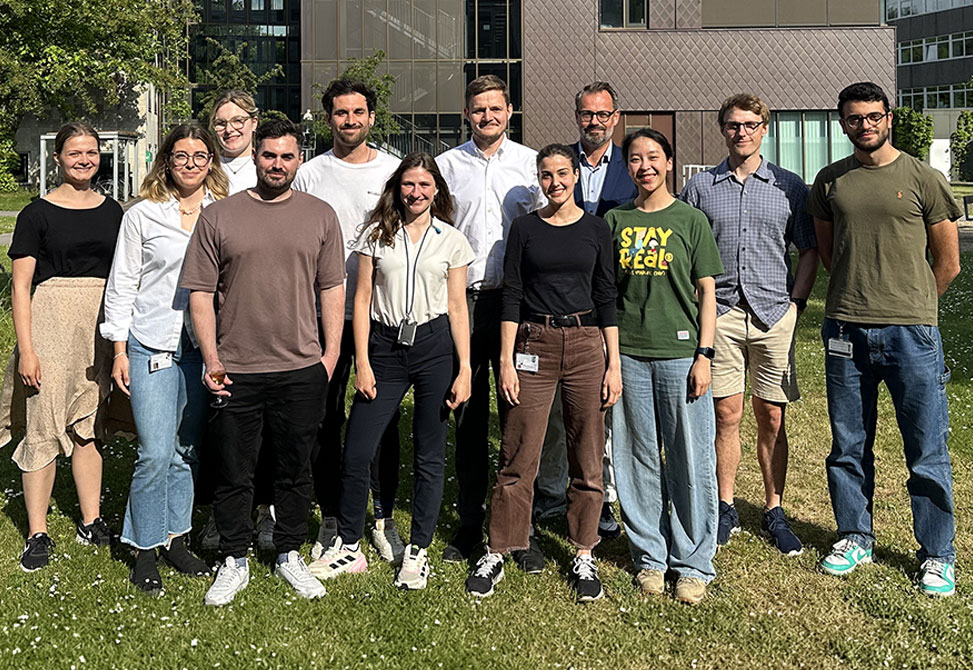
The Olsen Group, Spring 2024
The through-line in the group’s work is synthetic access. By making peptides, peptidomimetics, and macrocycles to order, including acylated substrates, activity-based probes, and constrained scaffolds that no expression system will provide, the lab can interrogate enzymes and signaling systems that are otherwise difficult to study, and can design inhibitors against targets that had none.
The Lysine Acylation Landscape and the HDAC Family:
Histone deacetylases sit where epigenetics meets metabolism, regulating gene expression by reversing acyl modifications on lysine. When it became clear that the proteome carries a far wider range of acyl groups than acetyl alone, the group built fluorogenic substrate assays and activity-based probes to profile the complete panel of human HDAC enzymes against them. That systematic approach repeatedly drew the lab toward the family’s least characterized members. HDAC11 is the clearest case: the group showed in 2018 that it is a highly efficient ε-N-myristoyllysine hydrolase, removing long-chain fatty acyl groups rather than acetyl, a finding that reframed both its biological role and what a useful inhibitor should look like. More recently, macrocyclic peptide synthesis combined with de novo peptide libraries has delivered potent and selective HDAC11 inhibitors.
Sirtuins and Mechanism-Based Chemistry:
The NAD+-dependent sirtuins pose their own design problem, and also their own opportunity, since the catalytic cycle can be turned against the enzyme by chemotypes that form stalled intermediates in the active site. For SIRT5, which favors negatively charged succinyl and malonyl substrates, the group developed mechanism-based inhibitors and then applied prodrug and bioisostere strategies to make them more drug-like; collaborators went on to establish SIRT5 as a druggable vulnerability in acute myeloid leukemia using those tools. SIRT7 proved harder, because it needs an oligonucleotide co-activator to show catalytic activity in vitro. The lab solved the assay problem with fluorogenic substrates activated by the appropriate nucleic acid additive, added reconstituted nucleosomes for higher turnover, and turned to the RaPID system for inhibitor discovery.
Lysine Lactylation:
Lactate, abundant under glycolytic conditions, was reported in 2019 to modify lysine residues. Working with Yingming Zhao, who made the original discovery, the group showed that the class I enzymes HDAC1, HDAC2, and HDAC3 are the principal histone lysine delactylases. The chemistry holds a further twist: lactate exists as two enantiomers, so lactylation gives rise to distinct, enantiomeric post-translational marks, and evidence that both may be present endogenously has become the subject of continuing collaborative work.
Quorum Sensing and Anti-Virulence:
Staphylococci coordinate virulence through macrocyclic autoinducing peptides, and targeting that conversation rather than bacterial viability sidesteps much of the selective pressure that drives resistance. The group’s breakthrough came from recognizing that native chemical ligation, a method developed for chemical protein synthesis, could be used to identify thiodepsipeptide autoinducers directly from bacterial supernatant. Taking inspiration from the same mechanism, the lab has since shown that strikingly simple small molecules can destroy these signaling peptides, with one such compound attenuating MRSA skin infection in a mouse model.
Foldamers and Synthetic Methodology:
An early and continuing interest in controlling three-dimensional structure produced the first well-characterized β-peptoid foldamer, a triangular prism-shaped helix and the longest folded peptoid oligomer reported at the time. That instinct for expanding the available architecture now shows up in the group’s use of sulfur(VI) fluoride exchange, or SuFEx, chemistry, first as a latent electrophilic warhead for covalent SIRT5 inhibitors and then as a way to stitch fragments together into diverse compound arrays on solid phase.
Whether the target is a human deacylase or a bacterial signal, the question the lab asks is the same: what molecule would settle this, and how do we make it?
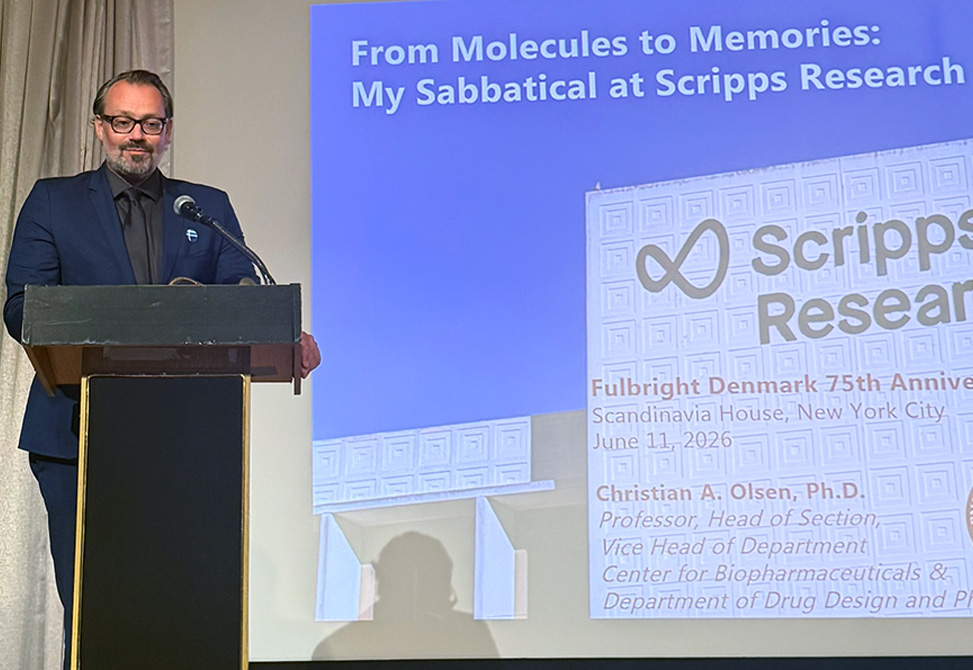
Professor Christian Olsen at the June 2026 Fulbright Anniversary
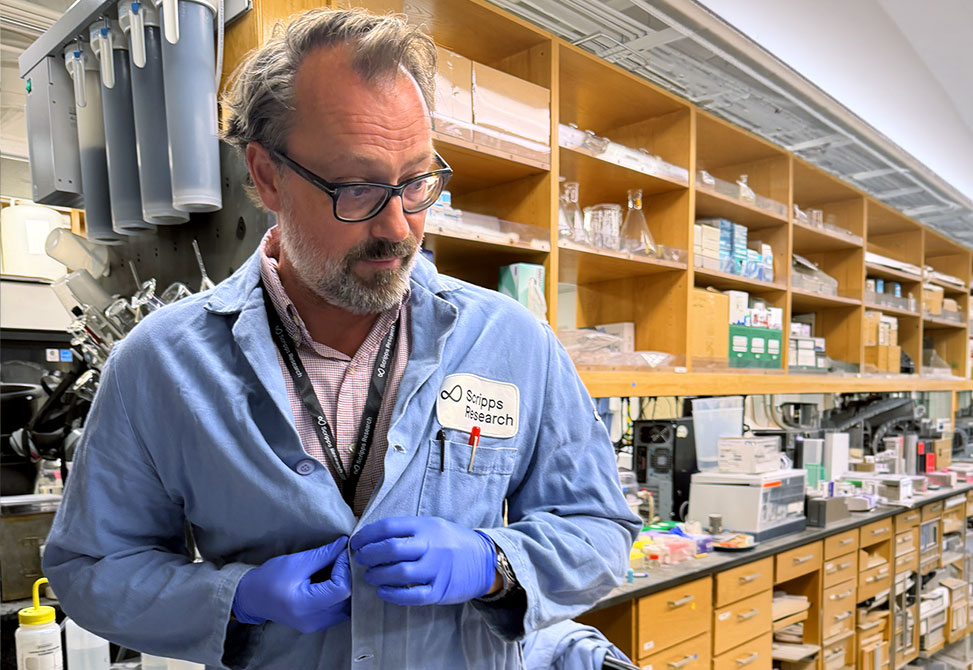
Professor Christian Olsen at Scripps on Sabbatical
Selected Recent Publications
Gless, B. H.; Milazzo, R.; Bojer, M. S.; Sereika-Bejder, B. S.; Ingmer, H.; Olsen, C. A. Repression of Virulence in Staphylococcus aureus by 2-Aminothiol-Mediated Quorum Quenching. Angew. Chem. Int. Ed. 2026, e9489770. DOI: 10.1002/anie.9489770.
Danková, D.; Nielsen, A. L.; Zarda, A.; Hansen, T. N.; Hesse, M.; Benová, M.; Tsiris, A.; Bartling, C. R. O.; Will, E. J.; Strømgaard, K.; Moreno-Yruela, C.; Heinis, C.; Olsen, C. A. Discovery of De Novo Macrocycle Inhibitors of Histone Deacetylase 11. JACS Au 2025, 5 (3), 1299–1307. DOI: 10.1021/jacsau.4c01148.
Hansen, T. N.; Danková, D.; Bæk, M.; Grlaš, L.; Olsen, C. A. Sulfur(VI) Fluoride Exchange Chemistry in Solid-Phase Synthesis of Compound Arrays: Discovery of Histone Deacetylase Inhibitors. JACS Au 2024, 4 (5), 1854–1862. DOI: 10.1021/jacsau.4c00042.
Bolding, J. E.; Nielsen, A. L.; Jensen, I.; Hansen, T. N.; Ryberg, L. A.; Jameson, S. T.; Harris, P.; Peters, G. H. J.; Denu, J. M.; Rogers, J. M.; Olsen, C. A. Substrates and Cyclic Peptide Inhibitors of the Oligonucleotide-Activated Sirtuin 7. Angew. Chem. Int. Ed. 2023, 62 (49), e202314597. DOI: 10.1002/anie.202314597.
Moreno-Yruela, C.; Zhang, D.; Wei, W.; Bæk, M.; Liu, W.; Gao, J.; Danková, D.; Nielsen, A. L.; Bolding, J. E.; Yang, L.; Jameson, S. T.; Wong, J.; Olsen, C. A.; Zhao, Y. Class I Histone Deacetylases (HDAC1–3) Are Histone Lysine Delactylases. Sci. Adv. 2022, 8 (3), eabi6696. DOI: 10.1126/sciadv.abi6696.
Yan, D.; Franzini, A.; Pomicter, A. D.; Halverson, B. J.; Antelope, O.; Mason, C. C.; Ahmann, J. M.; Senina, A. V.; Vellore, N. A.; Jones, C. L.; Zabriskie, M. S.; Than, H.; Xiao, M. J.; van Scoyk, A.; Patel, A. B.; Clair, P. M.; Heaton, W. L.; Owen, S. C.; Andersen, J. L.; Egbert, C. M.; Reisz, J. A.; D’Alessandro, A.; Cox, J. E.; Gantz, K. C.; Redwine, H. M.; Iyer, S. M.; Khorashad, J. S.; Rajabi, N.; Olsen, C. A.; O’Hare, T.; Deininger, M. W. SIRT5 Is a Druggable Metabolic Vulnerability in Acute Myeloid Leukemia. Blood Cancer Discov. 2021, 2 (3), 266–287. DOI: 10.1158/2643-3230.BCD-20-0168.
Gless, B. H.; Bojer, M. S.; Peng, P.; Baldry, M.; Ingmer, H.; Olsen, C. A. Identification of Autoinducing Thiodepsipeptides from Staphylococci Enabled by Native Chemical Ligation. Nat. Chem. 2019, 11 (5), 463–469. DOI: 10.1038/s41557-019-0256-3.
Moreno-Yruela, C.; Galleano, I.; Madsen, A. S.; Olsen, C. A. Histone Deacetylase 11 Is an ε-N-Myristoyllysine Hydrolase. Cell Chem. Biol. 2018, 25 (7), 849–856.e8. DOI: 10.1016/j.chembiol.2018.04.007.
Laursen, J. S.; Harris, P.; Fristrup, P.; Olsen, C. A. Triangular Prism-Shaped β-Peptoid Helices as Unique Biomimetic Scaffolds. Nat. Commun. 2015, 6, 7013. DOI: 10.1038/ncomms8013.
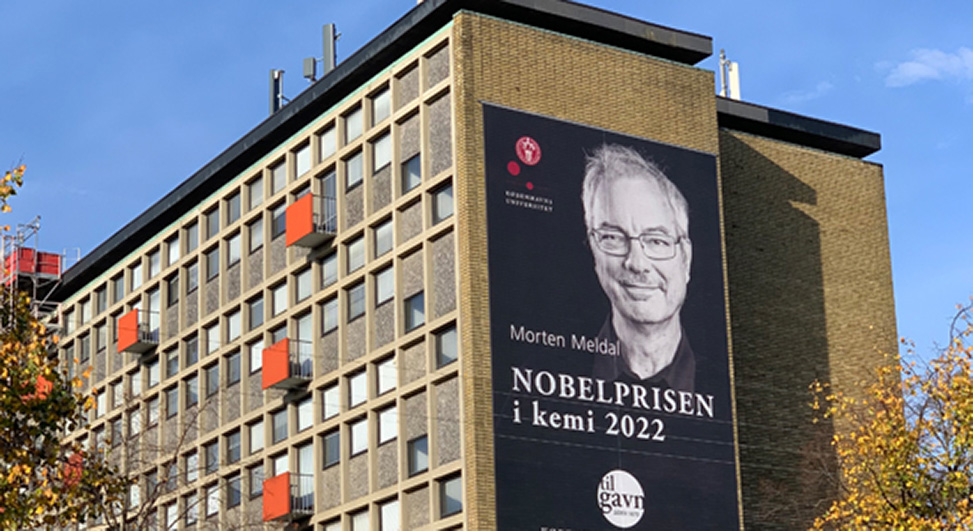
Department of Chemistry at the University of Copenhagen

Department of Chemistry at the University of Copenhagen
A Conversation with Professor Christian Adam Olsen
APS: Your lab sits at an unusual intersection between organic synthesis, peptidomimetics, epigenetics, and anti-virulence chemistry. How did you end up covering so much ground?
Olsen: Honestly, it grew very organically over time. My training was in chemical engineering at the Technical University of Denmark, DTU, where I did carbohydrate synthesis for my MSc thesis. Then, during my Ph.D., I focused on solid-phase synthesis of polyamine toxins from the venoms of wasps and spiders at what was then the Royal Danish School of Pharmacy. Although I spent some weeks in our collaborator’s laboratory performing electrophysiology experiments during my Ph.D., the bridge to biology really manifested itself during my postdoc with Reza Ghadiri at Scripps. His lab was doing extraordinary things with self-assembling cyclic peptides, systems where molecular architecture and biological function came together. Further, the project I worked on involved a class of naturally occurring cyclic peptides that inhibit histone deacetylase (HDAC) enzymes to modulate gene expression. That experience made it clear to me that to work at the interface of chemistry and biology, my independent laboratory needed to encompass both activities, rather than relying entirely on collaborators to perform the biological evaluation. When I returned to Denmark and started my own group, I first followed two main directions: foldamers and lysine acylation, each emerging from a fundamental desire to use organic chemical synthesis to access interesting biologically active molecules. My laboratory’s interest in quorum sensing peptides and anti-virulence came later, through collaborations with microbiologists.
APS: Let’s start with foldamers. Your β-peptoid work produced some striking helical structures. What problem were you trying to solve?
Olsen: A fundamental challenge with peptidomimetics is controlling three-dimensional structure. Natural peptides can adopt defined conformations, but they are also susceptible to proteolysis and are often not very good at penetrating cells to reach intracellular targets. I was very impressed with the research on β-peptides and so-called peptoids, N-substituted glycine oligomers, which are both protease-resistant foldamers. I therefore set out to take on the challenge of designing folded peptidomimetics with a backbone construct that combined the two, called β-peptoids (N-alkyl-β-alanines), to extend the available repertoire of foldamers. Studying the cis–trans isomerism of the amide bonds in monomer models systematically eventually enabled my team to design β-peptoid homooligomers that adopt a unique triangular prism-shaped helical conformation. It was the first well-characterized β-peptoid foldamer, and the longest folded oligomer of any peptoid reported, which I was quite proud of at the time. I think that having access to many different architectures when trying to solve a problem in molecular recognition is an advantage. However, my laboratory’s activities in this area have been reduced over the years to make way for other research directions.
APS: Your lab’s HDAC work has been prolific. How did you come to focus on histone deacetylases, and specifically on the less-studied family members like HDAC11 and the sirtuins?
Olsen: HDACs are compelling targets because they sit at the intersection of epigenetics and metabolism; they regulate gene expression through reversible post-translational modification of lysine residues. Originally, my interest was to build on my experience from my postdoc to develop selective peptide-based inhibitors of the class I classical zinc-dependent HDACs. However, publications started to appear showing that a far wider range of acyl groups than just acetyl is broadly present in our proteome, which I found exciting to start investigating in the context of HDAC activity. When we published our first papers in 2012 about the expanding lysine acylation landscape (i.e., succinylation, malonylation, and crotonylation), we were just getting started on developing fluorogenic substrate assays and activity-based probes to interrogate the full panel of human HDAC enzymes, including the sirtuins. Our approach kept leading us to the more poorly characterized members of the class of enzymes. HDAC11 was a good example: we showed in 2018 that it is a highly efficient myristoyllysine hydrolase, meaning it removes long-chain fatty acyl groups rather than acetyl groups, which significantly changes how you think about its biological role and what a useful inhibitor should look like. More recently, we used a combination of macrocyclic peptide synthesis and de novo peptide libraries to identify potent and selective HDAC11 inhibitors.
APS: The sirtuin work, particularly on SIRT5 and SIRT7, has generated some sophisticated chemical tools. What has that effort revealed?
Olsen: Sirtuins are the NAD+-dependent branch of the HDAC family, and they present distinct mechanistic challenges for inhibitor design compared to the zinc-dependent HDACs. On the flipside, this different mechanism can also be targeted by certain chemotypes that form stalled intermediates in the active site. For SIRT5, which prefers negatively charged acyl substrates like succinyl and malonyl groups, my lab developed mechanism-based inhibitors that exploit the catalytic cycle. We then used prodrug and bioisostere strategies to improve their drug-like properties. One satisfying outcome was when our collaborators demonstrated that SIRT5 is a druggable vulnerability in acute myeloid leukemia and showed that the chemical tools we had built actually could have translational relevance, in Blood Cancer Discovery in 2021. SIRT7 was trickier because it requires an oligonucleotide co-activator to display catalytic activity in vitro, which made assay development more difficult. We eventually solved that by identifying fluorogenic substrates that are activated in the presence of the appropriate nucleic acid additive, enabling robust high-throughput screening for SIRT7 modulators. For higher enzymatic turnover, we collaborated with John Denu in Wisconsin to be able to add reconstituted nucleosome particles within our assays. For the discovery of potent inhibitors, we eventually turned to the RaPID system in collaboration with my colleague Joseph Rogers at University of Copenhagen. Our collective work on SIRT7 was reported in Angewandte Chemie in 2023, but we still have several issues to iron out to improve our inhibitors, which are ongoing in our laboratories.
APS: Lactylation has become a major topic in the PTM field. Your group has made key contributions there. Can you walk us through the story?
Olsen: Lactate is a metabolite produced abundantly under glycolytic conditions, and it was reported in 2019 that lactate can modify lysine residues, so-called lysine lactylation, with interesting roles in gene regulation. At first, I was not too excited about simply testing which HDACs could remove this “yet another newly discovered mark,” but a small group of students were eager to start investigating it. When they had quickly generated the first data, I contacted Yingming Zhao at the University of Chicago, who had made the initial discovery of lysine lactylation, and we decided to collaborate on this problem. This collaboration led to a joint publication in Science Advances in 2022, where we showed that class I HDACs, specifically HDAC1, 2, and 3, are the main enzymes responsible for removing lactyl modifications from histone proteins. However, lysine lactylation is of course also fundamentally interesting through the eyes of a chemist, because lactate exists as two enantiomers, L- and D-lactate, giving rise to distinct, enantiomeric post-translational modifications. During our work, we started to appreciate that both enantiomers of lactate may be present endogenously, which has become the subject of further collaborative work.
APS: The quorum sensing work feels like a different universe from HDAC enzymes. How do autoinducing peptides from staphylococci connect to the rest of the lab’s program?
Olsen: The connection is the chemistry. We were already pretty good at synthesizing and modifying macrocyclic peptides and had prepared several batches of a naturally occurring peptide called solonamide, which inhibits quorum sensing in Staphylococcus aureus, for microbiologists at the University of Copenhagen. So, when they asked us if we could synthesize a bacterial signaling peptide, we found this fascinating as a synthetic target and interesting due to the potential medical relevance. MRSA is a serious and growing clinical problem, and the idea of targeting virulence rather than viability has appeal, because the evolutionary pressure to survive that mainly drives resistance development is not there. The breakthrough for my lab came when we realized that native chemical ligation (NCL), developed for chemical protein synthesis, could be applied to identify the thiodepsipeptide autoinducers from bacterial supernatant. That 2019 Nature Chemistry paper by Bengt Gless et al. was a real turning point for my group, leading to a series of activities in cyclic peptide-mediated bacterial communication. Most recently, we have shown that by taking inspiration from the NCL mechanism, we can destroy the signaling peptides with certain very simple small molecules, and shown that one of these can attenuate MRSA skin infection in a mouse model. The clinical pathway is still long, but the biology is genuinely exciting, and we now have a Novo Nordisk Foundation Infectious Disease Catalyst grant with Tom Muir at Princeton to push this further.
APS: SuFEx chemistry has appeared in your recent work on HDAC inhibitor arrays. What drew you to that approach?
Olsen: SuFEx, sulfur(VI) fluoride exchange, is a click-chemistry-inspired platform that Sharpless and colleagues have developed into a remarkably versatile tool for covalent inhibitor development, library synthesis, and bioconjugation. We were applying the latently electrophilic aryl fluorosulfate group as a “warhead” for the discovery of covalent inhibitors of SIRT5 as our first encounter with SuFEx chemistry. Again, the idea of using SuFEx reactions to stitch molecules together for the synthesis of diverse compound arrays on solid phase came from my students. For me, it became a great project for MSc students or visiting students to join, because they can learn a variety of different techniques while producing useful molecules for our compound collection. Eventually, we had more than 80 compounds with interesting biochemical activities and decided to publish this work in 2024. However, we continue to expand upon the compound collection, incorporating different SuFEx hubs to connect the various pieces and functionalities, and it was fantastic to be able to discuss these chemistries with Prof. Sharpless during my recently conducted sabbatical at Scripps Research in La Jolla.
APS: On that note, you received a Fulbright Scholar Award for your sabbatical at Scripps Research, a return to where you did your postdoc. What did you hope to accomplish there?
Olsen: It felt like a natural return. The Scripps environment has a fantastic energy and ambition as well as a collegial coherence that I find very stimulating. The scientific focus was on investigating quorum sensing within the gut microbiota, which I find highly fascinating due to the wide potential implications. However, the sabbatical was also a chance to think deeper, more slowly, and more broadly than my everyday portfolio of tasks allows. Day-to-day running of an active research laboratory, combined with teaching and various departmental leadership positions, makes it difficult to find time to really think and reflect. Having been back at University of Copenhagen for two months now, I look back at many great interactions and conversations as well as some time spent at the bench, all of which has been tremendously inspiring.
APS: What advice would you give an APS member who wants to move from traditional peptide chemistry into chemical biology?
Olsen: Identify and set up a small selection of assays that your lab can perform really well to illuminate the biochemical relevance of the molecules you are interested in. Then, you can always build from there. For my lab, simple fluorogenic assays that could be easily modified by the chemical synthesis of new substrates and could be applied for enzyme kinetics investigations were a great starting point, really. The ability to screen compounds against a panel of enzymes in a high-throughput format changes the pace and ambition with which you can develop your projects. But don’t think you need to do everything in your own lab; some of the most interesting problems are usually where two communities can find common ground.
APS: Final thought for the peptide community?
Olsen: We are in a remarkable moment for peptide research. The clinical success of GLP-1 receptor agonists has demonstrated to a broader audience that peptides have extraordinary potential as a drug modality. I think that the current excitement about peptides as a drug modality has been and will continue to be beneficial for the academic side of peptide science as well. A great position for the field to be in.

Professor Christian Olsen