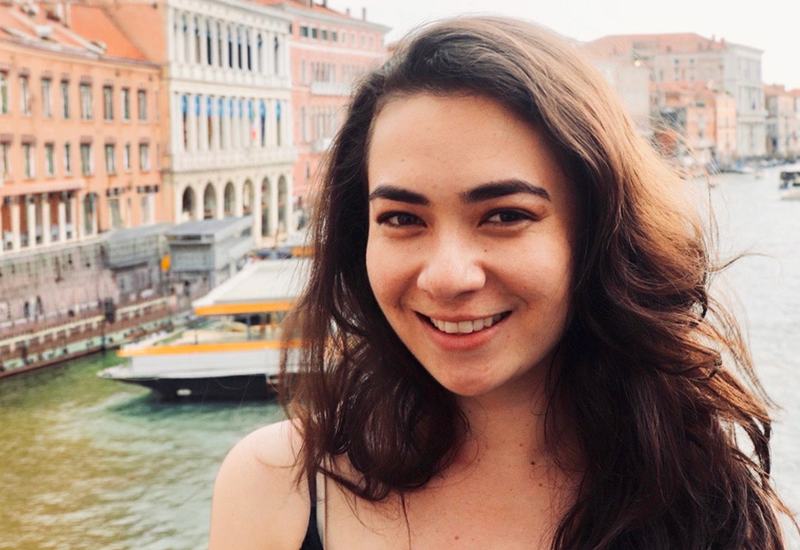
Most scientists profiled in this series arrive at independence by way of a postdoctoral fellowship. Leah Roe did not do one. She defended at UC Berkeley, out of Alanna Schepartz's group. On February 2, 2026, she opened her own laboratory at UCSF as a Faculty Fellow of the Quantitative Biosciences Institute, a position that recruits newly graduated Ph.D.s directly into principal investigator status and that runs in tandem with the UCSF Sandler Fellows Program. Fellows receive institutional support to start a group, may apply for extramural funding in their own name, and are expected to spend the time doing their best science rather than someone else’s. It is independence without the usual apprenticeship, and it reshapes nearly everything about how the first year looks.
What she brought to it is a question she has been circling since her undergraduate years. Biology assembles enormous functional diversity from a small set of chemical building blocks, and Roe has always found that odd. “If life does that much with one set of molecules, what else is possible with more molecule classes,” she asks, “and what functions might be hiding in chemistry that biology never adopted?” Her training approached it in stages: first the folding rules and structural behavior of biological and peptidomimetic systems, then, in graduate school, the methodology to install peptidomimetic monomers directly into proteins expressed in cells.
Leah Roe developed truly transformative science in my lab, and is now doing the same at UCSF. She is someone to watch very closely, no doubt about it.
Alanna Schepartz, T.Z. and Irmgard Chu Distinguished Professor of Chemistry, Professor of Molecular and Cell Biology, Faculty Affiliate, California Institute for Quantitative Biosciences, University of California at Berkeley
That methodology is Backbone Extension Acyl Rearrangement, or BEAR, developed with Schepartz and published in Nature Chemical Biology in 2025, see our coverage. It is among the first generalizable backbone-editing methods to work on expressed proteins, and it delivered the first examples of a β2-, γ-, and δ-amino acid placed into a full-length protein made inside a cell. Readers of this series will recognize a coauthor: Carly Schissel, profiled here recently, was a Miller Fellow in the same laboratory. That capability let Roe ask the question she had been waiting on, which is what these chemical features do when they sit inside a folded protein rather than a short synthetic peptide.
The divergence in her independent work is one of direction rather than subject. Where the doctoral work asked whether backbone editing was possible, the Roe Lab asks what it is good for, pushing the folding rules and functions of peptidomimetic monomers toward biologics and therapeutic contexts. Biologics are currently restricted to natural α-amino acid backbones; she would like to bring them the chemical diversity that small molecule and peptide therapeutics already enjoy, and with it new functionality, new targets, and better stability. Genetic code expansion is the central technique, though she is unsentimental about method. Her program runs across the chemistry–biology continuum, from synthetic chemistry through biophysics to synthetic biology, on the principle that the question chooses the technique. “I have always been a firm believer that I can learn anything,” she says, “and I know my students are capable of the same.”
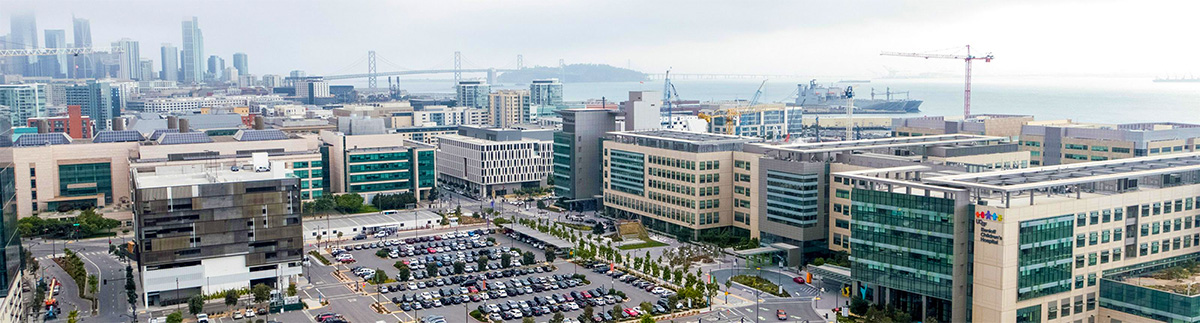
UCSF Medical Complex & School of Pharmacy
UCSF was chosen for the same reason. A department of pharmaceutical chemistry embedded in a clinical research culture puts her chemical and structural work within sight of patients, and some seven months in she reports having had ideas that would not have occurred to her in a traditional chemistry department.
Leah is an exceptional, young chemical biologist whose research on programmable protein backbone editing is allowing scientists to introduce unnatural amino acids with altered backbones into proteins, providing macromolecules that were previously inaccessible. We were lucky to recruit her to UCSF and CVRI, where she is off to an outstanding start as a Sandler Research Fellow.
William F. DeGrado, Professor, Pharmaceutical Chemistry, University of California at San Francisco
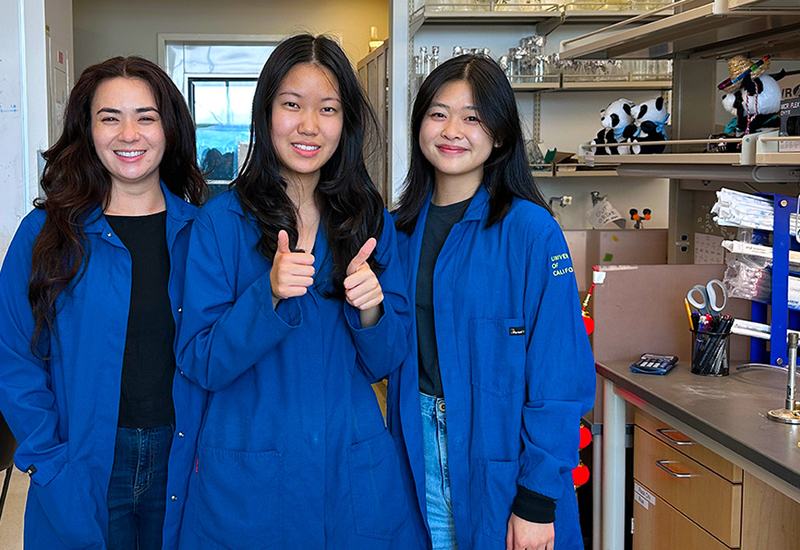
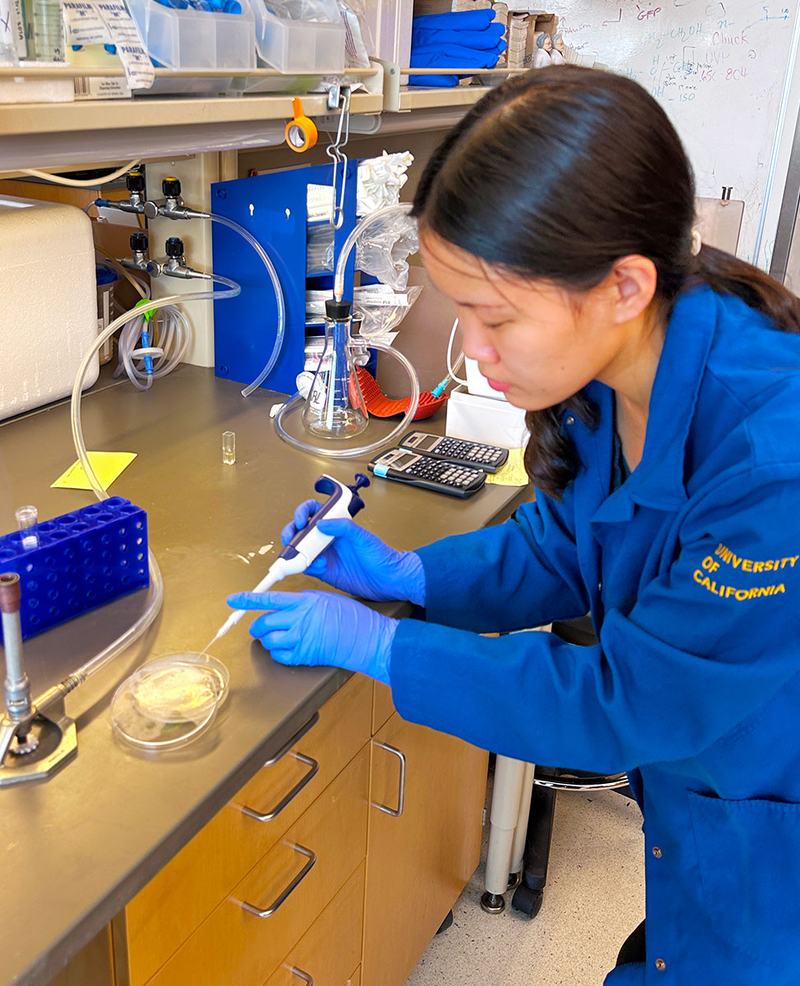
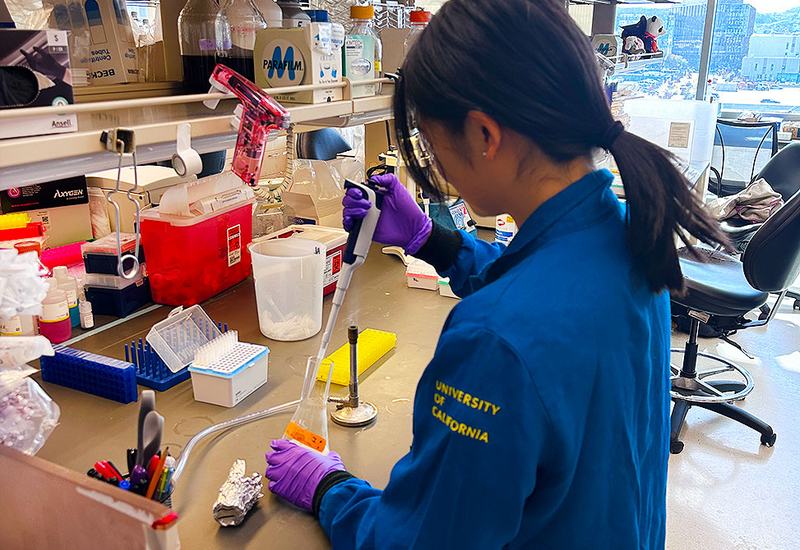
The Fellow position also imposes constraints that a conventional startup package would absorb, and Roe is candid about them. She cannot hire at scale, which makes recruitment a deliberate exercise rather than an expansion. She looks for people who are enthusiastic, kind, and genuinely good to work beside, and she has two: Kathleen Zhang, a junior specialist, and Nancy Sun, who volunteers in the lab. Neither arrived with direct background in this kind of research and both, she says, learned fast. That matters more than usual, because the biggest surprise of the first year has been the funding landscape and the constant application writing it demands, while the Fellow position also keeps her at the bench. The lab moves because her two members can move it while she writes. A former trainee, Arjun Garapaty, whom she mentored as an undergraduate at Berkeley, has gone on to a doctorate at Harvard as an NSF Graduate Research Fellow.
What a Fellow does without is the built-in community that comes with joining an established laboratory as a postdoc. The department is there, and pharmaceutical chemistry supplies colleagues and support; what has to be assembled rather than inherited is the daily scientific company of a group already in motion, a condition she shares with most people starting a lab at the assistant professor level. UCSF supplies part of the answer architecturally: laboratories are grouped into neighborhoods that share bench space, offices, and instruments, which is a practical gift when your group is three people and a scientific one when the neighbors work on things you have never touched. Roe supplied the rest herself. This summer a postdoc from the cardio-immunology laboratory next door asked whether she would teach his group to work with E. coli. She trained him and his undergraduate in her own bay, and while reactions ran they talked about their research and their careers. Then she asked to see the mouse rooms. Mouse work is a long way from acyl chemistry, but she wants to make therapeutics, and understanding how a neighboring field designs an experiment tells you what kinds of data are possible outside your own. Months later, writing a grant that required an immunological argument, she had someone to ask. The two groups now meet weekly, and a collaboration has grown out of it that neither of them anticipated.
She credits three mentors with three different things. Ron Zuckermann, her undergraduate advisor, showed her the joy of doing science. James Fraser, her post-baccalaureate advisor, made a Fellow position seem possible. Alanna Schepartz shaped how she thinks as a chemical biologist. Having been the beneficiary of that, she is direct about wanting to pass it on, and about what she wants her own group to be. Asked where the lab should be in five years, she names a scientific goal – understanding how backbone modifications shape folding and function in full-length proteins – and then sets it beside another. “My personal definition of success has more to do with people than output,” she says. She wants a group that stays productive because the work is enjoyable, and members who leave with good outcomes and good memories.