Genetically encoded libraries of macrocyclic peptides can be screened against protein targets at a scale that synthetic chemistry alone cannot match, and arming those libraries with covalent electrophilic warheads should yield potent, selective inhibitors. The obstacle is chemical: installing a warhead onto a phage-displayed or mRNA-displayed peptide typically requires basic conditions that simultaneously activate the electrophile toward the very nucleophilic side chains it is meant to avoid. Lysine, histidine, tyrosine, and cysteine residues within the peptide library compete with the intended protein target, quenching the warhead before selection even begins. Milder electrophiles sidestep some of this damage but sacrifice reactivity with the target. The field has lacked a general strategy that fully separates macrocyclization from warhead installation without restricting which electrophiles can be used.
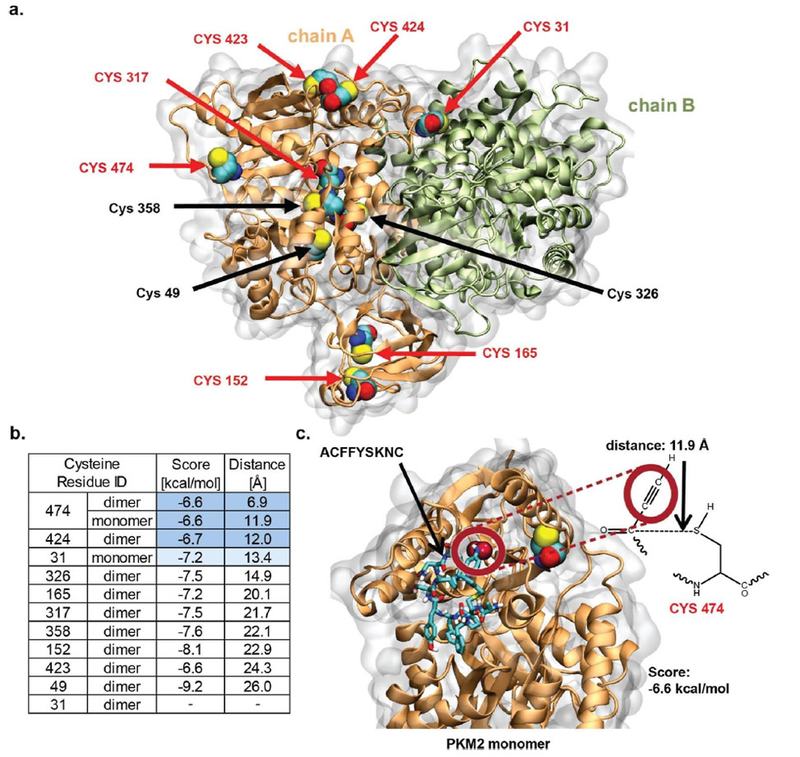
Researchers in the Derda Group at the University of Alberta, published in J. Am. Chem. Soc., addressed this problem by decoupling the two chemical steps and running them under orthogonal pH conditions. In the first step, macrocyclization proceeds at basic pH using a diketone-containing linker to bridge two cysteine residues and generate a shelf-stable cyclic scaffold bearing a 1,3-diketone handle. The warhead is then attached in a second step via Knorr-pyrazole cyclocondensation with a hydrazine-functionalized electrophile at mildly acidic pH, around 4.5 to 5.0. At that pH, the electrophile is silenced toward peptide nucleophiles but becomes reactive again at neutral pH upon encountering the protein target. Applying this two-step route to a phage-displayed library bearing a propiolamide alkyne warhead and panning against pyruvate kinase M2, the team identified lead macrocycles with IC50 values below 10 μM, with LC-MS/MS on the top compound confirming site-specific covalent adduct formation on the target.
The two-step pH-orthogonal approach is not limited to propiolamide warheads or to phage display; the authors argue that any biocompatible bond-forming reaction that proceeds at mildly acidic pH could serve as the warhead-installation step, broadening access to diverse electrophiles, affinity tags, and imaging probes across multiple display platforms. Full inhibition data, regioisomer analysis, docking models, and LC-MS/MS site-assignment results are available in the original publication.