Peptide Publications Archive
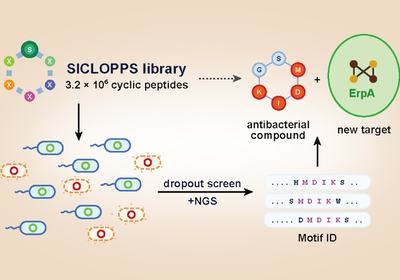
Dropout Finds Target
Tavassoli Lab
Most cyclic peptide screens hunt a known protein target. A new dropout platform asks a simpler question: which library members kill bacteria when expressed inside …
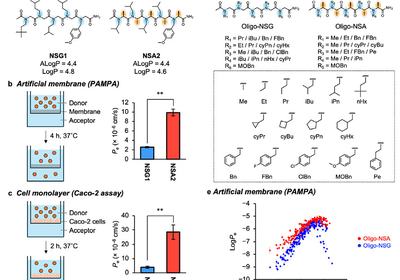
Steric Backbone Advantage
Morimoto & Sando Lab
N-alkyl peptides cross cell membranes with unusual efficiency, and removing their amide hydrogens has long been credited as the reason why. A new study isolates …
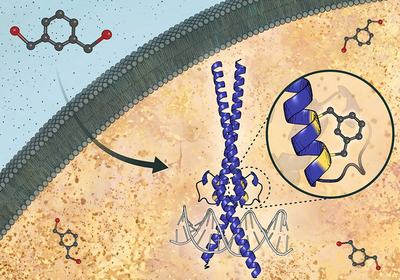
Stapled c-Myc Binds E-box DNA Without Max
Mason Lab
c-Myc is intrinsically disordered and cannot bind DNA without its partner protein Max, a dependency that has stymied drug discovery for decades. A new intracellular …
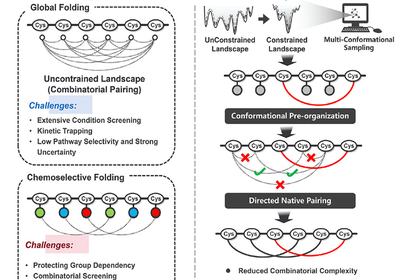
Folding by Design
Hemu Lab
Folding disulfide-rich peptides with three or more disulfide bonds has long frustrated chemists: without cellular machinery, the wrong bonds form first and kinetic traps accumulate. …
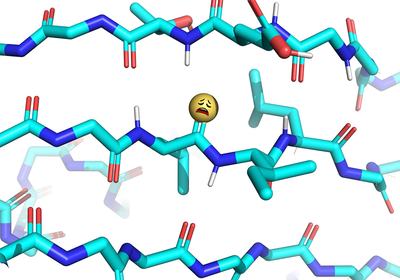
Thioamide Disrupts β-Sheets
Petersson Lab
Swapping a single oxygen for sulfur in a peptide backbone sounds conservative, but a new semi-synthesis strategy reveals that one thioamide can unravel a cooperative …
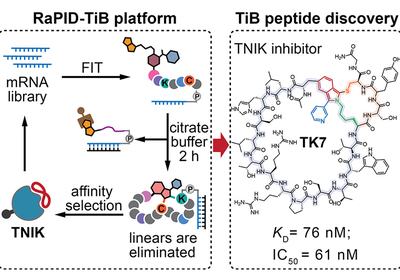
Bicyclic Kinase Trap
Suga Lab
Bicyclic peptides that incorporate a thioisoindole bridge offer tighter conformational constraint than standard macrocycles, yet building them fast enough to work inside a high-throughput mRNA …
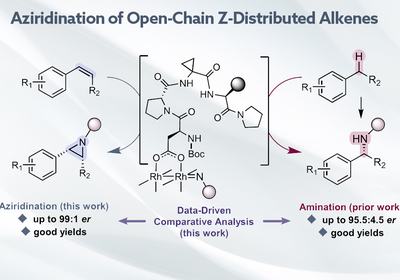
Aziridines by Metallopeptide
Miller Lab
Aziridines are prized synthetic building blocks, yet making them enantioselectively from open-chain Z-disubstituted alkenes has long resisted reliable catalyst design. A new dirhodium metallopeptide system …
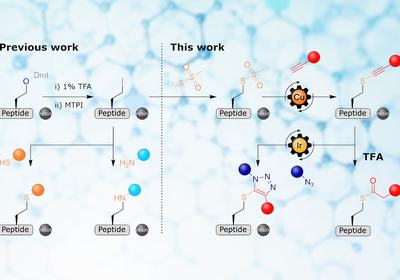
Dual Resin Clicks
Thomas Lab
Generating structurally diverse peptides on solid phase typically means modifying one site at a time, limiting how much chemical complexity a single sequence can carry. …
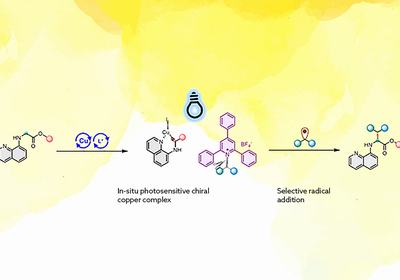
Deaminative UAA Synthesis
Singh Lab
Unnatural amino acids unlock drug-like peptides, but installing them with precise stereochemistry has resisted simple catalytic routes. A visible-light-driven copper catalyst now converts amine-derived Katritzky …
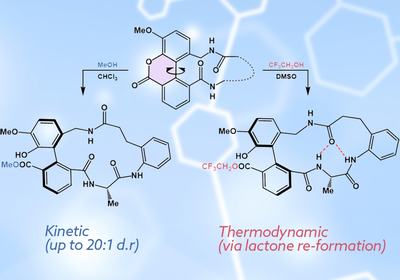
Choosing Conformations
Yudin Lab
Macrocyclic peptides can fold into multiple conformations, but chemists have lacked a reliable chemical handle for selecting one over another. A late-stage lactone-opening reaction now …
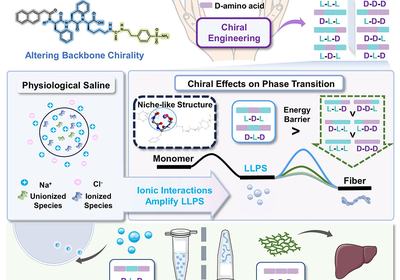
Chirality Steers Condensates
Chen Lab
Switching a single residue's chirality in a tripeptide-drug conjugate redirects assembly away from amyloid-like fibers and toward liquid droplets, but only when Na⁺ or K⁺ …
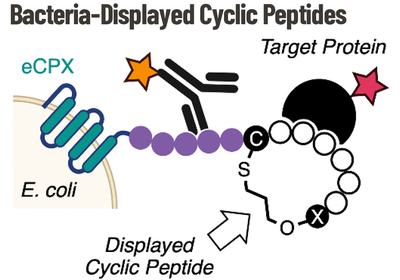
Cycling on Bacteria
Tharp Lab
Cell-surface display of cyclic peptide libraries offers a fluorescence-sortable alternative to phage display, but generating stable macrocycles directly on living bacteria has resisted clean, bioorthogonal …
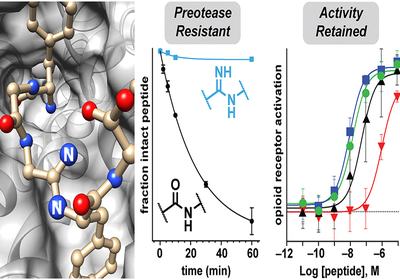
Amidine Backbone Switch
VanVeller Lab
Proteases rapidly destroy therapeutic peptides before they can act, and most stabilization strategies fix this by breaking the very structural features that drive biological activity. …
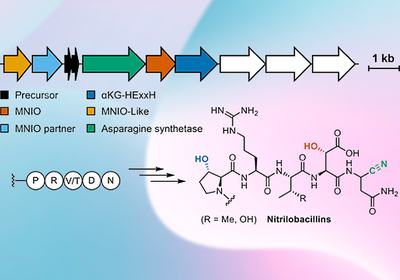
Ribosomal Nitrile
van der Donk Lab
Nitrile groups are prized warheads in peptide drug design, yet no ribosomal peptide natural product had ever been found to carry one. A genome-mining campaign …
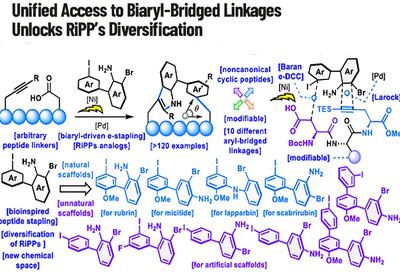
Electrochemical Biaryl Stapling
Hugh Nakamura Lab
Biaryl-bridged cyclic peptides from ribosomally synthesized and post-translationally modified peptides offer compelling drug-like properties, yet their rigid ring systems have made systematic analog synthesis almost …
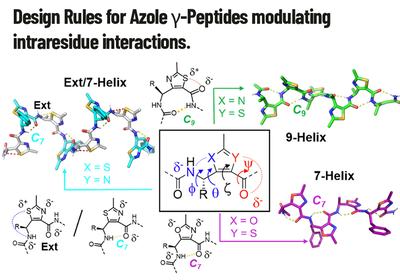
Switching Foldamer Helices
Legrand Lab
Foldamer chemists have long sought a simple switch to redirect backbone folding between distinct helical states. A French research team shows that permuting or substituting …
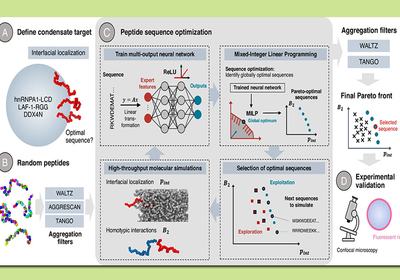
Condensate Surface Surfers
Arosio Lab
Biomolecular condensate interfaces drive protein aggregation and redox reactions, yet no general strategy existed for designing short peptides that park specifically at that boundary rather …
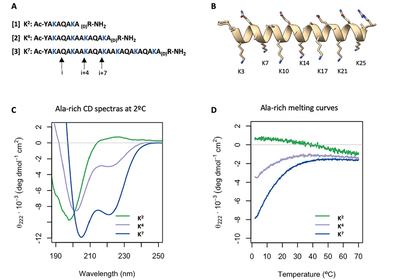
Locking the Helix
Wendeborn and Shahgaldian Groups
Short peptides rarely hold their α-helical shape at physiological temperatures, which limits their use in nanomaterial interfaces. A covalent surface-chemistry strategy on silica nanoparticles not …
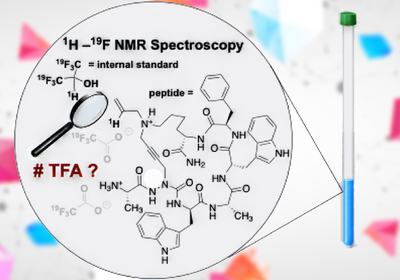
Weighing Without Weighing
Lubell Lab
Trifluoroacetic acid is ubiquitous in peptide synthesis and purification, yet quantifying how much remains in a final salt requires destroying the sample or trusting an …
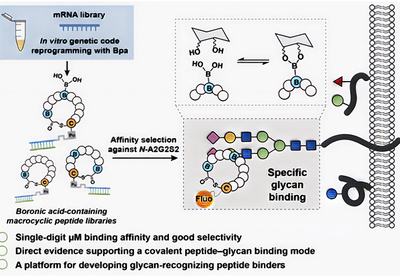
Boronic Glycan Hunters
Suga Lab
Glycans drive cancer progression yet resist the synthetic binders that proteins attract so readily. A new platform combining genetic code reprogramming with mRNA display now …
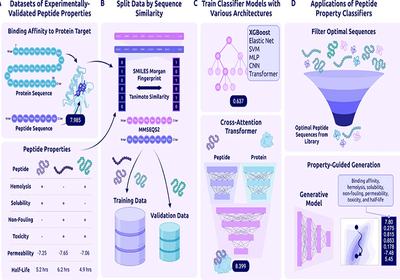
Predicting Peptide Futures
Chatterjee Lab
Peptide therapeutics fail not for lack of binding but for poor membrane permeability, short half-life, hemolytic activity, and other developability liabilities, and no single computational …
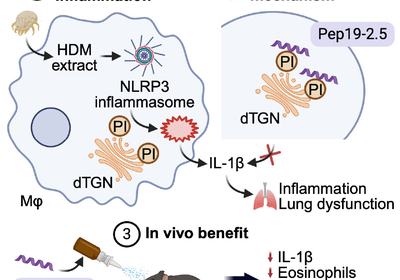
Golgi Ambush
Weindl and Schromm Groups
The NLRP3 inflammasome drives chronic inflammatory diseases from asthma to gout, yet most small-molecule inhibitors target the NLRP3 protein directly and carry adverse-effect profiles that …
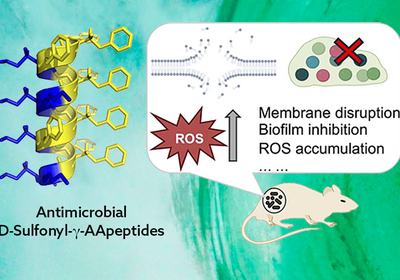
Foldamers Fight Resistance
Cai Lab
Natural antimicrobial peptides promise a way around drug resistance, but proteolytic instability and cytotoxicity have blocked their clinical path. A new class of right-handed D-sulfonyl-γ-AApeptide …
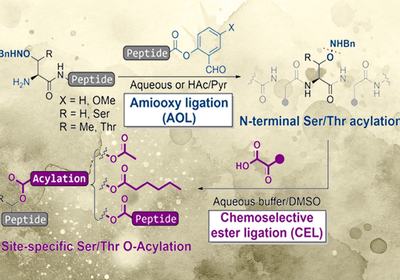
Editing Serine's Silence
Li Lab
Serine and threonine dominate regulatory post-translational modifications in biology, yet chemical tools to edit them site-selectively in unprotected peptides have remained out of reach. A …